
Scientific breakthroughs don't get stuck in Maastricht
At the Brightlands Maastricht Health Campus, the transition from the lab to real-world application is quick and easy.
Published on November 20, 2026
Our DATA+ expert and Editor-in-Chief, Elcke Vels, explores AI, cyber security, and Dutch innovation. Her "What if..." column imagines bold scenarios beyond the norm.
A medical breakthrough in the lab does not automatically translate into a usable treatment for a patient. To achieve that, research must be transformed into a product, a company, and ultimately an application. Brightlands Maastricht Health Campus is working to accelerate those steps. “We don’t just advise researchers; we also seek out CEOs and provide seed capital ourselves,” says Christine Coch, CEO of Brightlands Maastricht Health Campus. Reporter Elcke Vels visited the campus and got a behind-the-scenes look at a major molecular research institute: M4I.
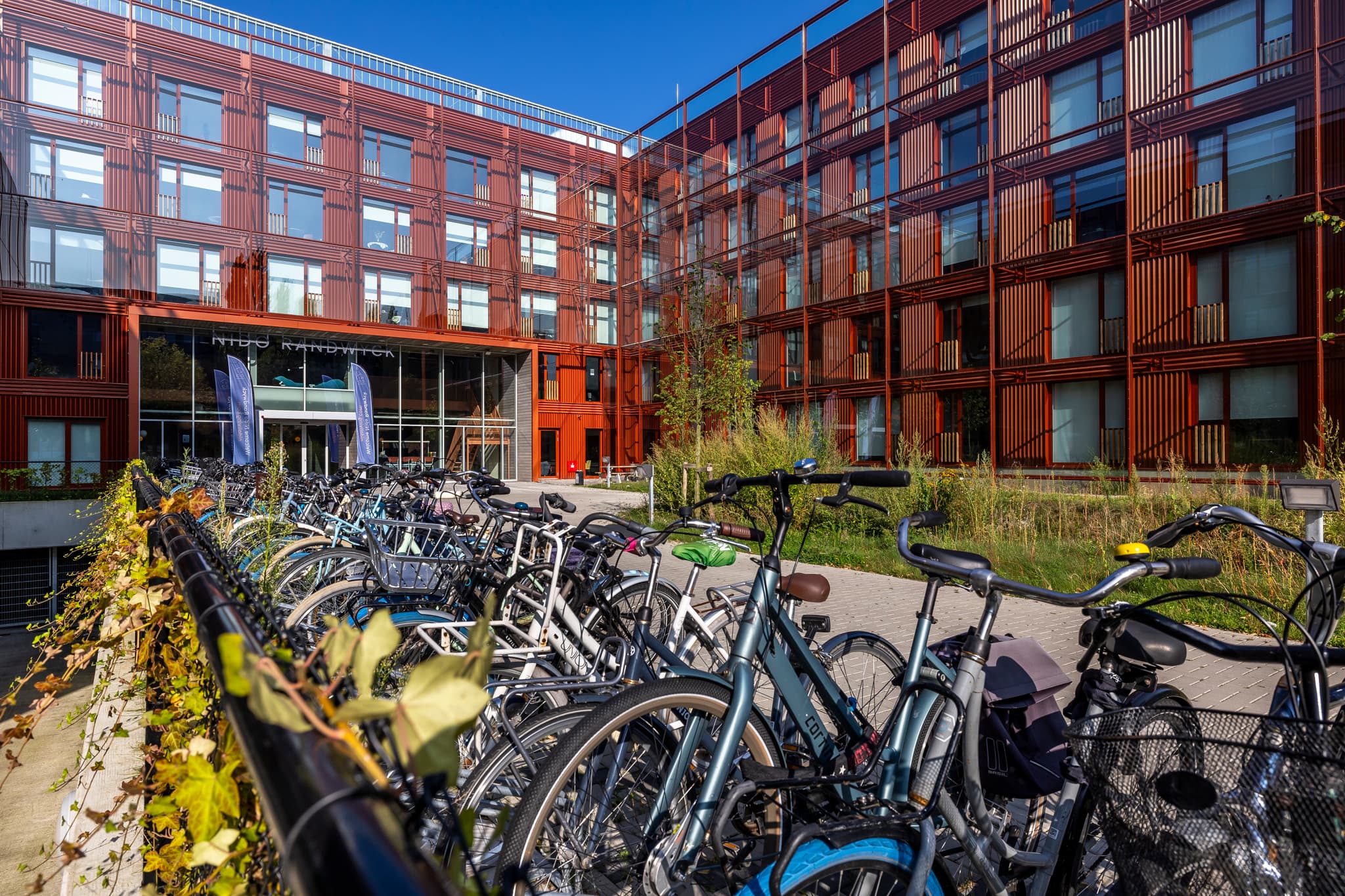
Brightlands Maastricht Health Campus is home to 8 research institutes and more than 150 companies. During an extensive tour, I see how researchers, educational institutions, and companies are working here on innovations in healthcare, medicine, and the life sciences. The campus aims to prevent promising research from getting stuck in the lab. To that end, the organization has a unique structure.
Brightlands Maastricht Health Campus is an independent private limited company (BV), in which Maastricht University Holding, Maastricht UMC+, and the Province of Limburg each hold a one-third stake. This structure gives the organization the flexibility to operate in a more business-oriented manner than a traditional university department. It guides researchers in establishing companies, helps startups secure funding, and conducts commercial negotiations. Investments in spin-offs are channeled through the wholly-owned subsidiary Brightlands Life Sciences Ventures BV.
During lunch on campus, Coch elaborates on that ambition. “We are not a department of a university or hospital. You sometimes read criticism in the newspaper about knowledge and technology transfer organizations (KTOs): that they are too slow, don’t work professionally enough, or can’t negotiate on equal footing with large multinationals. We try to do things differently. For example, we employ business developers who hold PhDs in the fields in which we excel here in the region, but who also understand the market.” So when they sit down at the table with a company like Philips, they can truly negotiate on an equal footing.
Several examples demonstrate that this approach can lead to companies advancing beyond the startup phase. PharmaCell, which specializes in the production of cell and gene therapies, was acquired by the Swiss company Lonza in 2017. PathoFinder, a developer of molecular diagnostic tests for infectious diseases and other conditions, followed in 2019 with an acquisition by the Chinese company Autobio.
Biological structures in crystal-clear focus
One example of a campus institute that focuses on basic research but is regularly bustling with activity is the Maastricht MultiModal Molecular Imaging Institute (M4I). During the tour, we’ll also stop by this institute. It is the largest center for molecular imaging in Europe. We’ll be welcomed there by Assistant Professor Anjusha Mathew.
Researchers there are developing new techniques and instruments to examine biological structures in ever-greater detail. To do so, they combine methods such as mass spectrometry and electron microscopy. This allows them to study both the molecular composition of tissue and the structure of cells.
One of the innovations currently being developed is Fast Mass Microscopy. With the traditional method, tissue is examined point by point using a laser. “That takes a lot of time: for a surface area of 42 by 23.5 millimeters, the analysis can take weeks. With a modified mass spectrometer and a special detector, the Timepix, the same surface area can be imaged in about 33 minutes,” says Mathew. The detector, based on technology from CERN, records the position and arrival time of ions imaged on the detector. Using that data, researchers reconstruct the molecular distribution in the original sample.
The result is a detailed molecular map of the tissue. This allows researchers, for example, to identify differences between healthy and tumor tissue. Brain and kidney tissue could also be examined using this method in the future. The technique has been demonstrated experimentally but is not yet in use in hospitals. “The preparation of tissue samples and the reliability of the measurements in clinical practice still require attention,” says Mathew.
Whether the Timepix technology will ultimately become a commercial product remains to be seen. However, it has already been proven that M4I’s research can reach the market. The institute has spawned several companies. For example, CryoSol-World emerged from research into electron microscopy. The company is developing a device that prepares samples for examination with an electron microscope. Dutch Screening Group also emerged from M4I. That company is developing a method to determine, using hair samples, whether someone has been exposed to certain substances.
Four campuses with the same goal
In short: Brightlands Maastricht Health Campus clearly demonstrates how research can grow into business activity. The campus, incidentally, does not stand alone. With Brightlands, Limburg has built a network of four campuses where science, industry, and government collaborate. In addition to the Brightlands Maastricht Health Campus, there is the Brightlands Chemelot Campus in Sittard-Geleen, focused on new materials and sustainable chemistry; the Brightlands Data & AI Campus in Heerlen, where data and AI take center stage; and the Brightlands Campus Greenport Venlo, where healthy food and innovative agriculture are the focus.
Each has its own specialty, but the ambition is the same: to ensure that knowledge doesn’t go to waste.