
Salvia launches US trial of implantable migraine treatment
Eindhoven-based Salvia BioElectronics is testing MySalvia in RECLAIM-II: ultra-thin implants for hard-to-treat migraine.
Published on October 16, 2026

Team IO+ selects and features the most important news stories on innovation and technology, carefully curated by our editors.
Salvia BioElectronics has implanted the first patient in the United States with its MySalvia system. This marks the start of RECLAIM-II, a large-scale clinical study of an implantable neuromodulation therapy for adults with hard-to-treat migraine. The study, which is expected to enroll 150 participants, will be conducted at more than 20 hospitals and clinics across the US.
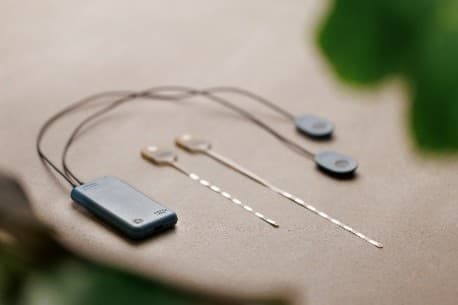
The MySalvia system consists of two ultra-thin implants placed just beneath the scalp, one at the forehead and one at the back of the head. These implants modulate nerves involved in migraine, aiming to reduce the frequency and severity of attacks. Users activate the therapy daily through an external wearable device. This neuromodulation approach seeks to restore balance in the brain’s processing of pain signals, which is often disrupted in people with migraine. Dr. Amaal Starling, a headache specialist at Mayo Clinic in Arizona, emphasizes that migraine affects tens of millions of people worldwide and is the leading cause of disability among adults under 50. Many patients have already tried several treatments without success.
RECLAIM-II builds on earlier studies
The launch of RECLAIM-II follows authorisation from the US Food and Drug Administration (FDA) and represents an important step in Salvia’s clinical development program. The study builds on the RELIEF feasibility study results and the ongoing European RECLAIM pilot study. RELIEF, a small-scale study involving seven patients, provided promising insights into MySalvia’s safety and the feasibility of the implantation procedure. Initial results also suggested that this form of neuromodulation could offer longer-term clinical benefits. The European RECLAIM study, currently underway in Belgium, the Netherlands and the United Kingdom, is further investigating this approach in a larger group of participants.
A milestone for neuromodulation in migraine
Hubert Martens, co-founder and CEO of Salvia BioElectronics, sees the launch of RECLAIM-II as a crucial milestone. “Our goal is to develop a bioelectronic therapy that fits seamlessly into the daily lives of people with migraine,” Martens says. “With RECLAIM-II, we are taking an important step toward building the clinical evidence needed to better understand the role of neuromodulation in migraine and ultimately make our therapy available to patients worldwide.” The study is a multicenter, randomised, double-blind, controlled trial designed to evaluate the safety, durability and effectiveness of the MySalvia system.
The technology behind MySalvia
The MySalvia system was designed for the preventive treatment of migraine and falls into the emerging category of Implantable Extracranial Neuromodulation (IEN). Unlike earlier neuromodulation devices, often adapted from devices for chronic pain in the back or limbs, MySalvia is tailored to the head's anatomy. The two implants, placed just beneath the skin, target key nerves involved in migraine. Users activate the therapy twice daily at the touch of a button on a small wearable device. Wim Pollet, Salvia's Chief Medical Officer, explains that neuromodulation aims to restore balance in the brain’s processing of pain signals, which is often disrupted in people with migraine.
An urgent medical need
Migraine is not only a common condition; it also has a profound impact on daily life. In the US alone, more than 40 million people live with migraine, and one in four households includes someone with the condition. For patients with resistant migraine, whose existing treatments provide insufficient relief, the search for an effective solution is often difficult. Dr Starling emphasises that many patients have already tried several preventive treatments, including CGRP inhibitors and botulinum toxin, without an improvement in their quality of life. RECLAIM-II is investigating whether MySalvia can offer a safe and effective new option for this group.
Future applications and expansion
Alongside migraine, Salvia BioElectronics is also exploring the technology’s potential to treat cluster headache. Founded in 2017 and based in Eindhoven, the company is advancing clinical development with support from leading investors.