
Researcher receives 1.5 million for energy-efficient computers
A researcher at the University of Groningen has received 1.5 million euros to conduct research on energy-efficient computers.
Published on September 7, 2026

Team IO+ selects and features the most important news stories on innovation and technology, carefully curated by our editors.
University of Groningen (RUG) researcher Henk van Waarde will receive 1.5 million euros from the European Research Council (ERC) over the next five years for research into a new generation of energy-efficient computers. He aims to develop systems inspired by the way the human brain processes information.
Computing like the brain
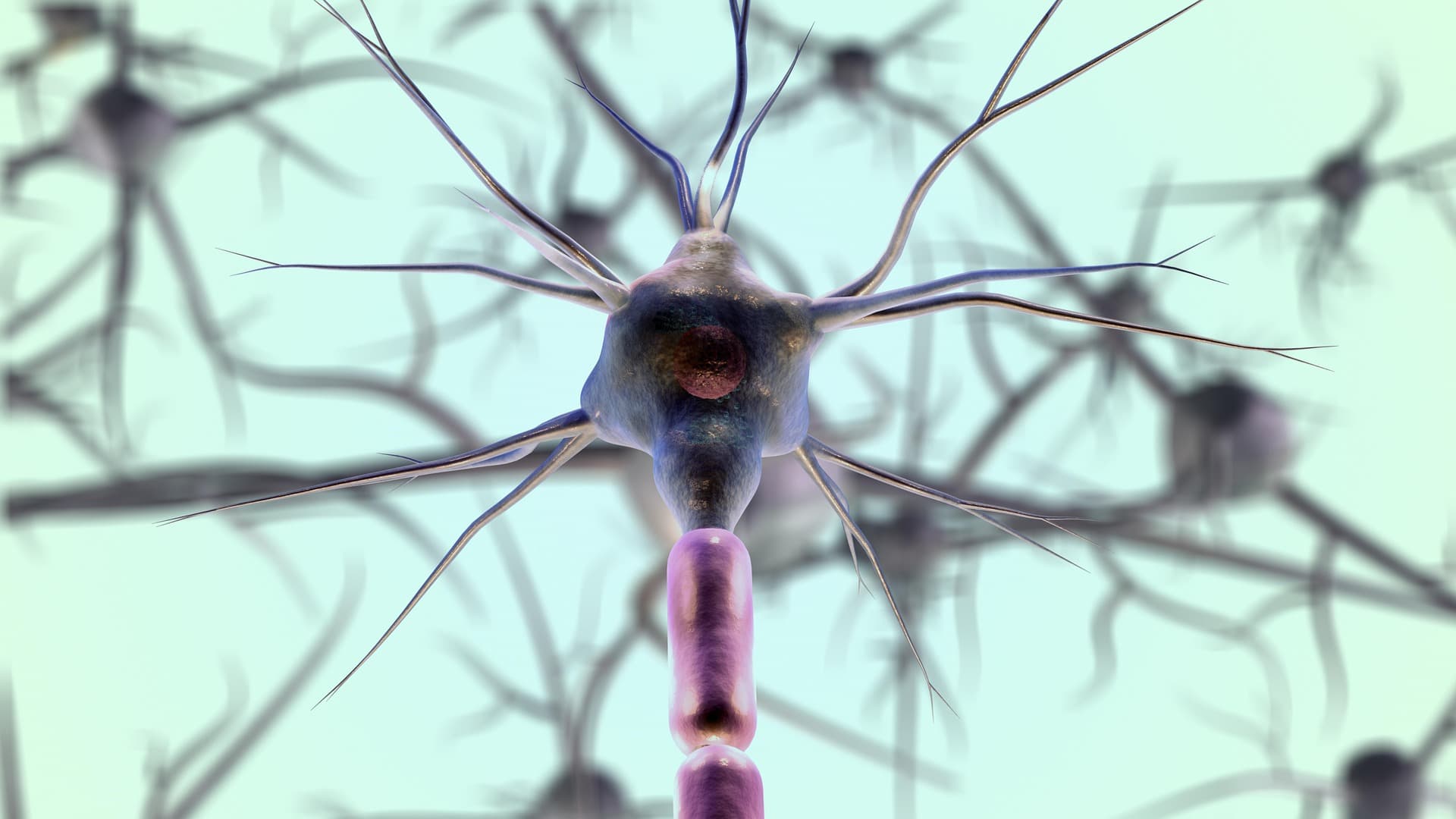
Van Waarde, affiliated with the Faculty of Science and Engineering and the Bernoulli Institute at the University of Groningen, is researching neuromorphic computing. Instead of having computers compute according to classical digital architecture, neuromorphic systems attempt to mimic certain principles of the brain. This involves, among other things, processing information through large networks of simple computational elements, comparable to neurons.
In traditional computers, memory and the processor are largely separate. As a result, information must constantly be sent back and forth, which can consume a great deal of time and energy. The human brain works differently: information is processed within a vast network in which storage, processing, and communication are tightly intertwined.
Neuromorphic computers attempt to mimic that principle. For example, they use electronic circuits that behave like neurons and connections whose strength can be adjusted, similar to synapses. This allows information to be processed locally, without having to move large amounts of data between memory and the processor for every calculation. This can lead to much lower energy consumption and higher speed, especially for complex tasks.
Learning without a central trainer
According to Van Waarde, this also presents a significant challenge. Neuromorphic chips still need to be trained, for example, to recognize patterns or perform certain calculations correctly. Current techniques, such as backpropagation—which is widely used in AI—are not well suited to analog neuromorphic circuits. As a result, training can still consume a lot of energy and often requires information to be moved between different parts of the system.
Van Waarde therefore aims to develop a new way to train these circuits. His research focuses on a system in which learning arises directly from the dynamics of the circuit itself. Instead of a single central algorithm controlling all connections, components of the system must be able to learn locally and in a decentralized manner.
To this end, he is developing new mathematical models and algorithms that utilize the energy and dynamics of the physical system. The goal is a method that is scalable, uses little energy, and is also resilient to small variations among electronic components.
His own research team
With the ERC Starting Grant, Van Waarde can build his own research team and work on the project for five years. The grant is intended for promising young researchers and is designed to enable them to conduct groundbreaking research independently.