
Rare scandium: Europe's key to strategic autonomy?
Is it time for Europe to establish its own scandium supply chain?
Published on April 9, 2026

Team IO+ selects and features the most important news stories on innovation and technology, carefully curated by our editors.
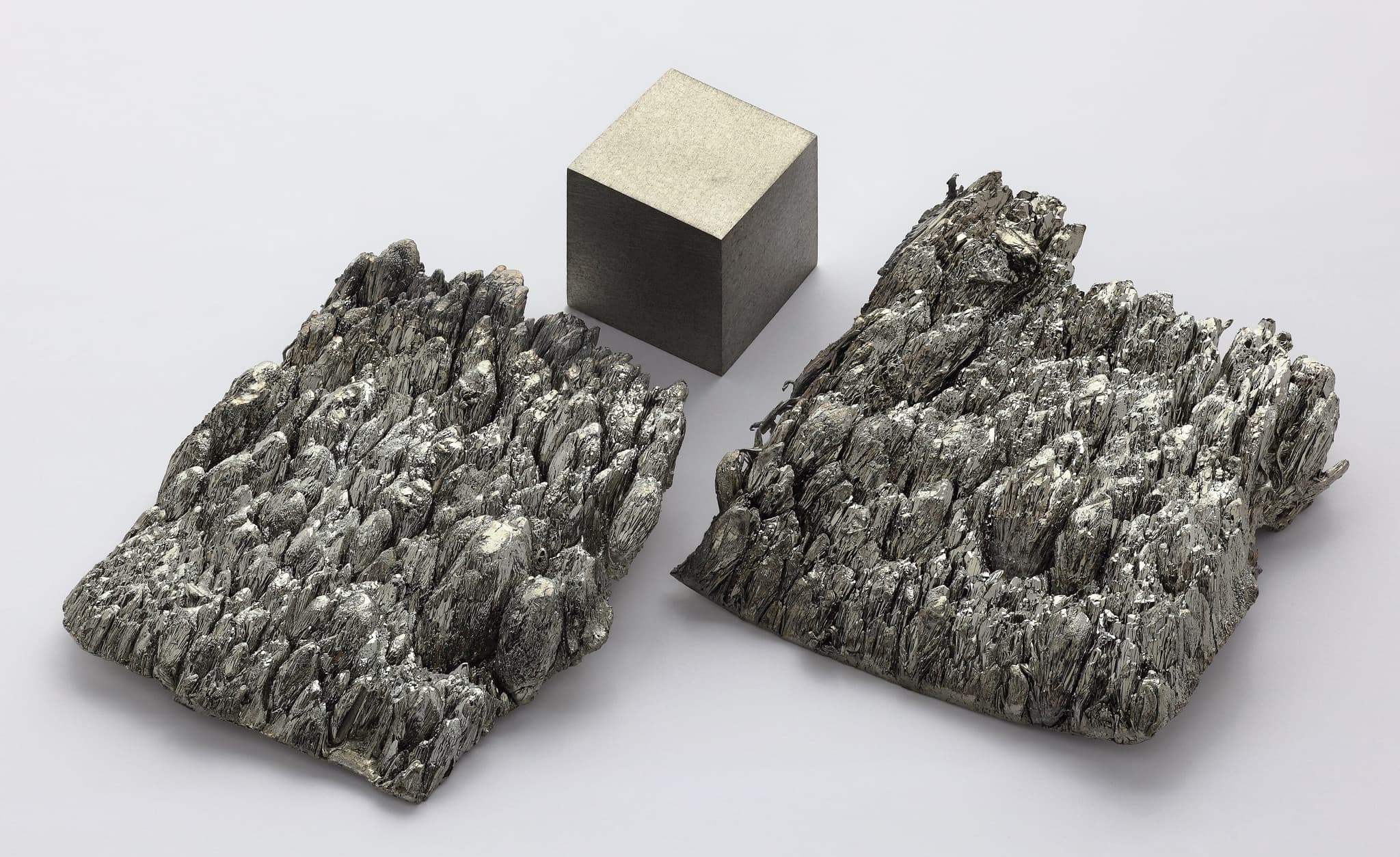
Scandium is a high-quality and indispensable metal for modern aircraft and fuel cells. Europe currently produces not a single gram of this material. We import all of it from countries such as China and Russia. This dependence poses a huge strategic risk. That is slowly changing. An ambitious plan in Europe aims to convert industrial waste into a reliable, domestic source of scandium.
The invisible powerhouse
Scandium is found in small quantities in many minerals. The problem is that it does not occur in high concentrations, making it difficult and expensive to extract economically.
However, it is a metal with unique properties. It significantly improves the strength, heat resistance, and weldability of aluminum. Manufacturers use these alloys for advanced aircraft and rockets. Manufacturers also use the material extensively for 3D printing. This opens the door to complex, lightweight structures in aviation.
The results are impressive. A partition wall in an Airbus A320 made from a scandium-aluminum alloy weighs less than a traditional design. In bicycle frames, the material also delivers weight savings.
Europe produces absolutely nothing
Despite these advantages, the supply chain is extremely vulnerable. China supplies 66 percent of global production. Russia follows with 26 percent, and Ukraine accounts for 7 percent. Europe produces absolutely nothing itself and is entirely dependent on imports.
Gold in industrial waste
The solution, however, lies surprisingly close at hand. European industry produces enormous amounts of waste annually. This waste contains significant concentrations of valuable metals. The European SCALE project focuses on these secondary sources. The researchers are specifically looking at bauxite residue from aluminum production. This material is also known as red mud. Greece produces large quantities of it annually. In addition, the project is investigating acidic waste from titanium dioxide production in Norway. Europe produces 5 million tons of bauxite residue and 1.4 million tons of titanium dioxide waste annually.
The SCALE project has developed an innovative method. This method extracts scandium from highly diluted liquids. The consortium consists of nineteen partners, including major industrial players and research institutions. They are collaborating to achieve a fully circular economy. This reduces import dependency while simultaneously solving a waste problem.
Pilot plant in Greece
The SCALE project successfully demonstrated a pilot plant at Aluminium of Greece. This plant processed 10 tons of bauxite residue and 2 cubic meters of acidic waste. The process yielded scandium concentrates of up to 25% by weight.
End users in Europe
The success of scandium on a small scale has already been proven. So perhaps it is time for Europe to start extracting this metal on a larger scale. After all, the end users are already ready: aviation giant Airbus uses the scandium alloy Scalmalloy through its subsidiary APWorks. With it, they mass-produce 3D-printed cabin brackets and structural connectors for the A320neo and A350 XWB. This adoption shows that industrial demand is clearly present.
Aviation is just one side of the story. Scandium also plays a key role in Europe’s energy transition. The metal is indispensable for solid-oxide fuel cells. These fuel cells use scandium-stabilized zirconia. This material significantly increases the efficiency of high-temperature electrolysis. Stationary fuel cells also perform better with this technology. Companies such as Bloom Energy rely on this technology for their systems. Europe aims to build a leading hydrogen economy. Without sufficient scandium, this ambition will face serious delays. The metal literally forms the engine of the future clean energy supply.
Economic challenges
The production of European scandium presents economic challenges. USGS (U.S. Geological Survey) reports show that Europe currently depends on imports for scandium oxide because there is no significant domestic production, which implicitly points to higher costs for European production.
However, local production saves on logistics costs. Moreover, European buyers are placing increasing value on supply security.
The first European pilot projects are showing tentative success. Will Europe soon become a producer rather than an importer? Only time will tell.