
Protein-rich potato: Wageningen startup lands €5 million
A Wageningen startup just raised €5M for a tuber that could cut Europe's protein imports.
Published on July 8, 2026
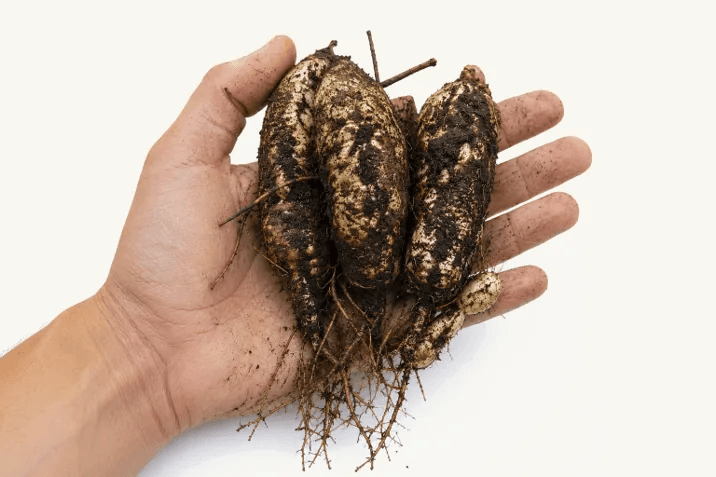
© Aardaia

Team IO+ selects and features the most important news stories on innovation and technology, carefully curated by our editors.
Wageningen-based agtech startup Aardaia has raised a €5 million seed round to accelerate development of the aardaker, a nitrogen-fixing, protein-rich tuber the company believes could become a new staple crop for Europe. The round was led by Point Nine, with participation from new investors Astanor and Grey Silo, as well as returning investor FoodLabs, which led the company's pre-Seed round, alongside a group of angel investors.
Aardaia is built on an unusual premise: rather than tweaking the handful of crops the world already depends on, it searches for wild plants that have already evolved the traits modern agriculture needs. As the company puts it on its website, of the roughly 30,000 edible plant species on Earth, more than half of humanity's calories come from just three, and 95% from only thirty.
Its answer is the aardaker (Lathyrus tuberosus), a wild tuber found from the Netherlands to central Siberia that was once eaten across Europe but never farmed at scale. It pairs the productivity of a root crop with the nitrogen-fixing biology of a legume, meaning it doesn't require synthetic fertiliser to produce protein — a trait Aardaia argues could help Europe reduce its costly, carbon-heavy dependence on imported protein.
Looking back to find new foods
Aardaia calls this "domestication on demand": using genome sequencing, high-throughput phenotyping, speed breeding and genomic prediction to compress a process that traditionally took centuries into just a few years, moving much of the work "from the field onto the computer." This year, the company is screening three-quarters of a million unique aardaker genotypes, aiming for two million next year with the fresh funding.
Regulation, often a bottleneck for novel foods, works in Aardaia's favor here: because the aardaker was documented as a food crop in Europe before May 1997 — including 19th-century woodcuts of vendors selling it at Amsterdam markets — it sidesteps "novel food" classification, easing its path to market.
It's already found fans among chefs: two-Michelin-star restaurant De Nieuwe Winkel in Nijmegen bought the tuber's entire harvest last year and is buying nearly all of it again this year. Flood describes its flavor as somewhere between potato and sweet chestnut, with a hint of cassava, and a drier texture thanks to double the dry matter content of a potato.
Bringing the aardaker back
For lead investor Point Nine, the deal marks a departure from its usual bets, such as Attio and Revolut. "A plant-breeding company wasn't an obvious fit," said partner Christoph Janz. "But after my first call with Pádraic and Mike, I was hooked."
Aardaia has grown to 14 staff members across 10 nationalities, half of whom hold PhDs, and says the round — its second in six months — will fund further genotype screening as it works to bring the aardaker from experimental fields toward commercial-scale farming.