
PowerPoint presentations are outdated: VR take's over lessons
How technology is revitalizing a familiar way of learning and helping teachers.
Published on February 24, 2026
Masterstudente journalistiek aan de RUG, stagiair bij IO+, schrijft graag over de integratie van AI in het dagelijks leven
Students' attention span does not end after fifteen minutes, nor does it diminish, according to educational consultant and trainer Steven Raaijmakers in a publication by Utrecht University. However, technology and social media are increasingly being used to attract students' attention faster. This makes it important for teachers to keep students engaged in the lesson in an effective and healthy way.
According to Michel van Eersel, co-founder of the Connec2 education platform, virtual reality (VR) can help with this. He believes that traditional PowerPoint presentations are often no longer enough to keep students engaged. Pointing to a presentation, he says, “I bet no one will remember what this is about as soon as they walk out the door.”
Action instead of listening
VR enables a kinesthetic way of learning. This teaching method emphasizes interaction and action instead of just listening or reading. Research shows that this form of learning can create stronger mental connections and improve retention of procedures.
This approach is particularly suitable for practical training programs, such as healthcare, engineering, or installation.
First practice digitally, then in real life
With VR glasses, students can practice the sequence of installation steps before entering the real world. According to Van Eersel, this makes it possible to train more students at the same time, without additional practice rooms, materials, or teachers.
Because students already know the procedure, they can work more efficiently with real materials. “This means that practice rooms are occupied for less time and skilled people are trained more quickly,” says Van Eersel.
A virtual classroom
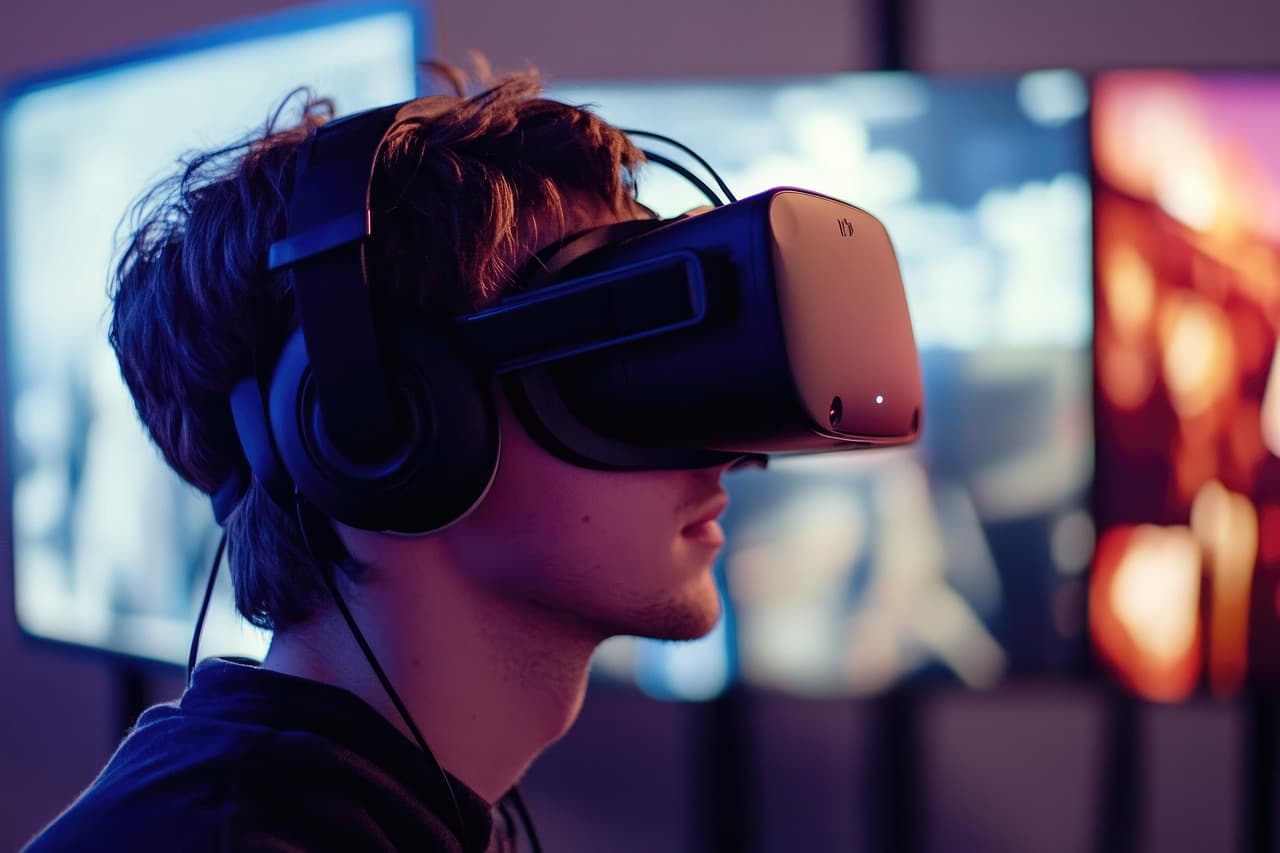
During IPON 2026, IO+ had the opportunity to experience a VR demo of Connec2, based on a lesson that students take when training on charging station installations. After putting on the glasses, the exhibition space remained visible, but an interactive charging station appeared on the screen. The glasses automatically connected to those of other participants and demonstrator Bart Kok, who took on the role of teacher and was able to activate functions via a digital lesson menu.
Participants could select and install components themselves. It gave them the feeling that they were working together in a virtual classroom. In another exercise, a steel structure was built. A two-meter beam could be easily moved in VR, whereas in reality it would be heavy. According to Van Eersel, this shows that VR is particularly suitable for learning procedures. The real feel and physical experience still need to be gained with real materials. “VR is not a substitute for real training,” says Van Eersel.
However, VR can offer additional support. “For example, a pop-up window could appear during the virtual lesson with a question about the weight of a component,” says Kok. According to Van Eersel, teachers can put together their own lesson plans: “You are in control of your own lesson plan.”
Digitization is not new in education
Digital training tools have been used for some time, for example in the medical sector. Digital dissection tables and virtual simulations are an alternative to real bodies, which can be limited in availability and can only be used once.
At the Jeroen Bosch Hospital, doctors in training use VR to experience situations from the patient's perspective. Applications such as these demonstrate that digital learning resources are being used more and more widely.
Future: lighter glasses and AI integration
Developments in VR technology are advancing rapidly. Companies such as Meta have already developed smart glasses in collaboration with Ray-Ban, in which AI is integrated.
Van Eersel expects VR glasses to continue to evolve in the future. He hopes that the glasses will become even smaller and lighter, comparable to normal glasses. Although there is still a lot of work to be done to reduce the size of VR glasses, “we are also already looking at how we can integrate AI into the glasses,” says Van Eersel.