
Photonics reaches tipping point: AI, sensing push chip technology
New Invest-NL study shows how integrated photonics is becoming a key technology — with the Netherlands in a strategic position
Published on March 20, 2026

Team IO+ selects and features the most important news stories on innovation and technology, carefully curated by our editors.
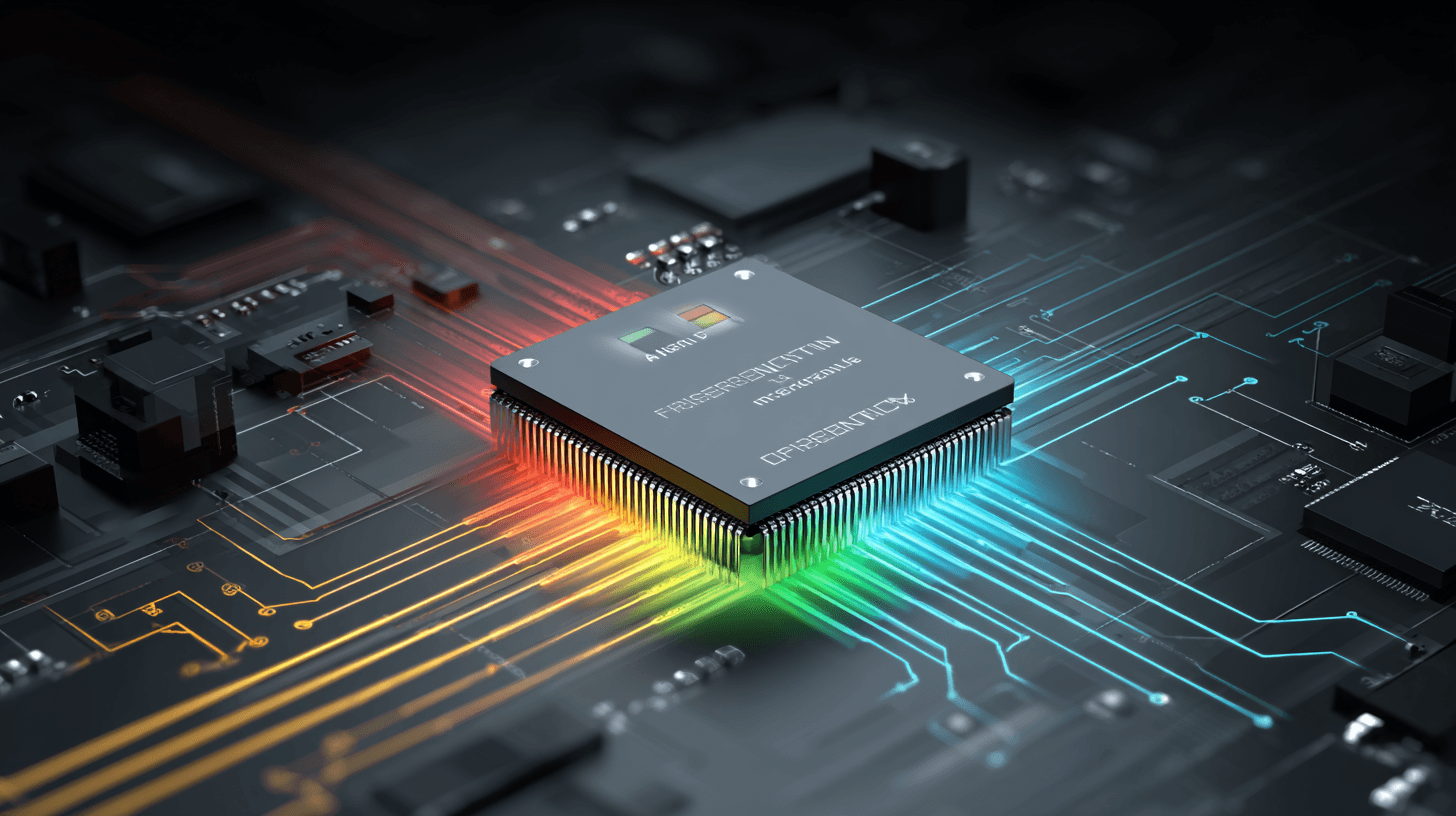
The next major leap in chip technology is no longer just about electrons, but about light. Integrated photonics (chips that process information using photons instead of electrical signals) is rapidly evolving from a niche into a key enabling technology for AI, healthcare, and autonomous systems. That is the conclusion of a new market study by Invest-NL and Roland Berger.
What the report makes clear above all is this: the breakthrough of photonics is not happening in isolation, it is being forced by a system reaching its limits.
AI is pushing electronics to their limits
The immediate driver is the explosive growth of artificial intelligence. Hyperscale data centers, which provide the computational backbone for AI models, are expanding not only in number but also in complexity. This leads to a massive increase in data traffic within and between servers.
And that is where the bottleneck appears. Electronic chips are struggling to handle these data flows efficiently. Energy consumption is rising, heat generation becomes a constraint, and the physical limits of copper interconnects are approaching.
Photonics offers an alternative. By transmitting data using light, chips can achieve much higher speeds while consuming significantly less energy. The study shows just how fast this transition is moving: optical modules are heading toward data rates of 3.2 Tbps and even 6.4 Tbps, while energy per bit must drop dramatically.
This turns photonics from an interesting option into a necessity.
Not one technology, but an ecosystem
Looking at the photonics market, there is no single dominant solution. Instead, a layered ecosystem of complementary technologies is emerging.
Silicon photonics currently forms the industrial backbone. It integrates well with existing semiconductor manufacturing and offers cost-effective scalability. However, it has a key limitation: it cannot generate light on-chip.
That is where indium phosphide comes in, a material that excels at active components such as lasers and high-speed modulation. As data speeds increase, its importance only grows. At the same time, silicon nitride is gaining ground as the technology of choice for highly precise sensing. Its low signal loss and broad optical transparency make it particularly suited for measurement applications.
The future, therefore, lies not in choosing one platform, but in combining them. Increasingly, multiple photonic technologies are integrated into a single system, each performing its specific role.
This makes integration - how these building blocks are combined - one of the most critical strategic decisions in the field.
Datacom today, sensing tomorrow
Today, the market is dominated by datacom, the communication infrastructure of data centers. This is where demand is immediate and volumes are highest. The rise of AI directly translates into growing demand for optical interconnects. But beneath the surface, a second domain is emerging that may prove just as important: sensing.
Photonic chips enable extremely precise, real-time measurements in compact and energy-efficient systems. This opens the door to applications in autonomous vehicles, medical diagnostics, and wearable devices. Think of LiDAR systems that allow vehicles to “see,” or sensors that continuously monitor health data.
According to the study, this market is still in its early stages, but could accelerate significantly after 2030.
Where datacom is about speed and scale, sensing is about precision and interaction with the physical world. It is this combination that makes photonics so strategically important.
Geopolitics: control over a key technology
The rise of photonics also has a clear geopolitical dimension. As with traditional semiconductors, it is increasingly seen as a critical technology for economic independence and security.
Applications in telecom, defense, and healthcare make it essential to reduce reliance on foreign production capacity. Europe is therefore investing in “strategic autonomy,” including the development of its own manufacturing capabilities and ecosystems. Photonics is thus becoming not only a technological priority but also a political one.
The Netherlands is in a unique position
Within Europe, the Netherlands stands out. The country has built a relatively complete ecosystem around integrated photonics, covering design, manufacturing, packaging, and applications.
This ecosystem is also highly complementary. While the Netherlands is strong in indium phosphide and silicon nitride, it gains access to silicon photonics through collaboration with partners such as imec. The result is a combination that is rare within Europe.
According to the report, this positions the Netherlands as a “one-stop shop” for photonics innovation. Because the future lies in hybrid systems, where multiple technologies converge, this integrated ecosystem could become a decisive advantage.
From promise to tipping point
At the same time, the sector is still evolving. Some markets, such as silicon nitride, remain largely in the research phase. The timing and scale of adoption are not yet fully predictable. But the direction is clear. The combination of AI, energy-efficiency demands, and new real-world applications is creating momentum that is hard to ignore.
Photonics is approaching a tipping point: no longer as an alternative to electronics, but as a necessary complement, and in some cases even a replacement. To understand the next generation of technology, it is no longer enough to look at smaller transistors. The real shift lies elsewhere: in how light is beginning to take over the role of electricity.