
Pay by Bank: the cheaper alternative to iDEAL and Wero
Mollie launches Pay by Bank: lower costs, same experience, without Wero or iDEAL. How does it work?
Published on October 6, 2026
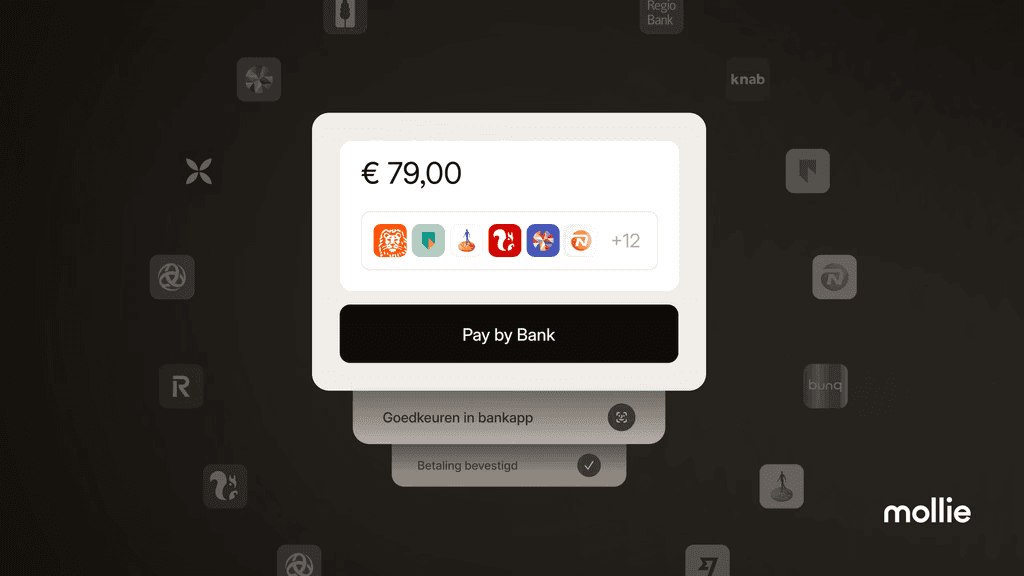
© Mollie

Merien co-founded E52 in 2015 and envisioned AI in journalism, leading to Laio. He writes bold columns on hydrogen and mobility—often with a sharp edge.
Dutch online stores face a choice. iDEAL is disappearing in 2027 to make way for Wero, but the new standard is more expensive and requires more personal data. At the same time, Mollie is offering an alternative: Pay by Bank. This payment method uses open banking to pay directly from the bank account, without intermediate steps. The experience is the same, the costs are lower, and privacy is better. What does this mean for businesses and consumers?
The transition from iDEAL to Wero
The Netherlands is switching from iDEAL to Wero, the new European payment standard. The transition is taking place in phases. The technical migration starts in 2026, followed by the full rollout in 2027. iDEAL will be switched off on December 31, 2027.
Businesses are concerned about the costs. Whereas iDEAL fees were typically around €0.19 to €0.20 per transaction, Wero fees range from €0.17 to €0.32, depending on the provider. Some providers even charge fixed monthly fees or setup fees, driving up the total costs for businesses even further.
In addition, Wero urges users to link a phone number or email address to their account. This raises privacy concerns. The combination of higher costs and privacy issues makes Wero less attractive to retailers and consumers alike.
Pay by Bank: direct payments via open banking
Pay by Bank is a payment method that uses open banking and the PSD2 directive. The payment provider, such as Mollie, acts as a Payment Initiation Service Provider (PISP). Consumers authorize the payment directly in their own banking environment. iDEAL, Wero, or a credit card is not involved.
In 2026, Mollie introduced an enhanced version of Pay by Bank. This solution was made possible by the technology of GoCardless, which was acquired in 2026. Pay by Bank offers guaranteed payments, instant payouts and fixed rates with no hidden costs. The method supports both one-off and recurring payments, such as direct debits.
Pay by Bank is available in the Netherlands from 2026. The rollout to the rest of Europe will follow in the first half of 2027.
Lower costs and better privacy than Wero
Pay by Bank offers the same seamless checkout experience as iDEAL or Wero, but at lower cost. While Wero fees can run as high as €0.32 per transaction, Mollie is positioning Pay by Bank as a cost-effective alternative with fixed rates.
Buckaroo launched a similar solution in 2023, with lower costs and a 25% shorter checkout process. Pay by Bank also avoids the extra layer, and therefore the sharing of data with Wero or iDEAL.
Technically, Pay by Bank is based on PSD2 and the role of PISPs. When a consumer chooses Pay by Bank, the payment provider sends the payment details directly to the consumer’s bank. This is done via the PSD2 Single Payments API.
The bank returns an authorization URL, which the consumer uses to enable the payment in their own banking environment. After authorization, the bank processes the payment. The consumer is then redirected back to the online store.
European scalability and future-proofing
Pay by Bank is not just a solution for the Netherlands, but for the rest of Europe as well. The rise of Pay by Bank gives businesses more freedom of choice. Besides Mollie, other providers such as Buckaroo and Paybyrd also offer Pay by Bank as an alternative to iDEAL and Wero. In doing so, they also offer an immediate solution for the B2B e-commerce environment.
After all, a major drawback of Wero is the mandatory link to a mobile banking app. In the business market (B2B), this causes problems. Many finance staff do not have the app for their business bank account on their phone, making Wero unusable for them. Pay by Bank solves this. Because the method uses open banking, business buyers can simply authorize payments securely from their familiar desktop environment,without needing a smartphone.
Practical situations like these show how important market competition is. This renewed competition not only lowers costs, but also pushes the market toward better terms and more sensible solutions for businesses. Maurice Jongmans, chair of the Verenigde Betaalinstellingen Nederland (VBIN, the Dutch association of payment institutions), told accountant.nl that this dynamic is essential: "It keeps payments innovative, customer-focused and affordable."