
Noise-detecting speed camera can catch “jerk car” in the act
In addition to speed cameras, there are now also noise cameras in the Netherlands.
Published on March 27, 2026

Our DATA+ expert and Editor-in-Chief, Elcke Vels, explores AI, cyber security, and Dutch innovation. Her "What if..." column imagines bold scenarios beyond the norm.
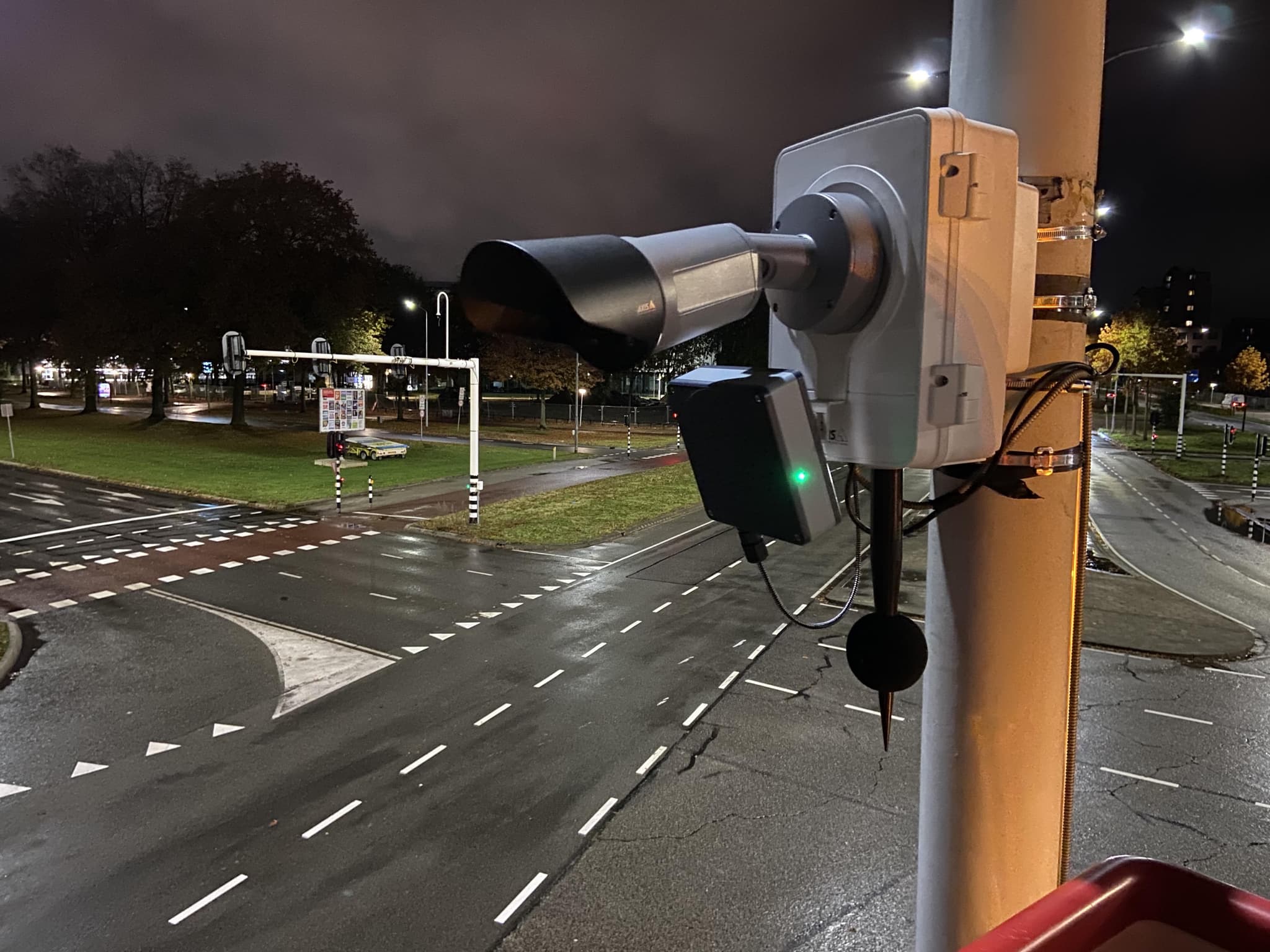
In addition to speed cameras, the Netherlands now also has noise cameras. A pilot program will soon begin in Rotterdam at four locations, where vehicles will be automatically photographed if they are too loud. Sorama’s mission is “to make the world sound better,” according to team leader Paul van Dooren. They do this not only with noise cameras in cities, but also with special systems for airports and stadiums.
You know how it goes: you’re walking peacefully through the city when suddenly a car roars past with deafening noise. It’s especially disruptive on sunny days, when more people are outside.
Fortunately, Sorama’s noise speed cameras can help. The technology is based on an acoustic camera. “It contains 64 microphones arranged in a specific configuration,” explains Van Dooren.
Although this technology has been around for some time, Sorama has made a difference by making it affordable and accessible. This means that municipalities, government agencies, stadiums, and factories now have a practical way to measure noise continuously, without invasive interventions or intensive manual labor.
‘Issue fines automatically’
The speed camera can continuously record sound. “This makes it easy to determine which vehicle was too loud, at what time, and how often this occurs. This provides municipalities with useful insights and simultaneously offers the possibility to investigate whether the technology can later be used to issue fines automatically,” explains Van Dooren.
Application in the US
Internationally, Sorama’s system is already in use, for example, in the US, where vehicles are already fined for excessive noise. In the Netherlands, the situation remains uncertain: here, it must first be determined whether the system’s evidence will be legally accepted.
Future plans: a smarter system
In the future, the system could become much smarter, explains Floris Bruinsma, an engineer at the company. Currently, it combines a noise camera with a license plate camera, whereby a license plate is only recorded if a vehicle is actually making too much noise. “The next step is to link up with the RDW. Since every car has different noise standards, the system can determine for each vehicle what is and isn’t allowed. This way, it will soon be possible to accurately determine for each vehicle whether it is actually too loud—and not just whether it exceeds a general threshold.” In addition, the company is exploring whether it can use AI to automatically recognize the type of vehicle passing by: passenger car, electric car, motorcycle, tractor, or truck. “This allows the measurements to be even better tailored, for example, because trucks are generally louder.”
Sorama is also looking into other smart city applications. For instance, the same camera can also detect sirens, making the system more multifunctional.
Rotterdam: setting an example
Not only large cities but also smaller municipalities can benefit from the noise cameras. “Rotterdam is setting an example, but it would be great if more cities followed suit,” says Van Dooren. “The idea isn’t to create a ‘Big Brother’ situation, but to use our technology to clarify who is responsible. So that real action can be taken.”
Airports and stadiums
Sorama’s mission goes beyond just noise speed cameras in the city. “At airports, for example, we measure aircraft noise. A well-known problem is the APU—that’s the engine that powers systems when an aircraft is on the ground. Often, it keeps running unnecessarily, even though the aircraft is already connected to ground power, because pilots don’t turn it off. We measure whether the APU is on or off, so airports can see exactly where things are going well and where waste or misuse is occurring.”
Sorama also conducts measurements in stadiums, such as the Philips Stadium in Eindhoven. “There, we make the enthusiasm of fans visible.” These insights help improve the experience, so that stadiums can respond intelligently to what visitors want.
Van Dooren concludes: “We are working hard to further develop these applications and thus contribute to a more pleasant living environment for everyone.”