
Noak raises €5 million for perovskite-silicon solar cells
Belgian imec spin-off Noak accelerates the industrialisation of high-efficiency tandem solar cells with backing from European investors.
Published on November 1, 2026

Team IO+ selects and features the most important news stories on innovation and technology, carefully curated by our editors.
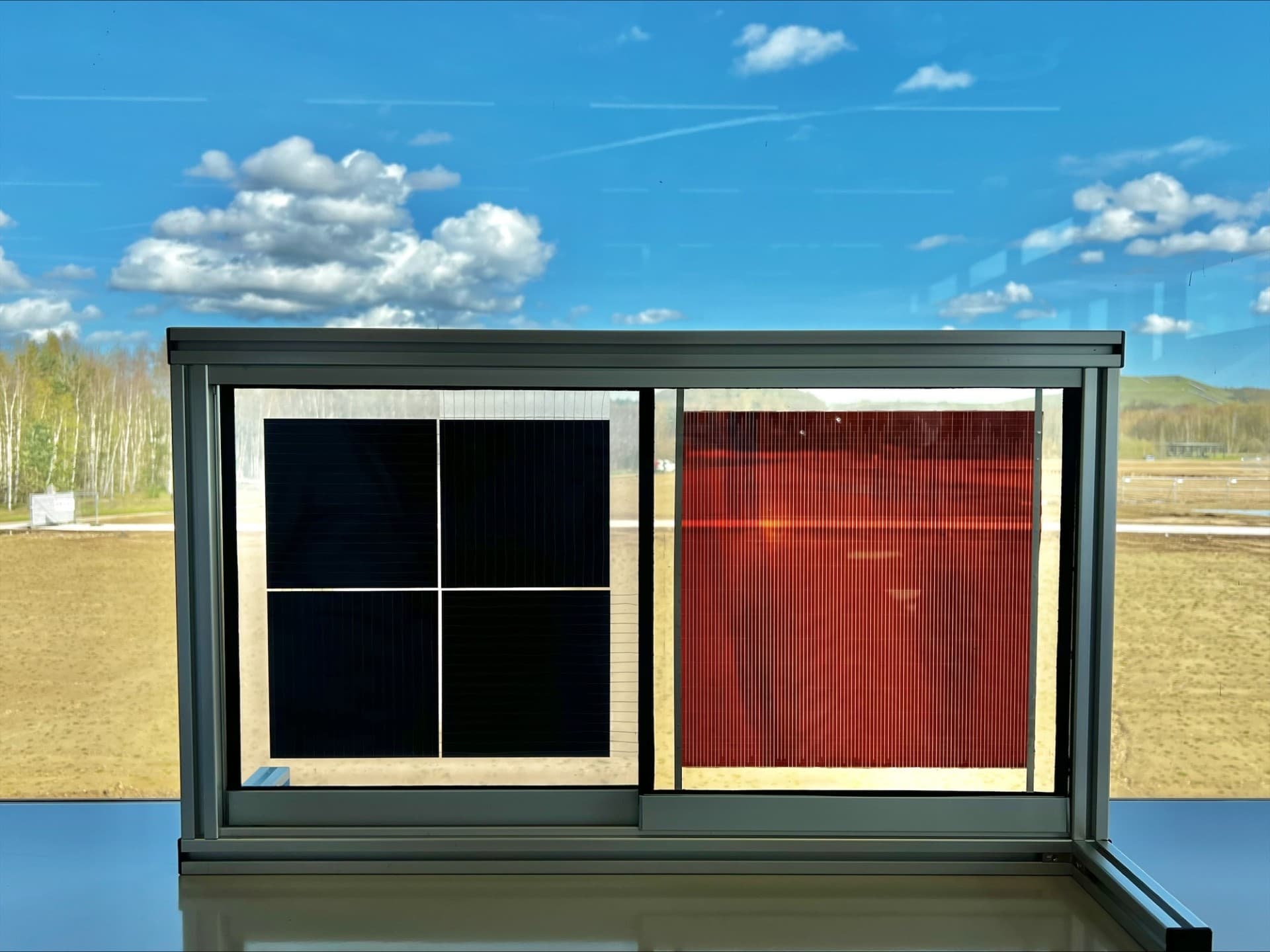
Belgian spin-off Noak, founded by imec and Hasselt University, has raised €5 million to scale up the production of perovskite-silicon tandem solar cells. The investment from the Helios Foundation, Nuhma and V2HFin aims to bring the technology, which promises efficiencies of 30–35%, to market faster. Through this move, Noak seeks to reduce Europe’s dependence on imported solar panels and build a circular value chain.
Perovskite-silicon tandem cells combine the strengths of both materials. While conventional silicon cells achieve efficiencies of 27–28%, Noak’s technology reaches 30–35%. This is because perovskite layers absorb sunlight across a broader spectrum than silicon alone. The technology is not new: imec and EnergyVille in Genk have been researching this tandem approach for a decade, supported by five years of outdoor testing data from three continents. The challenge, however, remains maintaining this efficiency at an industrial scale. Competitors such as Oxford PV (26.9% module efficiency) and LONGi (34.85% cell efficiency) show that the market is ready for this leap.
Circularity and critical raw materials
Noak focuses not only on efficiency but also on circularity and reducing dependence on critical raw materials. One innovation is a 3D-woven back-contact foil that eliminates the need for front-side metallisation. This reduces shading losses and simplifies recycling. Modules are also built from smaller subcells that can be flexibly connected in series or parallel, enabling material savings. The company uses certified recycled metal and designs its products for easy disassembly. This approach aligns with European policy goals to make supply chains more resilient.
Scaling challenges
The transition from laboratory to factory brings challenges. Long-term stability under real-world conditions is crucial: while current tests demonstrate 1,000 hours of stability, customers demand 25-year warranties. Module efficiency also often trails cell efficiency by 2–8 percentage points due to difficulties maintaining uniformity at scale. Technical constraints, such as compatibility with TOPCon silicon cells given restrictions on high-temperature processing, require targeted innovation. Nevertheless, Noak demonstrates that these obstacles can be overcome with the right infrastructure and partnerships.
European support and strategic autonomy
The investment in Noak fits within a broader European policy framework that encourages the industrialisation of advanced photovoltaic technology. In Flanders, VLAIO offers Strategic Transformation Support for major investments exceeding €3 million focused on sustainability and digitalisation, alongside R&D grants for feasibility studies. At the federal level, tax incentives include the Investment Deduction and R&D Tax Credits. At the EU level, the IPCEI programme (Important Projects of Common European Interest) supports large-scale, technologically advanced projects aligned with decarbonisation and strategic autonomy. The EU Innovation Fund finances innovative low-carbon technologies, including tandem solar cells.
Market potential
Noak has ambitious plans: over the coming years, the company aims to establish production partnerships at gigawatt scale. The technology is seen as a crucial solution for the necessary expansion of solar power to 50–100 terawatts by 2050, up from 3 terawatts in 2026. With the existing infrastructure at EnergyVille in Genk and collaborations with industrial partners, Noak aims to create a European value chain that is less dependent on vulnerable import flows. Its focus is on demonstrating long-term stability and commercial viability.