
NLR opens new test facility for hydrogen-powered flight
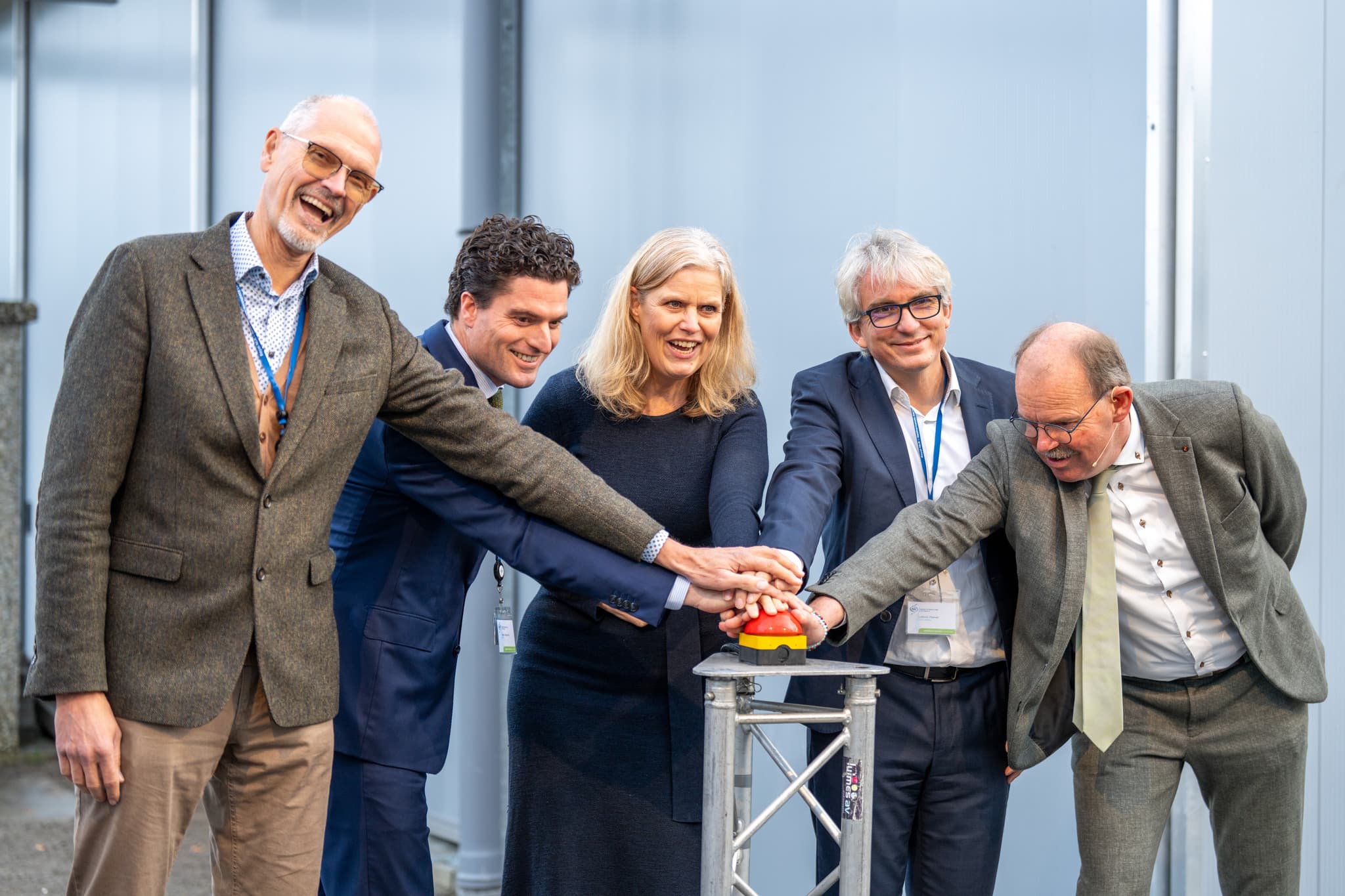
On November 28, the Netherlands Aerospace Center (NLR) opened its new test facility for hydrogen-electric aircraft propulsion systems.
Published on December 17, 2025
© Royal NLR

As Head of Partnerships, Linda liaises with new partners. She coordinates all ongoing collaborations and connects our journalistic editorial and commercial articles. She is not only the connector behind our articles, but also all of our events.
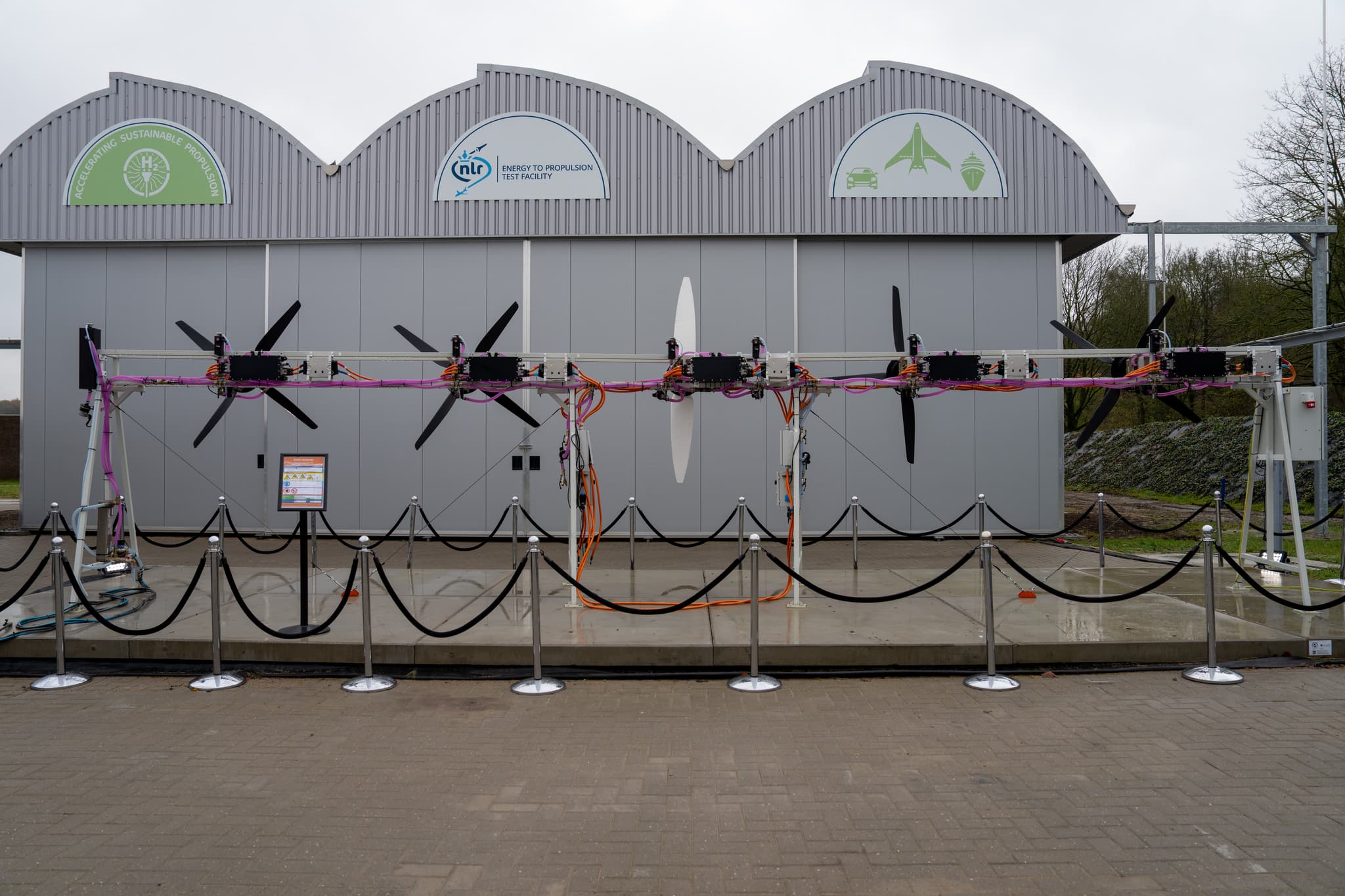
The Energy to Propulsion Test Facility (EPTF) is a unique, modular test facility where researchers at NLR (Netherlands Aerospace Center), as well as startups, small and medium-sized enterprises (SMEs), and large industrial organizations, can conduct tests. “What started as an idea in 2022 is now a reality. Not only for NLR, but also for our partners. It's fantastic to see this collaboration,” says Paul Arendsen, manager of the Structures and Evaluation department at NLR and responsible for the EPTF.
Bridge between science and practice
The EPTF supports a wide range of research projects to improve the sustainability of aircraft powertrains. “With our new test facility, we are building a bridge between scientific knowledge and its implementation in practice by companies. The facility is an important step in the innovation process,” says Martin Nagelsmit, CTO of NLR. “We need to close the gap between what is said and what is done,” he said in his keynote speech at the opening of the EPTF.
The testing facility itself is not a large building. There are no permanent walls, and even the roof consists of separate panels. “Less is more,” says Arendsen during his presentation. “This allows us to easily adapt the facility to the type of test being performed. Above all, it is an important safety condition when testing hydrogen in the facility. All the separate elements that are needed, such as sufficient energy, heat, hydrogen, and nitrogen, are, of course, available. As are all the necessary permits.”
© Royal NLR
According to Arendsen, working on sustainability addresses three critical targets. "Firstly, it contributes to climate-neutral aviation and thus to the achievement of climate goals. Secondly, it must be ‘Euro-green,’ as Arendsen puts it. “It must be possible to link cost-competitive business cases to the sustainability of aviation. Moreover, sustainability is important in the ambition of the Netherlands and Europe for greater strategic autonomy and, as a result, less dependence on other countries.”
Research and testing
The modular test facility offers space for a wide range of research projects. One focuses on manufacturing a composite hydrogen tank, while the other studies powetrain cooling systems. Components and entire aircraft systems can be tested extensively in the EPTF.
Aircraft manufacturer Airbus is conducting research into new cryogenic (extremely low-temperature) technologies at its test facility. During the opening, Ludovic Ybanez, Head of Electric Propulsion Demonstrator at Airbus UpNext, delivered a keynote address on the steps Airbus is taking toward more sustainable aviation through hydrogen. Together with stakeholders from multiple countries, they are conducting research on new aircraft powertrains and on entirely new aircraft to enable more sustainable aviation.
The opening of the test facility marks the start of additional research and, above all, greater collaboration to accelerate aviation's sustainability.
Sponsored
This story is the result of a collaboration between NLR and our editorial team. IO+ is an independent journalism platform that carefully chooses its partners and only cooperates with companies and institutions that share our mission: spreading the story of innovation. This way we can offer our readers valuable stories that are created according to journalistic guidelines.
Want to know more about how IO+ works with other companies? Click here