
‘New patent law may pose barrier for budding inventors’
The current patent law is changing. The most important change: the introduction of substantive examination. There are disadvantages to this.
Published on February 26, 2026

Our DATA+ expert and Editor-in-Chief, Elcke Vels, explores AI, cyber security, and Dutch innovation. Her "What if..." column imagines bold scenarios beyond the norm.
Applying for a patent is an important step for an inventor. You come up with a clever invention; then you don't want anyone else to run off with it. A patent protects an inventor's idea. The current patent law is now being modernized. The most important change is the introduction of substantive assessment. That sounds good, but there are also disadvantages. Ralph Stuyver, director of the Dutch Order of Inventors (NOVU) and an inventor himself, says, “It will become more expensive and the threshold for participation will rise. This may disproportionately affect private inventors and start-up entrepreneurs.”
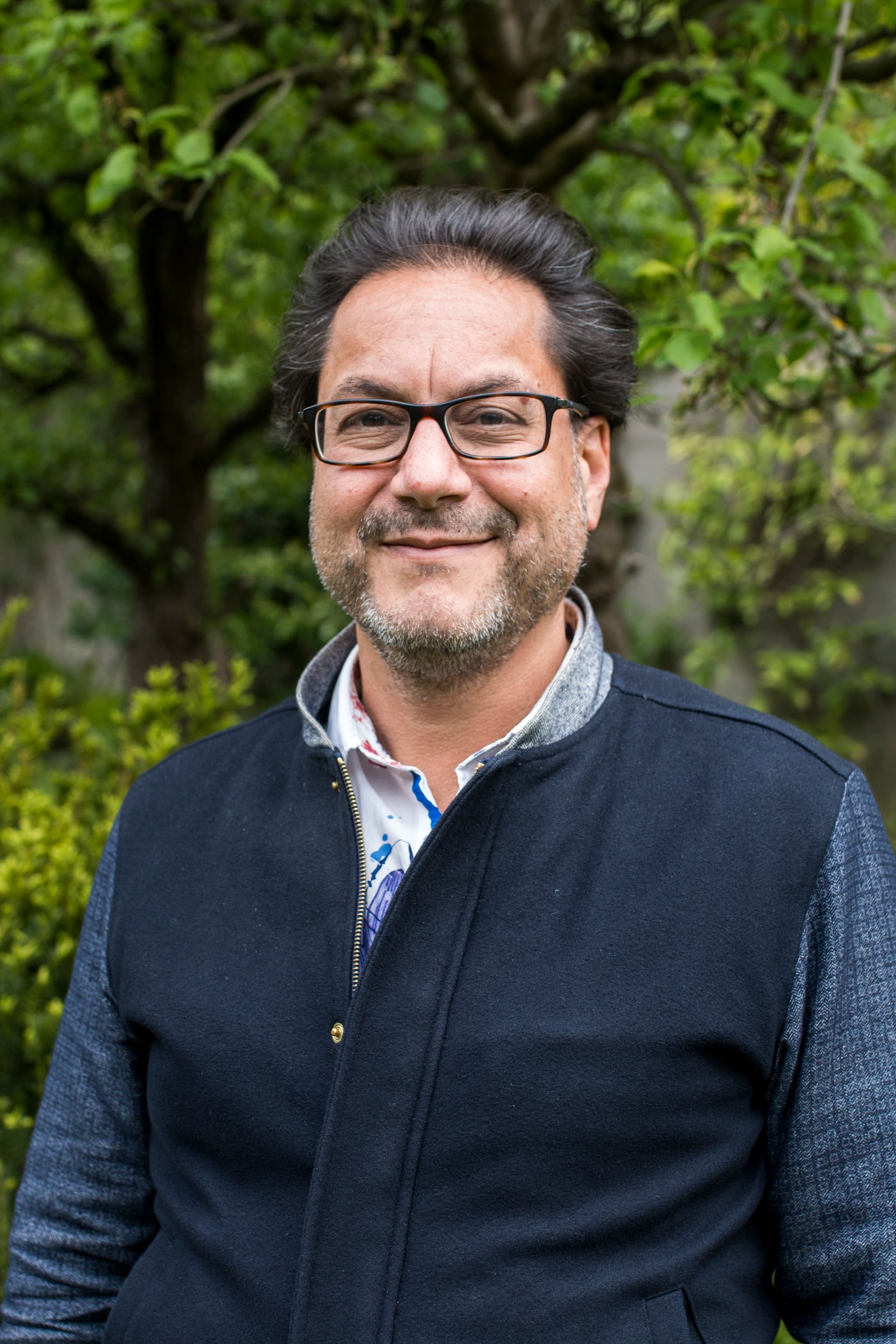
Ralph Stuyver
Entrepreneurs can protect their technical inventions with a patent. Companies that do so generate on average 28% more revenue per employee. Applying for a patent is, therefore, a crucial step for inventors and companies.
Currently, patents are granted without substantive examination. According to the Council of Ministers, this creates legal uncertainty. To address this, the Council, at the proposal of Minister Karremans of Economic Affairs, has decided to completely revise the National Patent Act. Under the new patent law, substantive examination will take place. This means that applications will be assessed more strictly in terms of novelty, inventiveness, and industrial applicability.
The NOVU was part of the committee that discussed the new National Patent Act. They sat down with major industry players, patent attorneys, and other stakeholders. “We have been involved for a long time and know exactly what to expect,” says the director. “The advantage of the new law,” he says, “is that the quality of patent applications can improve. The disadvantage, however, is that this stricter assessment may also be accompanied by higher costs, particularly for individual inventors and small entrepreneurs.”
A bottleneck for SMEs
Higher costs are not immediately a bottleneck for large knowledge institutions and multinationals. “The Netherlands has well-developed innovation hubs—think of TNO, Brainport, and the Eindhoven region—where a lot of R&D takes place and various subsidy options are available.” These channels are already well established, but individual inventors, start-ups, and SMEs with innovative ideas often fall outside them. “That is why we are committed to inclusive innovation, which also involves these smaller players.”
Vouchers: a fair chance
Stuyver is at the heart of the Dutch innovation landscape. He has been a member of the association for more than thirty years. He also holds several patents, including one for a cable reel that has sold millions of times worldwide.
Before 1995, patents were assessed much more strictly, an approach that is somewhat reminiscent of the new Dutch Patent Act that is coming into force. Stuyver also made his invention under that strict system. “I worked with a business partner who was still a student at the time. Fortunately, there was a special arrangement: a government voucher for people on limited incomes, which covered the costs of filing a patent. This allowed budding inventors, students, and small entrepreneurs to protect their ideas after all.”
With the new, ‘stricter’ law on the way, the substantive examination of patents seems to be returning to what it was before 1995, but without the vouchers. Stuyver: "Nowadays, there are still vouchers that allow small entrepreneurs, for example, to get a discount on the costs of filing a patent. However, such a discount only covers a small part of the total costs.“ It starts with thorough research into the novelty of your idea. Such a novelty search by a patent attorney alone often costs a few thousand euros. ”A voucher could offer a solution for this."
The Philips Airfryer
The NOVU therefore advocates a support scheme similar to that in place before 1995, so that small(er) inventors also have a fair chance. Stuyver predicts that this will make a difference. The NOVU, which has been in existence for more than 35 years, has now supported more than 3,500 inventors. Stuyver points to examples of successful Dutch inventors who might never have achieved a breakthrough without financial support. Fred van der Weij, inventor of the Philips Airfryer, had a brilliant idea, but limited resources at the time. “Under the new system, he might not have had the opportunity to apply for his patent. Now, more than a billion Airfryers have been sold worldwide – a huge economic contribution.”
Hope for change
The bill is currently before the Council of State. In the meantime, NOVU is in talks with the Netherlands Patent Office, RVO, and the Ministry of Economic Affairs about the new law. Stuyver hopes this will lead to much-needed changes. “Without vouchers, starting inventors may drop out – and we may lose valuable innovations for the Netherlands.”