
New concrete structural system aims to reduce CO₂ emissions
“A traditional hollow-core slab has a CO₂ footprint of about 37 kilograms per square meter. Here, that footprint is around 19 kilograms.”
Published on March 13, 2026

Thies van der Wal - VBI, Dick van Ginkel - TBI WOONlab, Niki Loonen - TBI

Team IO+ selects and features the most important news stories on innovation and technology, carefully curated by our editors.
In Roosendaal, four homes are being built using a new prefab concrete structural system that can reduce CO₂ emissions by up to 75 percent compared to traditional concrete construction. The project aims to demonstrate that significant sustainability gains are possible even when building with concrete.
The homes are constructed using the so-called NEXT level structural system, a new concept developed by TBI WOONlab, Voorbij Prefab, VBI and Hazenberg. The Beekhof project in Roosendaal serves as the first real-world demonstration.
The idea emerged in 2024 during a meeting of the TBI Klimaattrein initiative, where several parties discussed how to make concrete construction more sustainable. What started as an informal conversation evolved into a joint development combining multiple innovations in concrete production.
“This first NEXT level structural system in the Netherlands is unique,” says Dick van Ginkel, technical innovation manager at TBI WOONlab. “Several concrete innovations come together here, including impakt concrete and nearly cement-free hollow-core slabs, allowing us to achieve a significant CO₂ reduction.”
New materials, lower emissions
The main gains come from the use of alternative materials. Cement substitutes, biochar - a form of carbon storage - and strongly reduced cement use in the floors significantly lower the material-related CO₂ footprint.
According to Wim Jansze, director of innovation, sustainability and technology at VBI, the impact is clearly visible in the floors. “A traditional hollow-core slab has a CO₂ footprint of about 37 kilograms per square meter. With the product we have developed, that footprint is around 19 kilograms.”
From pilot to broader application
The four homes in Roosendaal serve as the first demonstration of the concept in practice. According to the partners involved, the structural system can be integrated relatively easily into existing prefab housing concepts.
“Ideally, we would like to see this become a blueprint,” says Van Ginkel. “That we can apply this solution as a standard in our housing concepts and truly reduce the sector’s CO₂ footprint.”
However, he notes that wider adoption will require more regulatory room for innovation. New materials often need to be approved separately for each project or municipality, which can slow down implementation.
With the Roosendaal project, the partners hope to show that the concrete sector can play an important role in making construction more sustainable, and that substantial CO₂ reductions are already achievable today.
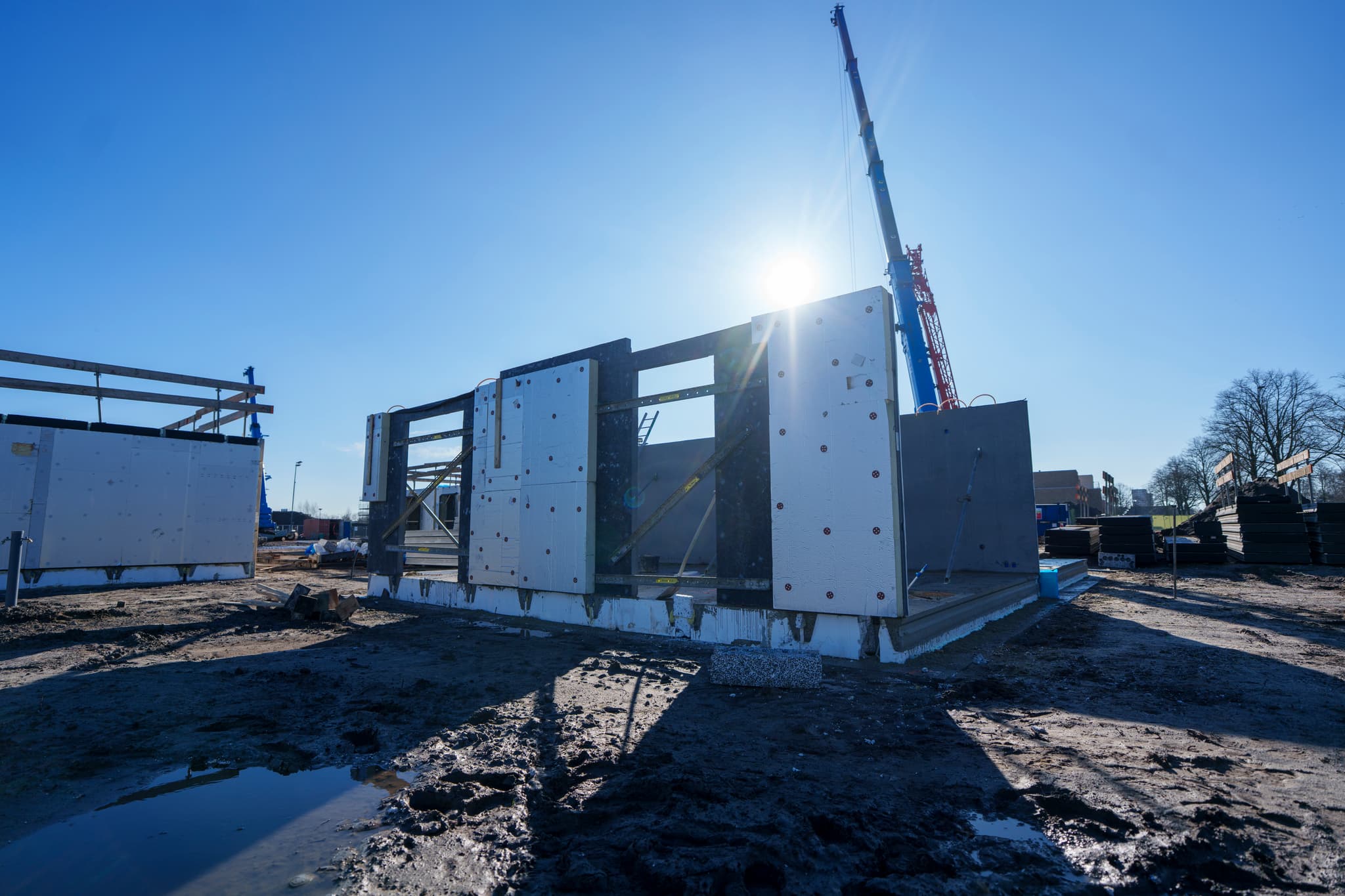
NEXT level casco in Roosendaal.