
New bionic foot makes walking effortless for amputees
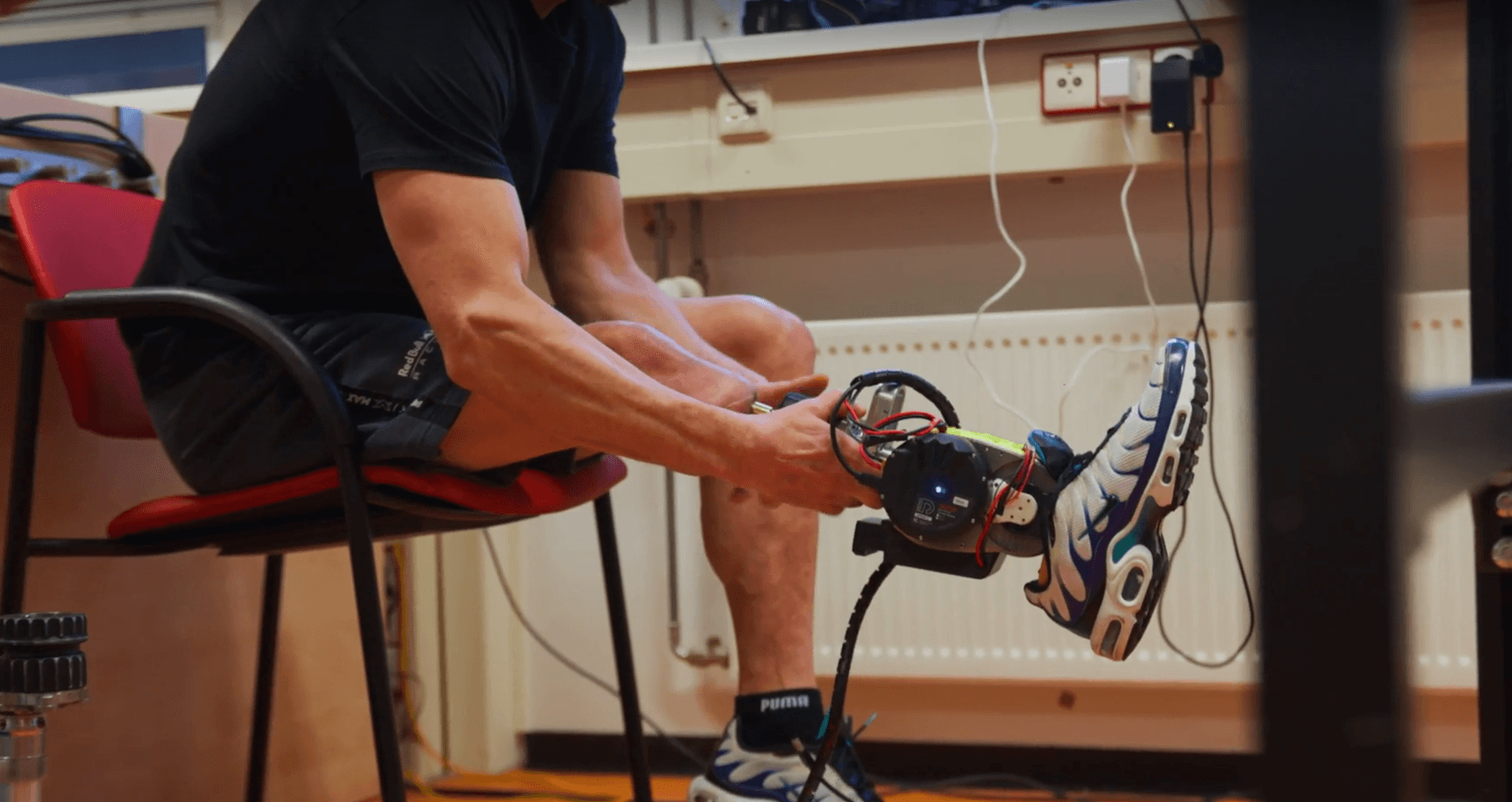
Dutch researchers have built a bionic foot that makes walking feel automatic again — just like it does for people without limb loss.
Published on March 19, 2026
© Radboudumc

Team IO+ selects and features the most important news stories on innovation and technology, carefully curated by our editors.
A group of Dutch researchers developed a new bionic foot that mimics the natural movement of human walking. The 'Autonomous leg' system allows users to walk smoothly and effortlessly. Initial tests have shown the bionic foot can rhythmically activate muscles in the lower leg, reducing fatigue and improving the walking experience for amputees.
The project, a collaboration between Radboud University Medical Center (Radboudumc) and the University of Twente, aimed to create a system that could automatically perform rhythmic walking movements, something opposite to what happens with passive prostheses.
"For people whose feet have been amputated, there are mainly passive prostheses and prostheses that incorporate pre-set rules for the movements that can be made with them," said Massimo Sartori, professor of neuromuscular robotics & engineering at the University of Twente. "We want to create a model that mimics natural foot movement."
Drawing inspiration from the spinal cord
Researchers are drawing inspiration from the spinal cord's central pattern generators. Foot movement is driven by the spinal cord, which contains specialized central pattern generators. Once these are activated, they move to the rhythm they 'know', such as walking. Because it is a 'worn pattern', it is an automatic movement that requires little thinking. In contrast to playing the piano, for example, where the brain must constantly cooperate actively.
To mimic that motor control, the researchers created a control system for a bionic foot. Sartori: "That allows us to give the right signals to drive the muscles at the front and back of the leg rhythmically and in a repeating pattern, so that the user can walk in a pleasant, relaxed way."
Promising results
Initial tests involved individuals with a bionic foot walking on a treadmill at two different speeds to assess how well the central pattern generators in the spinal cord can control the actuation of the bionic foot. These tests demonstrated that the system could rhythmically control the muscles in the lower leg, leading to smoother, less strenuous walking that can reduce cognitive load and fatigue for users.
"We want to see if we can replicate the more automated role of the spinal cord in the control of the legs during rhythmic and cyclic movements such as walking," stated Ruud Leijendekkers, associate professor and physiotherapist at Radboudumc. "If, indeed, the brain no longer plays a role in this task, it would prevent user fatigue because the brain is less stressed."
A system that can work everywhere
The next crucial step is to develop a fully stand-alone system with integrated sensors, a battery, and a mini-computer to enable testing in real-world environments. Making the system wireless is essential for users to walk freely. Leijendekkers emphasized that testing the prosthesis outside the lab, whether at home, on the street, or in the forest, is key to proving its added value over existing passive prostheses. Once the prosthesis can operate independently, users can practice with it outside the laboratory, which is an important step towards certification as a medical device.
This research is part of the European SimBionics project, a collaborative effort involving Ottobock, Aalborg University, and the Roessingh rehabilitation center. The project is also a part of the HealthTech Nexus, a strategic collaboration between Radboudumc and the University of Twente. Massimo Sartori and Ruud Leijendekkers are leading this project, focusing on addressing unmet healthcare needs.