
Netherlands joins Pax Silica amid ASML export control row
The Netherlands joins the US-led Pax Silica alliance to secure chip supply chains amid rising geopolitical tensions.
Published on June 24, 2026
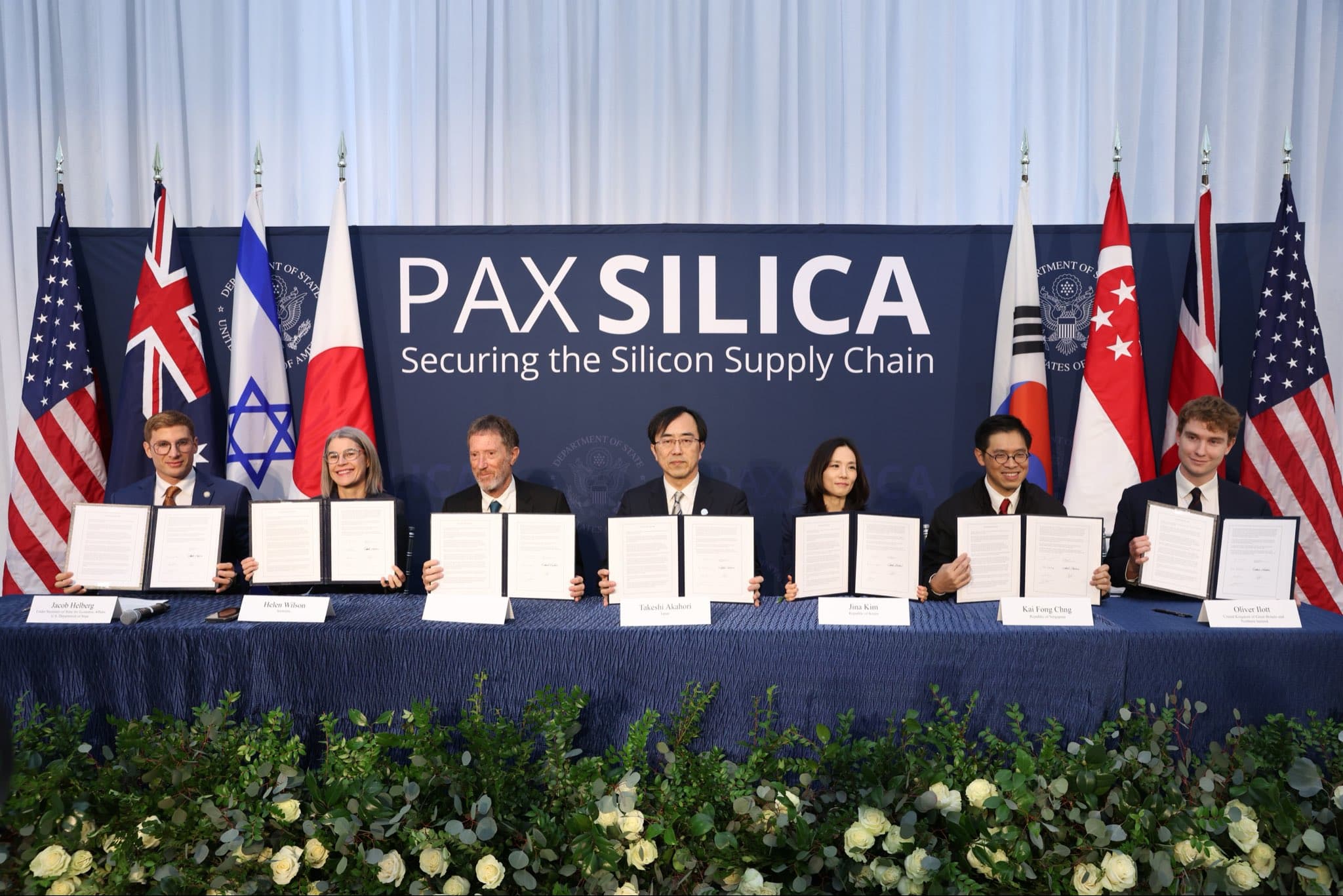
© X - Under Secretary of State Jacob S. Helberg

Team IO+ selects and features the most important news stories on innovation and technology, carefully curated by our editors.
The Netherlands joins Pax Silica, an alliance led by the United States on semiconductor and AI technology. Dutch Foreign Trade Minister Sjoerd Sjoerdsma announced the country's participation during a high-profile diplomatic visit to Washington, D.C.
The Pax Silica alliance brings together key global technology leaders, including the United States, Japan, South Korea, and the European Commission. The coalition aims to secure the entire semiconductor value chain, from raw materials to advanced AI hardware. This collective agreement seeks to create a more resilient supply chain and establish common standards for emerging technologies to counterbalance China's influence.
“The Netherlands plays a leading and unique role in the chip industry worldwide. Pax Silica offers opportunities for the Dutch economy and strengthens the Netherlands' trading position. Within Pax Silica, we work with other countries on our economic security in a geopolitically troubled world,” commented Minister Sjoerdsma.
Balancing trade and geopolitics
Joining Pax Silica comes at a sensitive time for the Netherlands amid a delicate diplomatic path with the US and its ties with China. Beijing is a vital market for its semiconductor company, primarily ASML. To this end, the U.S.-Led export restrictions imposed on China affect the company's revenue and the broader Dutch economy.
To exemplify the tensions at stake, last week, the U.S. Commerce Secretary Howard Lutnick told ASML that Washington fears one of its top-tier chipmaking machines may have ended up in China. The tech company denied, saying it never shipped one of its extra ultraviolet (EUV) machines to China. EUV machines are the only tools in the world capable of printing the smallest, most advanced circuit patterns onto silicon.
While the United States pushes for tighter export controls on advanced technology, the Dutch government seeks to protect its crown jewel from excessive foreign interference. Pax Silica provides a structured framework to address these competing pressures. However, participation does not immediately resolve the underlying tensions between national economic interests and international security demands.
The friction of the Match Act
A primary source of tension is the proposed U.S. legislation known as the Match Act. This law would grant the American government extraterritorial power to restrict technology exports from third-party nations. Specifically, the U.S. aims to limit ASML's ability to sell and service its deep ultraviolet (DUV) lithography machines in China.
Minister Sjoerdsma traveled to Washington to lobby directly against this legislation, meeting with U.S. officials like Commerce Secretary Howard Lutnick and Deputy Treasury Secretary Francis Brooke. The Dutch government has repeatedly objected to the Match Act, viewing it as an infringement on its strategic autonomy. Pax Silica does not resolve this legislative dispute. Instead, the alliance serves as a diplomatic forum for the two nations to negotiate. The Netherlands continues to oppose unilateral U.S. export controls while using the alliance to show its commitment to collective security.
Opportunities for Dutch innovation
Despite the geopolitical friction, Pax Silica offers significant benefits for the Dutch technology ecosystem. The alliance is expected to open new avenues for research, development, and cross-border investment. Companies like ASM International and the integrated photonics initiative, PhotonDelta, stand to gain from closer collaboration with American, Japanese, and South Korean partners. These firms specialize in advanced chip materials and next-generation optical chips, which are critical for future AI infrastructure.
While the United States has established a 250-million-dollar Pax Silica Fund to support infrastructure and critical minerals, the alliance itself does not impose direct financial obligations on the Netherlands. Participation is based on a non-binding declaration rather than a rigid treaty. This flexible structure allows the Netherlands to coordinate on supply chain security and export controls without committing to mandatory financial contributions or legally binding restrictions.
The European Commission, Germany, and Greece have also joined the initiative. U.S. Under Secretary of State Jacob Helberg told the Financial Times that Argentina, Chile, Costa Rica, Kazakhstan, and Panama would also join the initiative this week. By coordinating export controls, research funding, and raw material sourcing, the alliance members hope to prevent future chip shortages and secure technological leadership. For the Netherlands, the next steps will involve translating this political alignment into practical benefits for its domestic tech sector.