
Netherlands is a leader in imaging, but scaling up is a challenge
The Netherlands is among the global leaders in imaging technologies, but scaling up remains a challenge.
Published on March 24, 2026

An overview of SKA
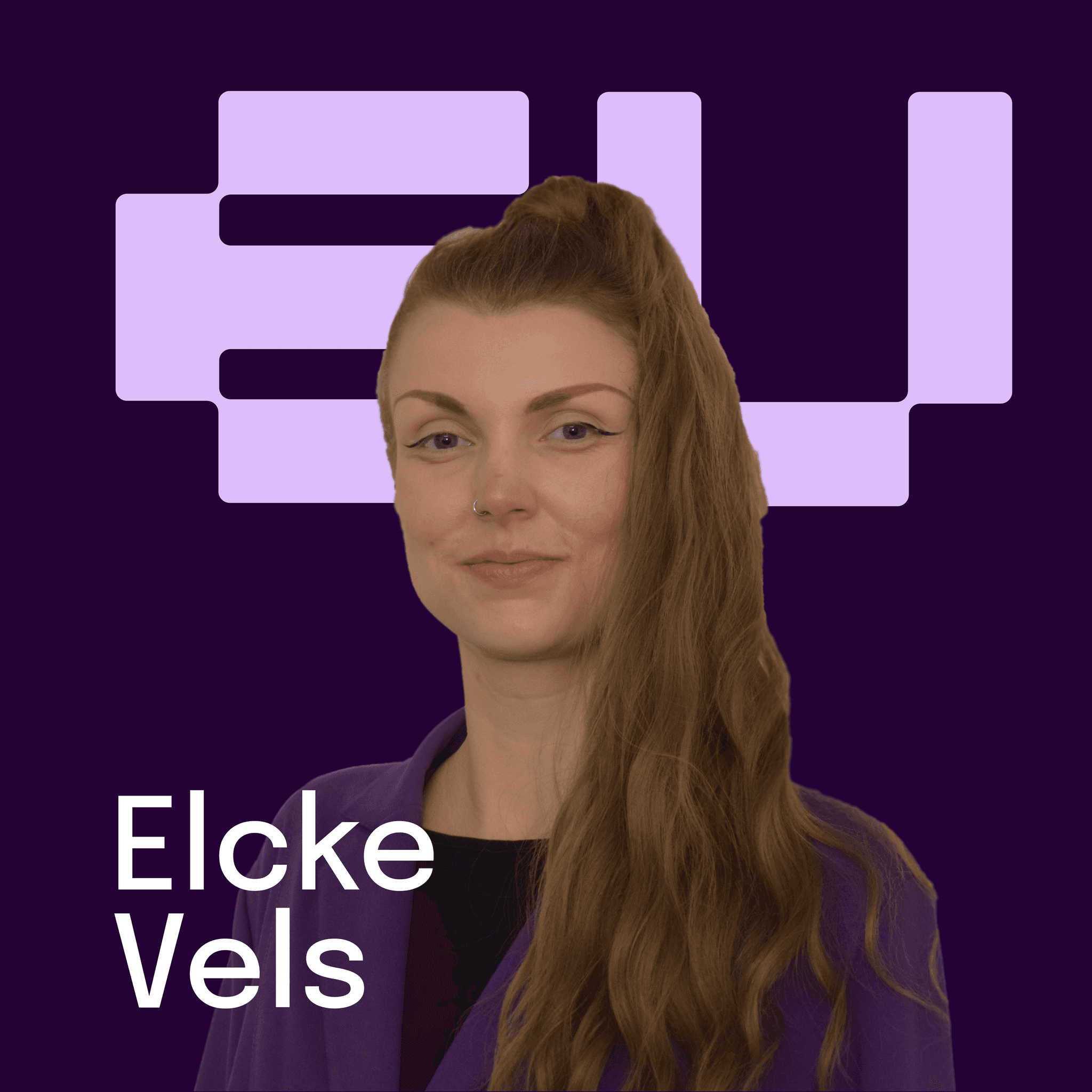
Our DATA+ expert and Editor-in-Chief, Elcke Vels, explores AI, cyber security, and Dutch innovation. Her "What if..." column imagines bold scenarios beyond the norm.
The Netherlands is among the global leaders in imaging technologies: technologies that create, analyze, and interpret images for science and industry. For example, Radboudumc ranks third worldwide in medical imaging, behind Harvard and Stanford. ASML and Philips are global leaders in the application of advanced imaging in sectors such as semiconductors and healthcare. Yet within the country’s borders, there is a bottleneck: scaling up research to market applications remains challenging. “It’s time to bridge the gap,” says Roelien Attema, who serves on the Holland High Tech program council in the Imaging Technologies innovation domain and is also director of R&D at ASTRON.
The world can no longer do without imaging. In healthcare, X-rays and MRIs are essential. Attema begins: “New forms of imaging enable faster and better diagnoses and also support innovative treatments. This directly improves the quality of care, while simultaneously increasing efficiency and helping to better manage staff shortages and rising costs.”
Defense and security also benefit: “Situational awareness—knowing what’s happening around you—is essential. Advanced imaging technologies make that information available faster and more accurately.” In the semiconductor sector, they are indispensable for quality assurance. The importance of remote sensing is also rapidly increasing in agriculture, air quality, and climate monitoring.
Imaging also plays a key role in science. As R&D director at ASTRON, Attema knows this better than anyone. “Imaging in the radio spectrum helps us answer several fundamental questions.” As an example, she cites LOFAR: ASTRON’s radio telescope. “Because we use low radio frequencies instead of visible light, we get a completely different picture of the universe, including the most energetic processes such as jet flows from supermassive black holes and extreme star formation.”
There is also close international collaboration in this field. Attema: “The Square Kilometre Array (SKA) will be the largest radio telescope in the world and is currently being built in South Africa and Australia. The project builds, among other things, on LOFAR and involves strong Dutch participation in technology and expertise.” The SKA consists of hundreds of thousands of antennas for low frequencies and hundreds of dishes for higher frequencies. Together, they generate enormous amounts of data. This allows scientists to study the early universe, including the first stars and galaxies.
Imaging technologies: a key technology in the Netherlands
In short: imaging is everywhere. It is therefore not surprising that the National Technology Strategy (NTS) has designated imaging technologies as one of the priority key technologies. The key technology is broadly defined in the NTS. It certainly isn’t limited to what we see with the naked eye, Attema explains. “It spans the entire electromagnetic spectrum—from X-rays and microwaves to radio waves—for which you need specialized sensors, cameras, and telescopes.” Nor is it just about hardware, she continues. “Behind every image lies an entire processing chain: software that converts, analyzes, and ultimately visualizes data. That combination of advanced hardware and smart processing forms the core of imaging technologies.”
Dutch science and industry: leading the way
The Netherlands makes an exceptionally strong contribution to imaging technologies, both scientifically and industrially. For example, 3.5% of the world’s top 1% publications and 5% of patent citations come from Dutch institutions. The four technical universities form a solid foundation for knowledge development. Radboudumc ranks third worldwide in radiology, nuclear medicine, and medical imaging, behind Harvard and Stanford.
The Netherlands also has a strong reputation in the industrial sector. “Just look at the Dutch semiconductor industry,” says Attema. “With players like ASML, which makes extensive use of imaging, the Netherlands holds a unique position that is leading not only in Europe but globally.”
Connections are also forming within the Holland High ecosystem that ensure the Netherlands remains among the top players, Attema explains: “because different application domains intersect there, whereas that doesn’t normally happen naturally.” An example of a program within Holland High Tech where imaging technologies play a leading role is SENSEIS. Nikhef (the National Institute for Subatomic Physics, part of NWO-I) and Innoseis Sensor Technologies are working closely together on this. They are developing ultra-sensitive MEMS accelerometers for precision navigation, seismic research, and geothermal energy.
Scaling up: a major challenge
According to Attema, such projects, where science, industry, and government come together, offer significant added value for the Netherlands. She notes that scaling up research to market applications remains a challenge in the Netherlands. Bottlenecks such as scalability and a lack of testing facilities hinder the country’s innovation capacity. TNO CEO Tjin-A-Tsoi previously noted that the innovation chain in the Netherlands stalls in the later phases. The Draghi report also highlights this as a problem—not only in the Netherlands but across Europe: of the 50 leading technology companies, only 4 are from the EU.
Attema: “Universities often develop innovative ideas and breakthroughs, but companies need solutions that are immediately applicable. It is a gap that must be bridged. That is why you see that virtually all innovation programs, within Holland High Tech but also beyond, place a strong emphasis on public-private partnerships.” According to Attema, we must therefore fully commit to this in the future. “Time to bridge the gap.”
Sponsored
This story is the result of a collaboration between Holland High Tech and our editorial team. IO+ is an independent journalism platform that carefully chooses its partners and only cooperates with companies and institutions that share our mission: spreading the story of innovation. This way we can offer our readers valuable stories that are created according to journalistic guidelines.
Want to know more about how IO+ works with other companies? Click here