
Musk vs EU: Who sets the rules in our digital living room?
Elon Musk vs EU: A €120M clash over digital rules. Who controls the internet—billionaires or democracies?
Published on January 8, 2026
© Alexander Shatov - Unsplash
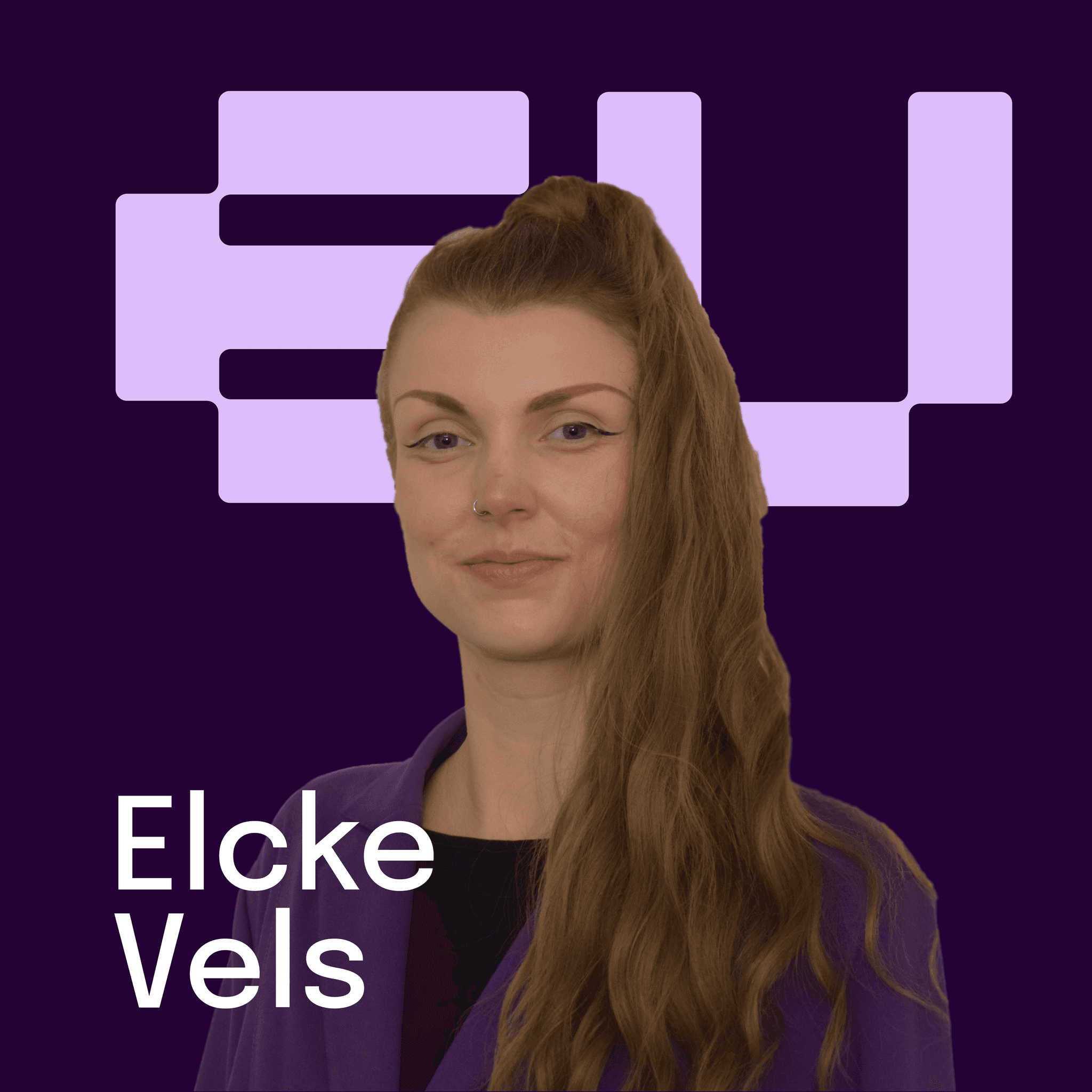
Our DATA+ expert and Editor-in-Chief, Elcke Vels, explores AI, cyber security, and Dutch innovation. Her "What if..." column imagines bold scenarios beyond the norm.
Elon Musk recently sent a message to the world: the European Union should be dismantled. This call did not come out of nowhere. The European Commission had just imposed a €120 million fine on X (formerly Twitter). This incident marks a new low in the relationship between Big Tech and European regulators, highlighting an ideological conflict over who determines the rules of the internet: billionaires or democracies.
On his own platform, X, Musk advocated for the dissolution of the European Union, arguing that national governments can better represent their citizens than the institution in Brussels.
This appeal fits a pattern in which Musk positions himself as a defender of free speech against what he perceives as censorship and government interference. According to him, the penalty is a targeted attack on him and his companies, rather than a mere business correction. He has received support from prominent American political figures, including U.S. Secretary of State Marco Rubio and Andrew Puzder.
A new constitution for Europe
The €120 million fine is not arbitrary. It is the first financial sanction issued under the Digital Services Act (DSA), the new constitution for the internet in Europe.
The European Commission identified three specific violations that undermine the core of X’s business model and its reliability. The most notable issue concerns the "blue checkmarks." Previously, a blue checkmark guaranteed that an account belonged to a verified person or official entity. Under Musk’s leadership, this has become a paid subscription—anyone who pays receives a checkmark. The EU rules that this misleads users about the authenticity of senders.
Additionally, X falls short on transparency. The platform is required by law to provide insight into who places advertisements. The current ad database on X is deemed unreliable and poorly searchable by Brussels, making it impossible for watchdogs to monitor hidden political influence or fraud.
A third pain point is the lack of access to data for scientific research. X creates barriers for researchers who want to analyze public data to map disinformation campaigns, for example. By blocking this access, X deprives society of visibility into the risks posed by the platform. The fine is thus a penalty for deliberately creating a "black box."
Contrast with TikTok
Interestingly, there is a contrast with other tech giants. Around the same time, TikTok faced similar issues with its ad archive. However, the Chinese platform chose to compromise, adjusted its systems, and thus avoided a fine. This shows that the EU is not inherently seeking conflict or penalties but compliance with the rules.
Who sets the rules?
The clash between Musk and the EU is about more than just checkmarks and fines. It touches on the core of European autonomy. The question at hand is simple: Who sets the rules in our digital living room? Is it a democratically elected legislator or a commercial company from the United States?
Musk views European regulations as a restriction on his freedom and on his platform's. He sees the DSA as a tool for censorship and government control. In Europe, legislation serves to protect citizens from the arbitrariness of algorithms and the power of monopolies.