
MMC first hospital to offer wireless monitoring premature babies
Máxima MC (MMC) is the first hospital to routinely use the innovative Bambi Belt as part of its standard care.
Published on March 17, 2026

Team IO+ selects and features the most important news stories on innovation and technology, carefully curated by our editors.
Máxima MC (MMC) is the first hospital to systematically use the innovative Bambi Belt as part of routine care for premature babies. The wireless sensor belt will now be used as standard for all children born before 29 weeks of gestation. With this move, MMC is replacing traditional adhesive electrodes, which regularly cause skin irritation and distress in this vulnerable group.
Less stress, more closeness
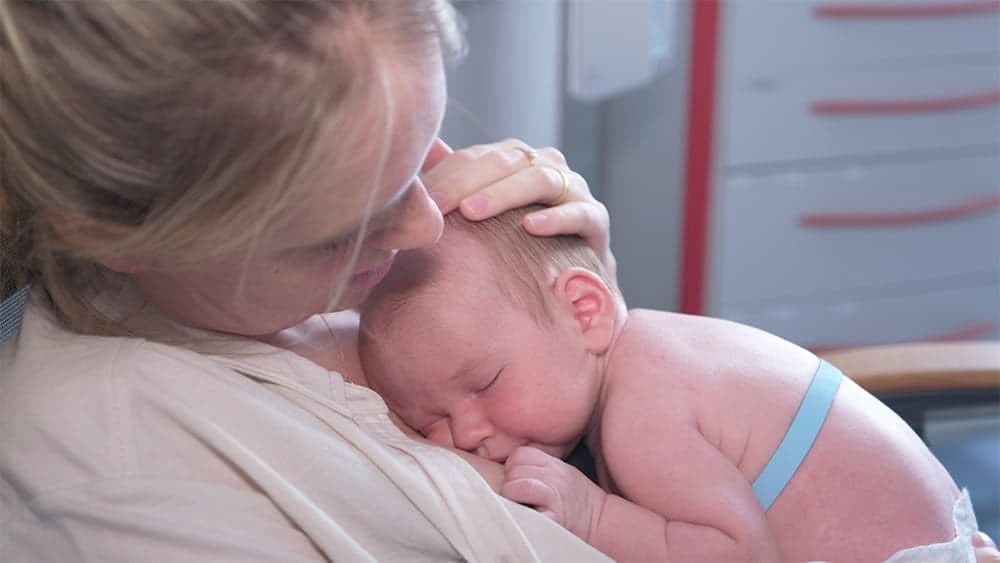
The skin of very premature babies is delicate. Adhesive electrodes can irritate or damage the skin, and the wires can get in the way when a baby lies on them. The Bambi Belt offers a gentler alternative: a soft, flexible band that monitors heart activity and breathing completely wirelessly, without adhesive electrodes. This reduces the burden on the skin and allows the baby to rest more peacefully.
The fact that the system uses no wires or adhesive pads also makes skin-to-skin contact easier and safer. Parents can lift and hold their baby more easily, without fear of pulling anything loose. That extra closeness provides noticeably more confidence and peace of mind during an already stressful period. Neonatologist Ellen de Kort emphasizes the impact on care: “With these children, we want to avoid any stimulus that isn’t strictly necessary. The Bambi Belt helps us promote calm and bring parents closer to their child, without compromising on safety and reliability.”
Innovation was born at MMC
The widespread use of the Bambi Belt is the result of seventeen years of innovation, research, and collaboration. In 2010, Máxima MC, in collaboration with Eindhoven University of Technology (TU Eindhoven), launched a doctoral research project on the first version of the technology: the Smart Jacket. This research was led by neonatologist and professor Dr. Sidarto Bambang Oetomo, who later founded Bambi Medical to further develop the technology into a certified medical product. With the introduction of the Bambi Belt, the technology is now gaining a permanent place in standard care at the very same hospital where it was first conceived.
The Bambi Belt has been extensively tested in daily practice over the past few months. The results were positive: the belt is reliable and less stressful for babies. That is why the Bambi Belt has recently been adopted as standard practice for newborns born before 29 weeks of gestation. These infants require the most intensive and prolonged monitoring and therefore benefit the most from this less stressful form of care.