
Long-term energy storage for the Dutch energy system
The TNO-led project aims to contribute to solutions for grid congestion, price volatility, and the mismatch between supply and demand.
Published on February 14, 2026

Team IO+ selects and features the most important news stories on innovation and technology, carefully curated by our editors.
The RenewaFLEXNL consortium is launching a three-year project in which 17 partners from across the energy value chain will collaborate to integrate long-duration energy storage into the Dutch energy system. The project, coordinated by TNO, aims to address grid congestion, price volatility, and the growing mismatch between renewable energy supply and demand.
Technologies for long-duration energy storage enable storing renewable energy for 8 to 100 hours and its flexible deployment. This helps prevent the curtailment of renewable generation and supports a more stable energy supply. Iratxe Gonzalez-Aparicio, Program Manager System Transformation at TNO: “RenewaFLEXNL focuses on one of the most urgent challenges of the Dutch energy transition: how to safely and affordably integrate large volumes of renewable energy into an already overloaded system. By combining technology development with real-world cases and system analysis, we are making long-duration storage truly scalable for the Netherlands.”
Storage is essential
“Long-duration energy storage is becoming increasingly important,” says Jeroen Neefs, Director of Energy Storage NL (ESNL). “We already see that grid congestion in the Netherlands is lasting longer and that security of supply is starting to become an issue, making multi-hour storage necessary. It is important that we continue to develop LDES (long-duration energy storage) technologies on the one hand, and create market incentives on the other to establish a well-functioning LDES market. ESNL is pleased to be a partner in working together on these necessary conditions.”
TU Eindhoven will use and further develop coordination mechanisms and analytical tools for regional energy system integration. “At TU/e, we aim to develop a standard simulation suite based on Digital Twins to analyse system integration cases such as those in RenewaFLEXNL,” says Koen Kok, Professor of Intelligent Energy Systems at Eindhoven University of Technology (TU/e). “This project is an important step in that direction.”
Maintaining balance
The growing share of wind and solar energy in the Dutch energy system is making it increasingly difficult to balance supply and demand. As one of the largest energy companies in the Netherlands, Vattenfall has a responsibility to provide affordable energy where and when it is needed. Storage is therefore playing an increasingly important role in ensuring the affordability and reliability of the energy system.
Three Dutch pilot projects
RenewaFLEXNL is developing three complementary solutions — electrochemical, thermal, and iron-air — and will test these in real-world cases that reflect typical Dutch system challenges:
- Port of Rotterdam: integration of storage with offshore wind to supply green electricity and heat to energy-intensive industry.
- De Kwakel: use of heat and electricity from energy storage to make greenhouses less dependent on gas-fired combined heat and power (CHP).
- Altena: a combination of renewable generation, energy storage, electric truck charging, and heat supply for greenhouses and local users.
The pilots will examine how long-duration energy storage can reduce congestion, improve the use of renewable energy, and strengthen regional energy security.
The consortium is exploring three solutions:
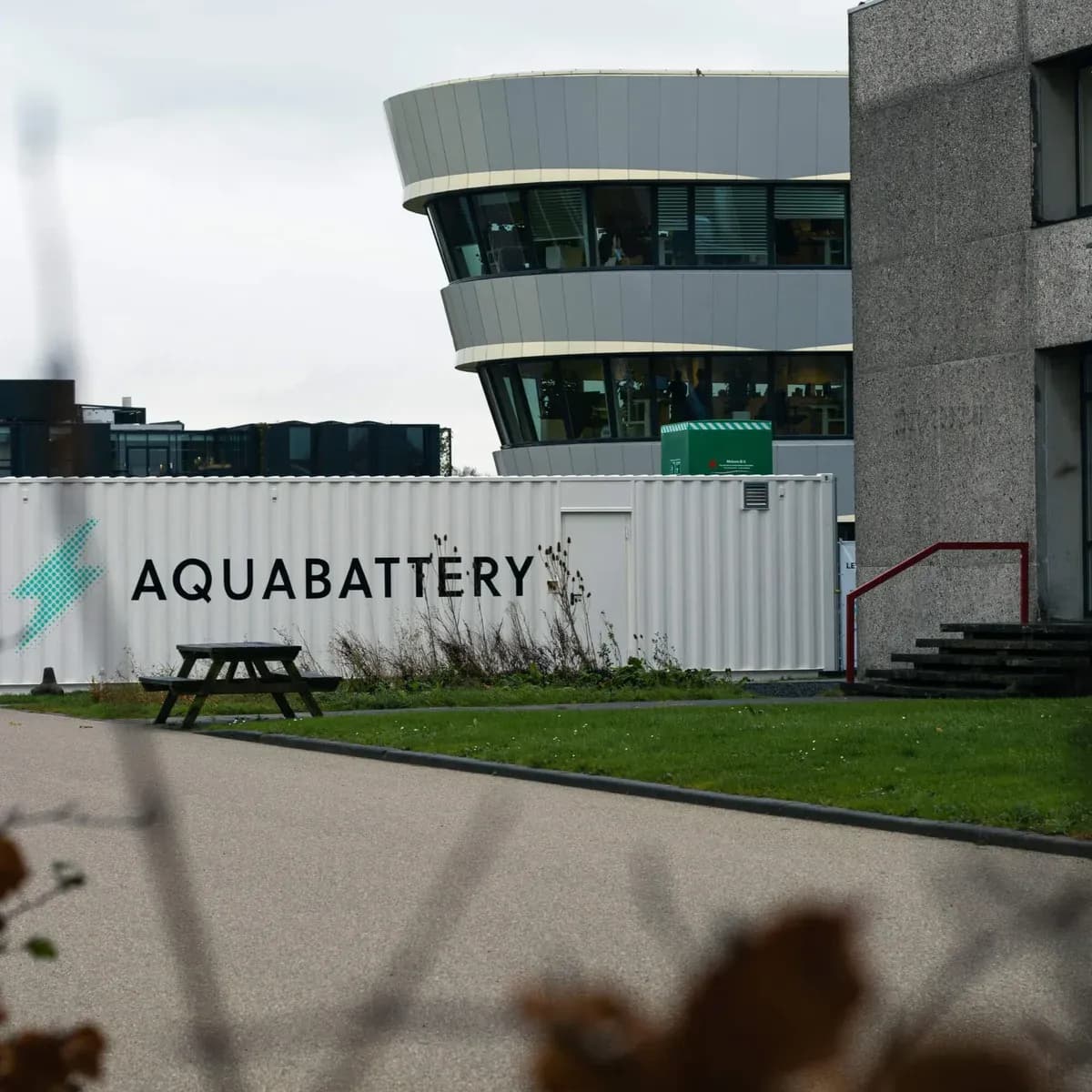
- Aquabattery (electrochemical): scalable acid-base flow battery based on saltwater.
- ORE Energy (iron-air): multi-day storage via reversible iron oxidation, suitable for grid stability and cost-efficient flexibility.
- BB1 Project (thermal & electric hybrid): heat pumps, water-based thermal storage, and sodium-ion batteries with smart control.
Consortium
The project is carried out by a broad partnership including: TNO (coordinator), TU/e, DNV, Vattenfall, Vopak, Nobian, Stedin, Aquabattery, ORE Energy, BB1 Project, HilverdaFlorist, Butterfly Orchid, Emmett Green, EFS, Ecomatters, New Ground Law, and Energy Storage NL. Sounding-board partners and stakeholders include TenneT, Alliander, Enexis, the Port of Rotterdam Authority, Glastuinbouw Nederland, and representatives from industry and transport.