
LiS and Summa scale up precision craftsmanship in Brainport
“When enrolment has grown and we are delivering the right skilled professionals for industry, then we will have accomplished our mission.”
Published on October 2, 2026
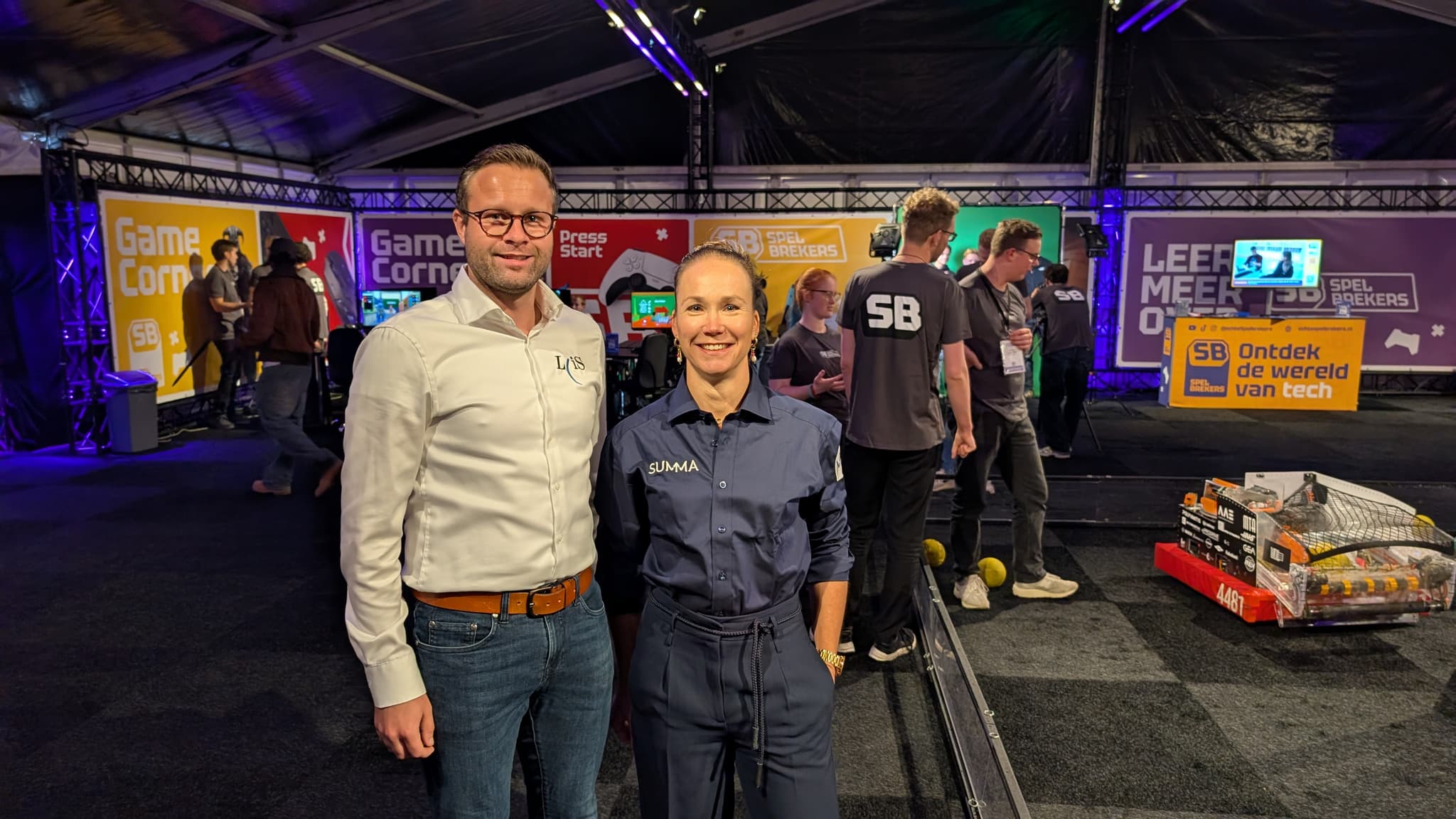
Thijs Pernot (LiS) and Patricia van der Linden (Summa) at the Education Fair in Veldhoven © IO+
Bart, co-founder of Media52 and Professor of Journalism oversees IO+, events, and Laio. A journalist at heart, he keeps writing as many stories as possible.
The Netherlands has a critical shortage of skilled professionals who can manufacture, measure and assemble with micrometre precision. To prevent innovations from getting stuck on the drawing board, the Leidse Instrumentmakers School (LiS) and Summa in Eindhoven are joining forces. From the coming academic year, Brainport Eindhoven will have a fully fledged instrument-making programme under the Summa banner, with the proven Leiden standard as its hallmark of quality. Patricia van der Linden (Summa) and Thijs Pernot (LiS) bring us up to speed on regional strength, industrial urgency and the search for new talent: “It will only be a success if we train additional students.”
When people think of the Netherlands’ leading position in technology, billion-euro investments, patents and advanced machines from global players such as ASML quickly come to mind. But those machines do not run on ideas and designs alone. They run on extreme precision: components with minimal tolerances, flawless assemblies and precision mechanics that push materials and machines to their limits. That is precisely where the problem lies. While the high-tech and semiconductor sectors are gathering momentum, enrolment in technical vocational education is under pressure nationwide. As the Wennink report also stated unequivocally, achieving technological sovereignty and productivity growth starts with finding and developing the right talent.
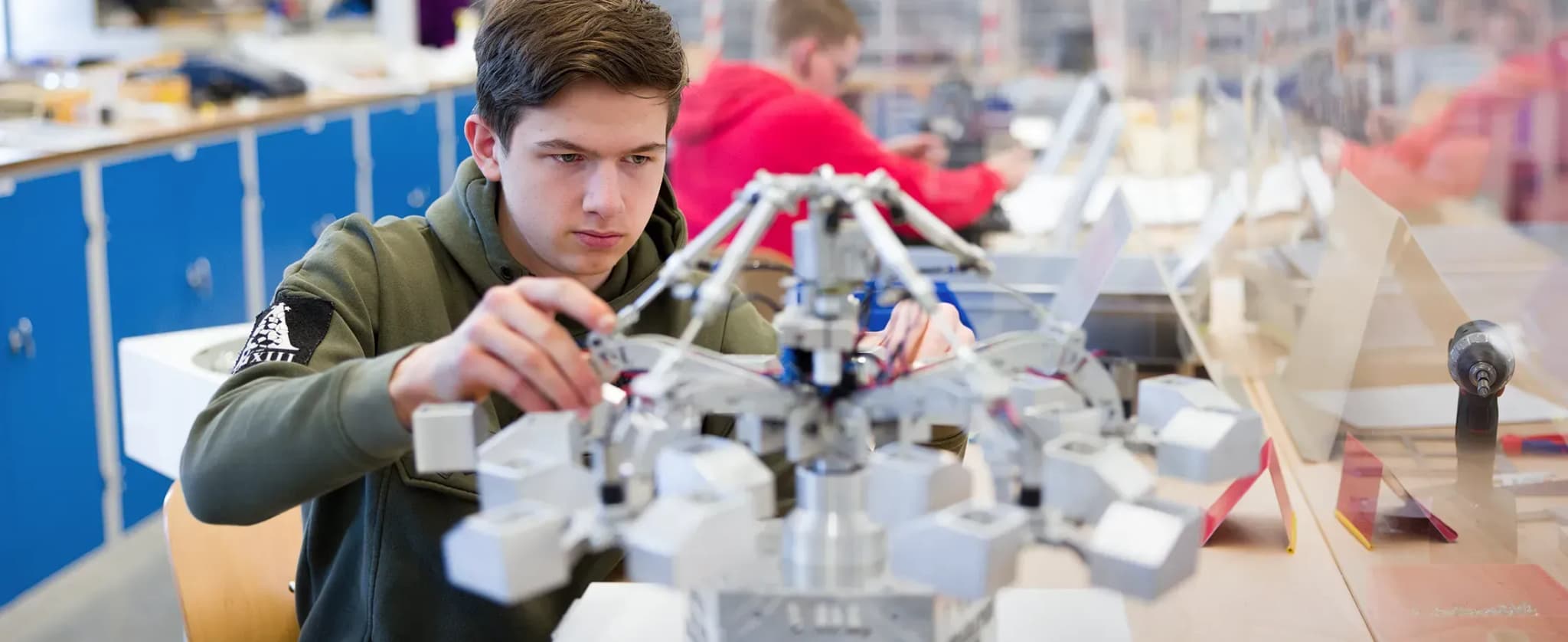
© Summa
To close this looming gap in a lasting way, substantial investments are being made in training additional technical talent through the National Microchip Talent Strengthening Plan. One element of this is the nationwide scaling up of precision craftsmanship. In Brainport, Summa and the Leidse Instrumentmakers School (LiS) are working together to achieve this. The historic custodian of expertise in this exceptional craft - the LiS, founded in 1901 - has deliberately chosen to look beyond its own campus. Rather than opening its own branches across the country, the vocational school is actively seeking partnerships with leading regional institutions for secondary vocational education within high-tech ecosystems. In Brainport Eindhoven, that partner is Summa.
Proximity rather than competition
Where the two institutions may once have viewed each other from a distance, their relationship has rapidly gained momentum, says Thijs Pernot, programme lead for Industry and Education Collaboration at LiS. “Initially, we were feeling our way: should we do this in this region or not? But it soon became clear that working with Summa was particularly constructive in achieving our shared objectives. We can act incredibly quickly, both at recruitment events and in the substantive industry sessions.”
Patricia van der Linden, Director of Engineering and Technology at Summa, saw the phone call from Leiden as exactly the right opportunity. “A huge share of current and future labour market demand is concentrated in the Brainport region. Machining and precision engineering are an important pillar of that demand. When LiS approached us with a proposal to share their expertise and establish a programme together at Summa, we saw it as an opportunity to expand Summa’s existing offering, including machining, with an instrument-making programme.”
The best of both worlds
In practical terms, this partnership means that Summa will launch a fully fledged three- and four-year Research Instrumentmaker (RI) programme in the coming academic year (September 2027), open to students from pre-vocational secondary education (vmbo) and senior general secondary education (havo). The programme will be formally embedded in Summa’s educational structure, while retaining a clear LiS DNA.
“Summa is responsible for the quality of education, and students enrol with us; the programme will be ‘powered by LiS’,” says Van der Linden, summarising the division of responsibilities. “We already have a solid foundation in our machining and engineering programmes. Research instrument makers also learn machining, but at a microscopic scale that is even more precise and specialised. By combining LiS’s specialist know-how with Summa’s strong educational structure, we are enriching our portfolio.”
Pernot stresses that LiS carefully safeguards its century-old quality standard. “We have a number of clear technical milestones that make our programme strong,” he explains. “We will integrate these with Summa’s strengths, creating a strong instrument-making programme in Eindhoven.”
Co-creation with the high-tech supply chain
The new programme does not stand alone. Summa and LiS work closely with the high-tech manufacturing industry. The Eindhoven region is characterised by an extensive supplier network around ASML and companies such as VDL. To ensure students learn precisely the skills the market is crying out for, so-called ‘industry sessions’ are being organised.
“On 15 September, through Brainport Academy, we brought education and industry together in Den Bosch for the CNC Operator and Assembly Technician profiles,” Pernot explains. “By thoroughly identifying demand, we examine what industry needs now and in the longer term. We translate that directly into concrete learning outcomes. We have now shared the first preliminary drafts. In this way, we are developing modules that can be used in regular secondary vocational pathways, both school-based (BOL) and work-based (BBL), as well as for lifelong learning (LLO) and retraining.”
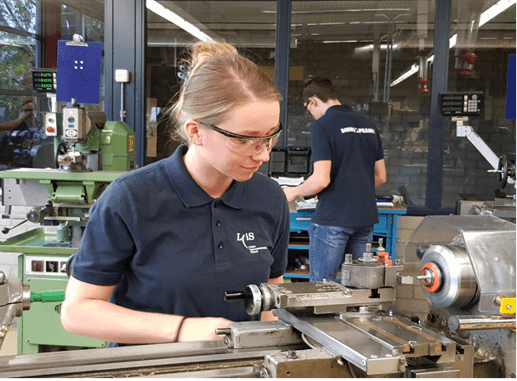
© LiS
This integrated approach resonates with employers. After all, companies are desperate for skilled professionals who can get straight to work. “What matters most to those companies is that we train enough skilled professionals who go on to work in the sector,” Van der Linden says matter-of-factly. “If employees also want to develop further, modular training or part-time education is often much more effective than having them immediately continue into full-time higher professional education. At the same time, we are also exploring continuous learning pathways with partners such as Fontys for students who do have the ambition to progress.”
Regional roots within a national network
The Eindhoven initiative is part of a broader national strategy involving Beethoven funding and related education agreements. LiS has similar partnerships with ROC van Twente and Firda in Drachten.
At the same time, Van der Linden stresses that Summa does not operate in isolation within Brainport. The institution works closely with a regional consortium of secondary vocational schools, including Koning Willem I College, Curio, Yonder, Gilde Opleidingen, SintLucas and Yuverta. Within Brainport, it also collaborates with Ter AA, Fontys and TU/e. “We have signed an agreement with secondary vocational education partners in Brabant to tackle this enormous challenge together. Each institution has its own profile and strengths; we do not compete with one another, but reinforce one another. It makes sense for Summa to take the lead in this instrument-making programme, given our scale, our location at Brainport Industries Campus (BIC), and our physical proximity to ASML and its ecosystem.”
The ultimate measure: a net increase in talent
When will the project be a success? For both leaders, having the classrooms, workshops and curricula ready next academic year is a given. “We will make that happen; we have enough educational experience in-house,” Van der Linden states firmly.
The real litmus test, she says, lies in enrolment figures: “This initiative will be a success if we train more students. We must avoid simply fishing in the same pond and drawing students away from existing technical programmes. We want to get a new target group excited about this craft: young people who love extreme precision, materials knowledge and technological achievements, but who have not previously considered instrument making as a profession. If, in four or five years, we see that overall enrolment has grown AND industry confirms that we are delivering the right skilled professionals, then we will have accomplished our mission.”