
Lightforce aims to end the autonomy compromise - Europe listens
At Blue Magic Netherlands, Kevin Rand pitched a new class of resilient, modular drone autonomy built for a GNSS-denied world.
Published on December 15, 2025

Lightforce's Kevin Rand at Blue Magic Netherlands © Nadia ten Wolde

Bart, co-founder of Media52 and Professor of Journalism oversees IO+, events, and Laio. A journalist at heart, he keeps writing as many stories as possible.
When Kevin Rand took the stage at Blue Magic Netherlands in Eindhoven, he didn’t start with theory. He started with experience, the kind that accumulates only after designing “more than 30 bespoke aircraft platforms” and flying some of Europe’s largest experimental drones. “We know drones,” he said. And precisely because Lightforce and its parent company have spent years building them, they also know the pain points that developers keep running into.
The core problem? Autonomy systems force developers into a false choice: performance or flexibility.
“Every time we went to the market for an off-the-shelf autonomy core, we were forced to choose,” Rand told the audience. “But in these applications, you can’t be forced to choose. You should have both.”
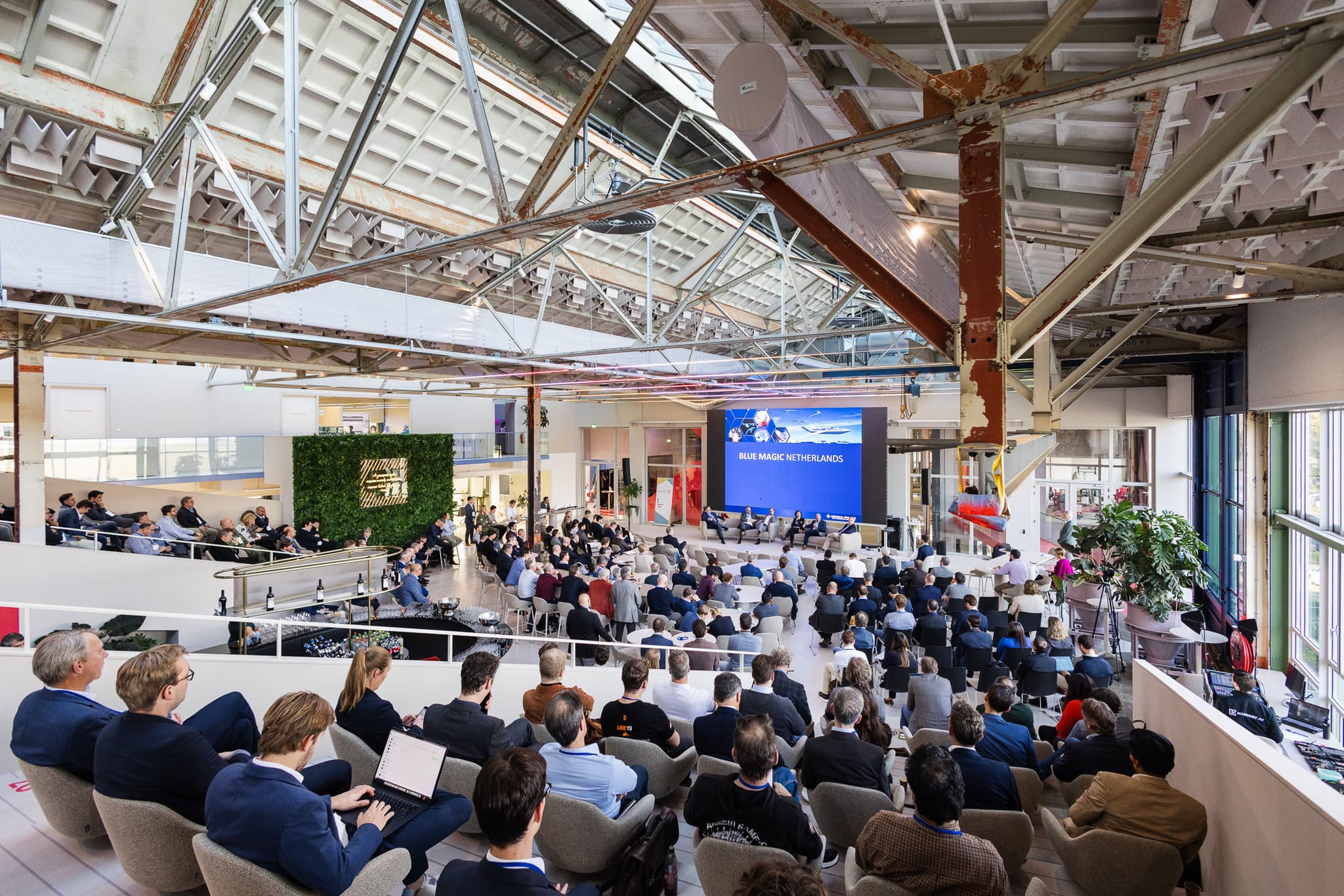
Blue Magic Netherlands
Read our stories about this event, focused on innovation in the defense industry.
That moment of frustration became the origin of Lightforce, a European-built autonomy stack that aims to bridge the gap between open, modular development environments and the rugged reliability demanded in defense and industrial operations. It is, Rand says, “a software-enabled hardware device” designed from the ground up for contested, GPS-denied environments. Lightforce is explicitly aimed at “resilient autonomy for a GNSS-denied world."
The battlefield is setting the tempo - and Ukraine shows it clearly
Much of Rand’s narrative reflects how autonomy development has changed since full-scale conflict returned to Europe. “What we’re seeing in Ukraine,” he argued, “is developers moving away from monolithic architectures and toward modularity and openness - integrating new technologies at the speed that software can be developed.”
The message: drone warfare is evolving daily. Autonomy systems must do the same. Legacy autopilots, whether flexible but fragile open-source systems or reliable but closed and opaque proprietary systems, simply cannot keep up.
That gap, says Rand, is not autonomy. “What we call autonomy today is actually automation,” he explained. “Where we want autonomy to be - true, adaptive, resilient autonomy - is still characterized by huge gaps. And that’s what Lightforce is designed to address.”
A three-layer autonomy stack: deterministic core, modular edge, and cloud intelligence
The Lightforce architecture consists of three tightly integrated layers:
- Onboard Core: A deterministic real-time control system for navigation, sensor fusion, and flight safety, engineered to keep operating even when GNSS is jammed or spoofed.
- Edge Intelligence Layer: Dedicated compute for advanced perception, AI inference, and integration with third-party companion computers.
- Cloud Companion Layer: A secure analytics and learning environment that closes the loop: mission data flows back to developers, who can iterate at high speed. Connectivity is optional; the system runs fully offline when needed.
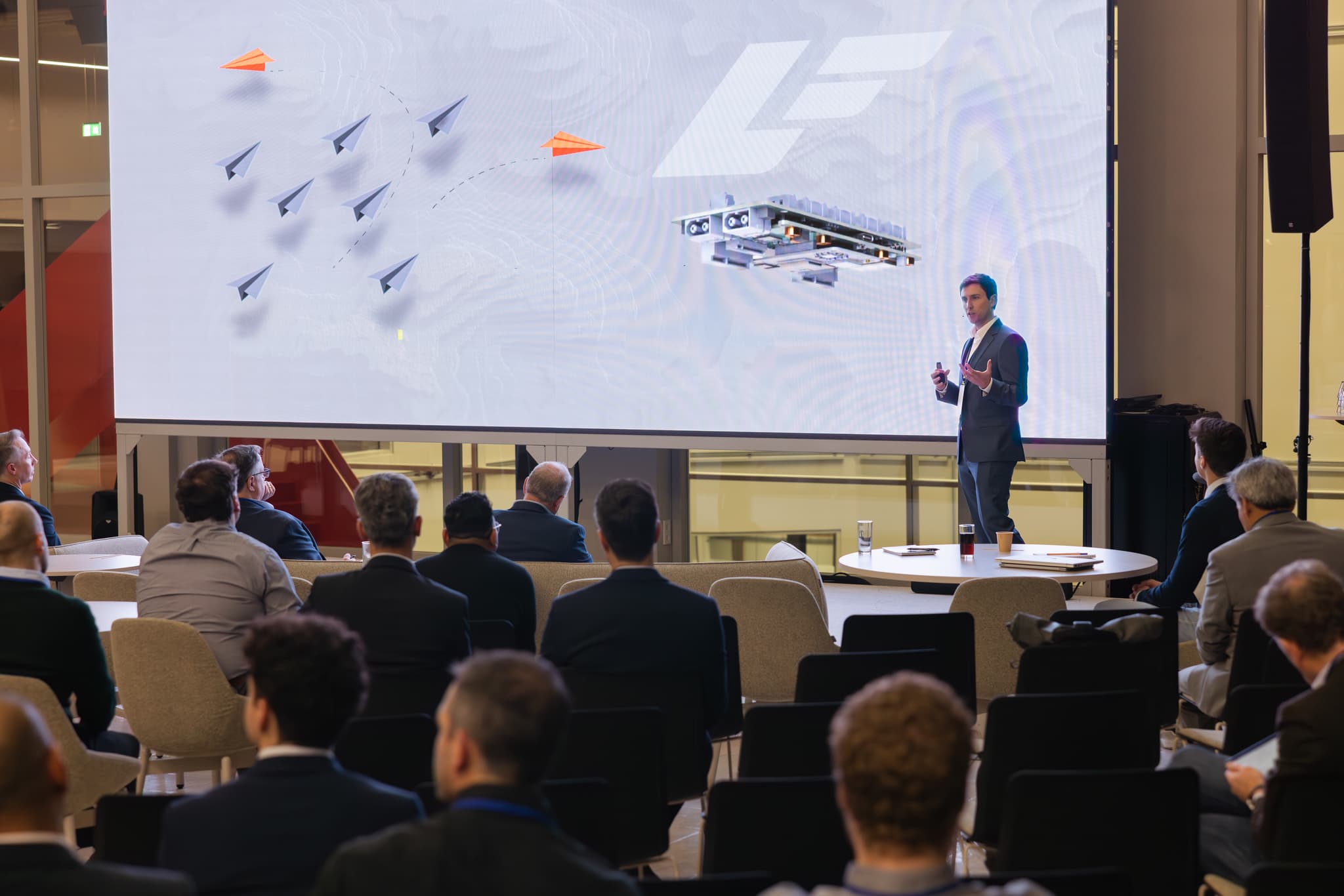
Lightforce's Kevin Rand at Blue Magic Netherlands © Nadia ten Wolde
This hybrid model gives Lightforce a key advantage: rugged, certifiable control where it matters, paired with modularity where innovation happens fastest.
A European sovereign autonomy alternative
Rand made a point of emphasizing sovereignty. “Everything we do is designed, sourced, and manufactured here in the EU,” he said, as a clear response to European defense programs increasingly wary of non-European dependencies.
Given the strong political and industrial push for European technological autonomy - from NATO's DIANA to the EU Defence Fund - Lightforce is positioning itself exactly where demand is accelerating most rapidly.
A business model built on software, not boxes
Perhaps surprisingly for a hardware-heavy domain, Lightforce’s strategy is explicitly software-first. Hardware margins are tight; ecosystem lock-in is not the goal. Instead, Lightforce wants a large, active developer base that treats its platform as the default autonomy substrate for drones, robots, and eventually infrastructure-level autonomy.
“We’re not focused on monetizing the hardware stack,” Rand stressed. “We’re focused on the software and data opportunities.”
This is also where the largest market growth lies. In Lightforce’s own conservative estimation, even limiting itself to hardware sales for European aerial systems today yields a market of several billion euros, but the autonomy-core layer is the fastest-growing segment of all.
From multirotors to 500-kg aircraft
One of Lightforce’s strongest differentiators is that it has already been flight-tested across a remarkable range of vehicle types, from small RC aircraft to a 12-meter-wingspan, 500-kilogram platform that required full DO-178 and DO-160 certification.
Test flights across all 30+ aircraft created a massive data set for generalizing the autonomy core, something few startups can match.
Because the system is modular, customers can scale from a single flight computer to a triple-redundant architecture by simply adding units and using the cross-link capabilities already built in.
Funding, traction, and what comes next
Lightforce is currently raising €2.5 million for its market-entry phase. Priorities include expanding its developer ecosystem, accelerating OEM integrations, maturing the autonomy core for commercial and defense customers, and setting up more institutional pilot trials.
It has already achieved early traction with major European innovation programs, including those in the final selection phase, a signal that the technology is resonating where it’s needed most.
Why it matters
Autonomy is no longer about following waypoints. It’s about navigating uncertainty, resisting adversarial interference, integrating new sensors overnight, and enabling operators to innovate at software speed.
Lightforce’s core bet is that the next decade of autonomy will be won by platforms, not products; platforms that combine reliability, openness, and sovereignty.
At Blue Magic Netherlands, Rand left the audience with a simple message:
“You don’t have to choose between performance and flexibility anymore.” If Lightforce delivers on that promise, it may become the backbone of the next generation of European autonomous systems; not just in the air, but across land, sea, and even space.