
LifeSense wins Korean innovation award for AI continence platform
The Eindhoven-based health-tech company is turning more than a million real-world data points into personalized support.
Published on September 19, 2026
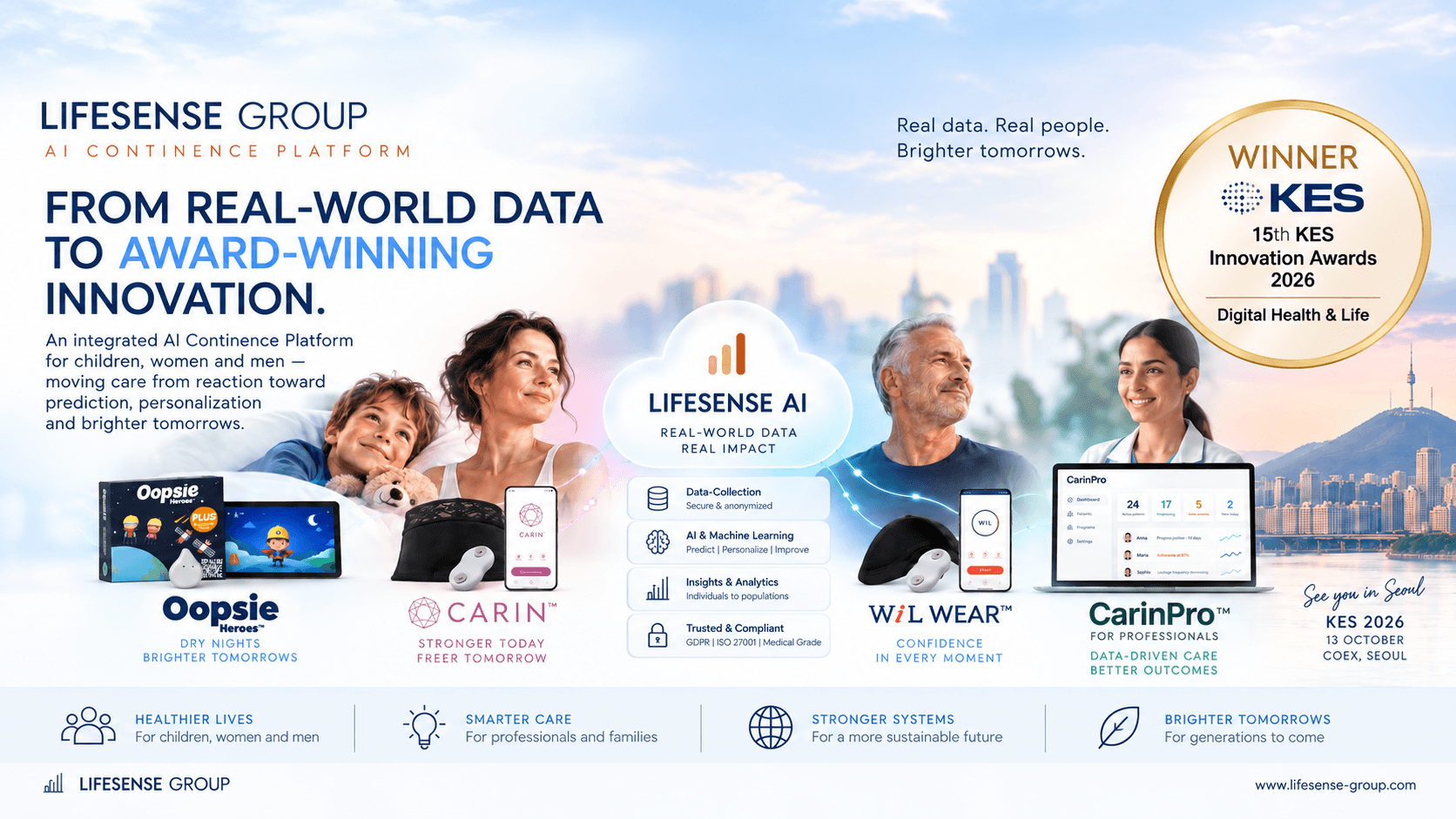
AI-generated illustration by LifeSense Group

Bart, co-founder of Media52 and Professor of Journalism oversees IO+, events, and Laio. A journalist at heart, he keeps writing as many stories as possible.
Eindhoven-based LifeSense Group has been selected as a winner of the 15th KES Innovation Awards in Seoul. Its AI Continence Platform received the award in the Digital Health & Life category, according to founder and CEO Valer Pop. Lifesense is a 2016 Gerard & Anton Award winner.
The award will be presented on October 13 during the opening day of KES 2026 at the COEX Convention Centre. Running until October 16 under the theme “AI in Motion,” the 57th Korea Electronics Show is one of South Korea’s leading technology exhibitions. The event brings together around 500 exhibitors and will focus on fields including artificial intelligence, mobility, semiconductors and digital health. This year, the show will also host CES Asia Unveiled Seoul, connecting Korean and international technology companies with investors, partners and media.
For LifeSense, the prize recognises a shift from separate wearable products towards an integrated data and intelligence platform. “We didn’t start with AI. We started with data,” Pop wrote when announcing the award. “Now the data is becoming intelligence.”
From measuring to predicting
Founded in Eindhoven in 2015 as a spin-off from the Holst Centre innovation ecosystem, LifeSense develops connected technologies for continence and pelvic health. Its products serve different groups at different life stages.
Oopsie Heroes helps children and their families address bedwetting. Carin combines wearable sensing, personalised feedback and guided pelvic-floor exercises for women, while Wil Wear supports men experiencing urinary leakage. CarinPro is being developed as a professional platform that lets healthcare providers use data and personalised programs to support patients.
Until now, these solutions have primarily detected events, measured progress and offered guidance. LifeSense wants its platform to go a step further by identifying patterns in longitudinal data and eventually anticipating relevant continence events.
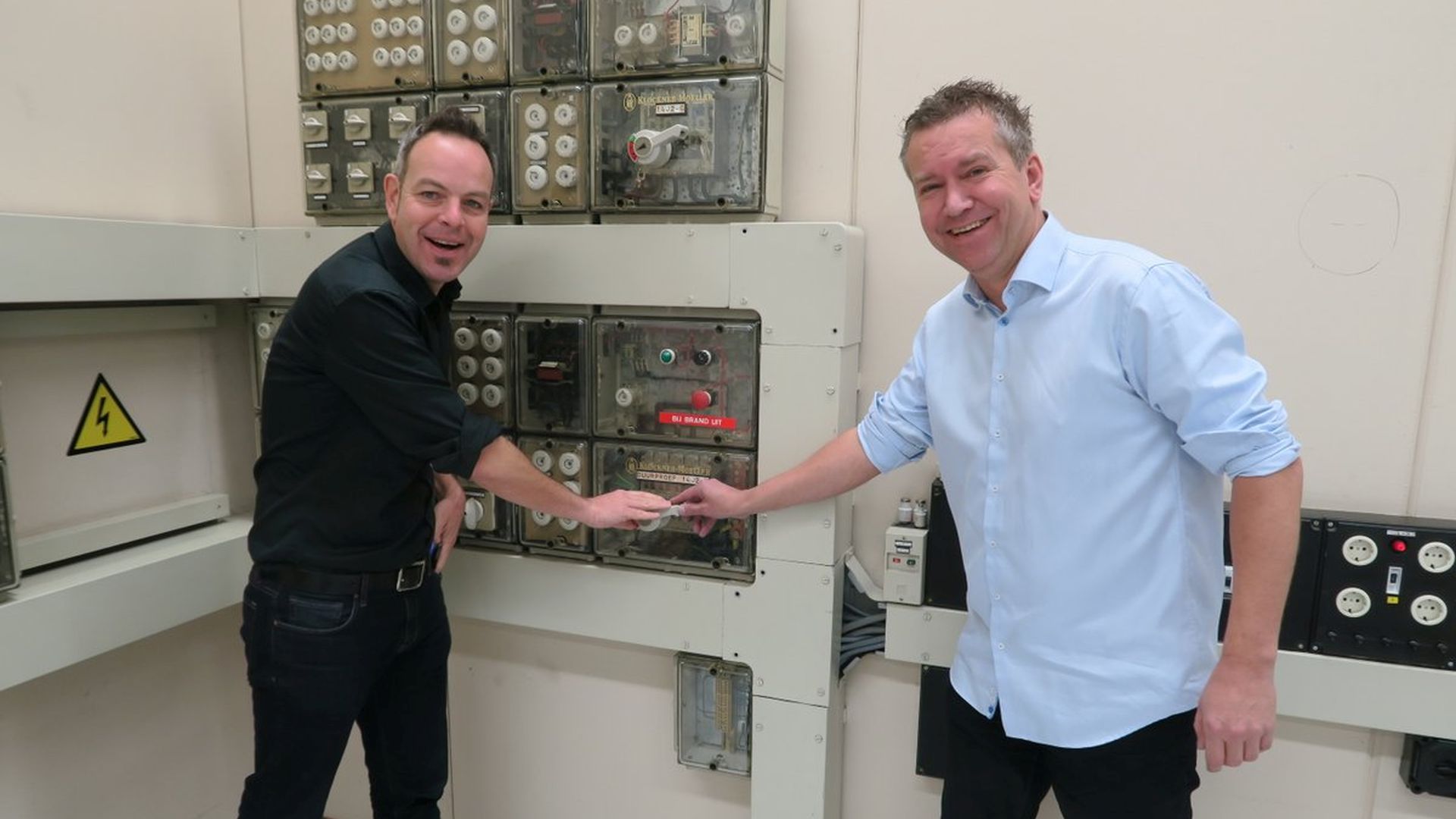
100 Drinks, Pitches & Demos: Connected dots sparking curiosity and creating opportunities
“When those people come together, they can create something larger than they could have on their own.” That’s what DPD is about, Bert-Jan Woertman Hans Meeske.
The underlying model follows four stages: measure, learn, predict and personalise. Sensors and smart textiles record events during everyday life. Data gathered over time can then reveal patterns that individual measurements might miss. AI models use those patterns to improve predictions and tailor coaching or care pathways to individual users.
The company says its Oopsie Heroes dataset now covers more than 18,900 children and contains over one million real-world data points. Those figures are central to the company’s AI strategy: rather than adding artificial intelligence to a new product without an existing evidence base, LifeSense is building on data collected through years of actual use.
“Years of real-world use have created something incredibly valuable: data,” Pop said.
A connected continence platform
The ambition is to bring LifeSense’s different solutions together on one technological foundation. Children dealing with bedwetting, women working on pelvic health and men living with urinary leakage have different needs, but the sensing, data analysis and personalisation behind their support can partly be shared.
That approach could also connect consumer products more closely with professional care. CarinPro, for example, is intended to give healthcare professionals access to insights and progress information rather than leaving users to interpret measurements on their own.
LifeSense describes the eventual transition as moving from reacting to continence events to anticipating them, and from standardised programs to more personalised support. The company carefully presents prediction as a direction in development rather than a finished capability: its website says the products are “evolving” toward AI-enabled prediction.
Pop sees the Korean recognition as validation of that broader direction, not just of an individual device. “This award is not simply recognition of a product,” he said. “It is recognition of a direction we have believed in for years.”
The award also gives the Dutch company visibility in an important Asian technology market. KES is organised by the Korea Electronics Association and brings established electronics groups together with SMEs and startups. LifeSense already has international experience beyond its Eindhoven base, including activities in Japan.
For Pop, however, the award is less a conclusion than a marker of what comes next. “We see this much more as a beginning than an endpoint.”