
Kerch bridge strike: Dutch firm Destinus’ missiles were key
Missiles by Hengelo's Destinus played a key role in Ukraine’s precision strike on Russia’s Kerch Bridge, collapsing a span.
Published on November 18, 2026
© Destinus

Team IO+ selects and features the most important news stories on innovation and technology, carefully curated by our editors.
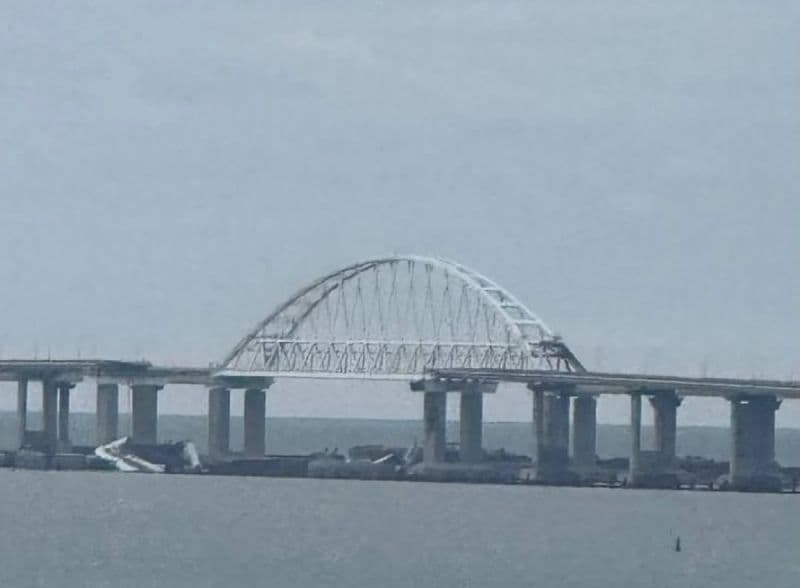
Dutch defense firm Destinus confirmed its RUTA cruise missiles were central to Ukraine’s latest strike on the Kerch Bridge, causing the collapse of one span and damaging the upper load-bearing structure. The operation, spanning two consecutive days, involved seven RUTA missiles and supporting systems to suppress Russian air defenses.
Ukrainian President Volodymyr Zelenskyy later detailed a multi-stage assault using 11 weapons, including Destinus’ technology, marking a significant escalation in Ukraine’s long-range strike capabilities. The first strike on November 16 damaged the bridge’s upper load-bearing structure, while a second strike the following day, involving seven RUTA missiles, caused a span to collapse. Destinus's LORD/Da Vinci drones for air defense suppression were also central.
The bridge, a symbol of Russian control over Crimea since its 2018 opening, has been a repeated target, with prior attacks in 2022, 2023, and 2025 failing to achieve lasting damage.
Destinus is a European defense company based in Hengelo, in the Netherlands. It was founded in Switzerland in 2021 and moved its headquarters to Hengelo in 2024. The company develops and builds jet-powered drones and cruise missiles, including the RUTA long-range missile. Ukraine has used its drones since 2023 to hit targets deep inside Russia. Destinus is expanding quickly through partnerships with Rheinmetall, Quantum-Systems and TNO.
The missile
The RUTA Block 2, as outlined on Destinus’ website, is a long-range cruise missile system designed for precision strikes against hardened military targets. It operates in environments where there is no access to navigation systems, using AI-assisted terminal guidance for accuracy.
With a range of 700+ km and a 250 kg payload, the system is canister-launched for mobility and rapid deployment. Destinus also highlighted the Block 2’s doubled Maximum Take-Off Weight and range compared to its predecessor.
Implications for the war
The Kerch Bridge’s collapse disrupts Russia’s logistical and symbolic control over Crimea. The $3.6 billion bridge, inaugurated by Vladimir Putin, has been a critical supply route for Russian forces. Its damage, described as irreparable in the near term by former US General Ben Hodges, undermines Putin’s narrative of inevitability in the conflict.
Ukraine’s ability to execute such strikes signals a shift in firepower parity, with further attacks expected to hinder repairs and resupply efforts. Russia suspended traffic and launched a terrorism investigation, while Ukraine’s operation demonstrates its growing domestic weapons industry and coordination in complex strikes.