
ISS evacuation shows: space travel needs new technology
What technology can help keep astronauts healthy during a space mission?
Published on January 13, 2026

Team IO+ selects and features the most important news stories on innovation and technology, carefully curated by our editors.
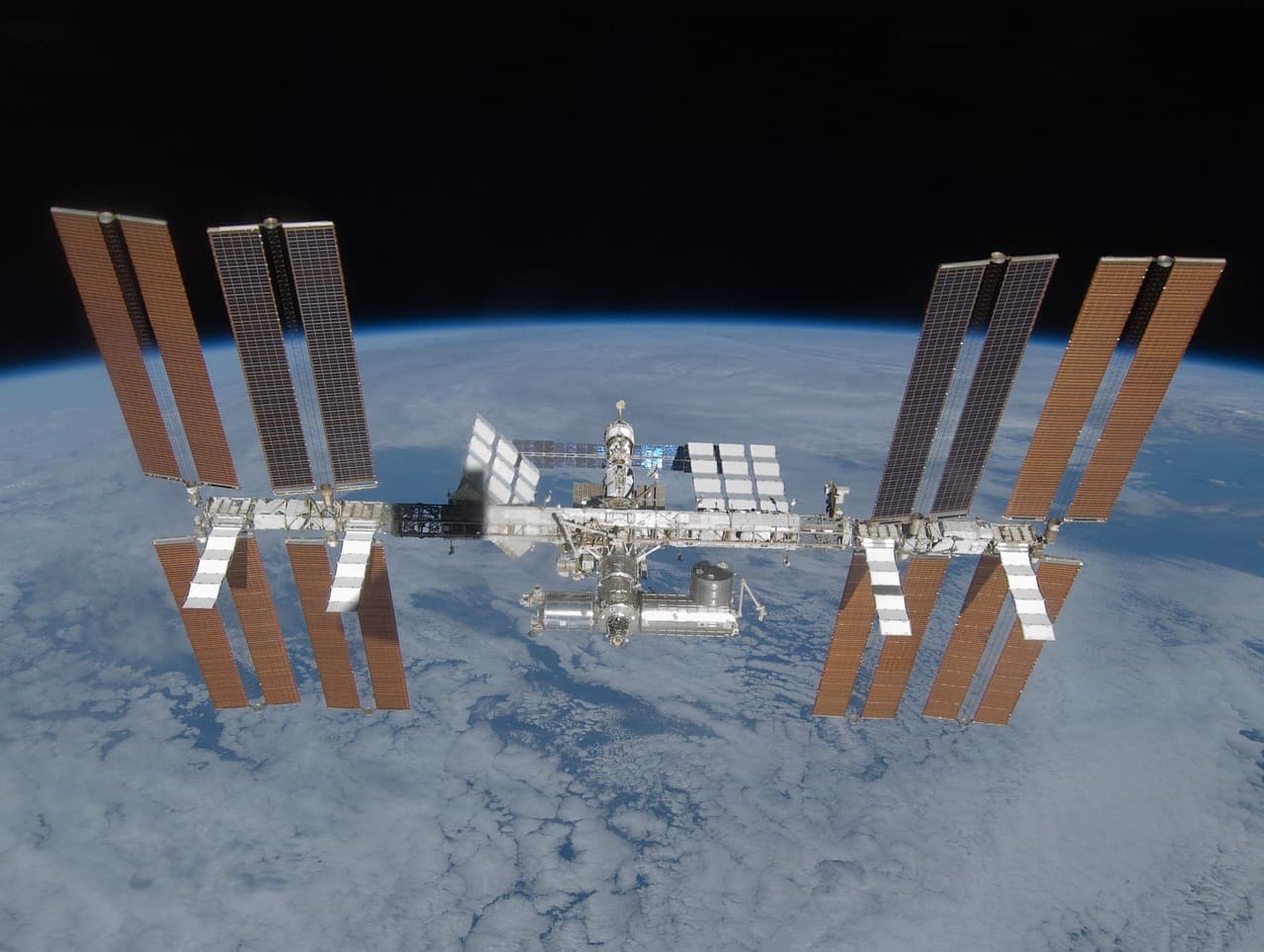
For the first time in 25 years, NASA is bringing a crew back from the ISS early due to a medical emergency. The exact nature of the emergency is not yet known, but it is believed to be serious. This is a good moment to reflect on how vulnerable the human body actually is, especially in space. What technology can help keep astronauts healthy during a space mission?
The decision by NASA chief Jared Isaacman marks a break with the past. In the 25 years that the ISS has been permanently inhabited, never before has an entire crew been evacuated for medical reasons. The situation on board is stable, but the risks are too great to ignore. Doctors on Earth have determined that the necessary care is simply not available in space. That is why American commander Zena Cardman, pilot Mike Fincke, Japanese astronaut Kimiya Yui, and Russian cosmonaut Oleg Platonov are boarding their lifeboat. They are leaving three colleagues behind at the station.
While NASA protects the patient's privacy, this incident has shaken the space community. The forced return compels us to take a critical look at our medical capabilities outside the atmosphere. After all, if we want to go to Mars in the future, ‘just flying back’ will no longer be an option.
Technology 1: laboratory on a chip
Let's take a look at what Lab-on-a-chip technology can do. On Earth, we send blood tubes to a large laboratory and wait days for the results. In space, there is no time or space for that. The solution, therefore, lies in ‘Lab-on-a-chip’ technology. These are small devices, no larger than a credit card, that can perform complex analyses with just a few drops of blood. They use nanoelectronics and fluid dynamics at a microscopic level. These chips can detect infections, inflammation levels, or specific biomarkers for organ damage within minutes. This technology is rapidly developing and becoming increasingly accurate.
Technology 2: healing with 3D printers
A second technology: repairing the body with 3D bioprinting. Injuries and burns pose a major risk in an environment full of machines and chemicals. Because you cannot take skin grafts out of the freezer in space, astronauts must be able to make them themselves. Scientists are working on compact 3D printers that use the body's own cells as ‘ink’. This allows them to print new skin, blood vessels, or even bone structure layer by layer. This sounds like science fiction, but the first experiments have already been carried out.
In February 2024, a simulation of an operation even took place on board the ISS to test these procedures. In addition to biological material, these printers can also print medical instruments or splints that are needed at that moment. If an astronaut breaks a leg, they print a custom-made plaster splint. If a surgical instrument is missing, they print it on the spot. This flexibility makes the on-board pantry infinitely larger without having to carry extra weight.
No ‘emergency exit’ to Earth
The recent incident is a reminder of the reality of space travel: humans are the weakest link. Our own bodies remain vulnerable. NASA plans to retire the ISS around 2030. The focus is shifting to the moon and then to Mars. On those journeys, there is no ‘emergency exit’ to Earth. In short, the technologies currently in development are not a luxury.