
Insight and impact: ASML, diversification and ecosystem power
Otto Raspe and Brigit van Dijk – van de Reijt interpret the latest economic insights for the province of Brabant.
Published on March 6, 2026

Team IO+ selects and features the most important news stories on innovation and technology, carefully curated by our editors.
The economy of Brabant is strong, but it also faces major transitions. Otto Raspe and Brigit van Dijk – van de Reijt provide a perspective on the region’s latest economic developments. How dependent is the region on ASML? What does Peter Wennink’s report mean for the future of the Dutch economy? And how can Brabant continue building strong ecosystems across the province?
Anyone looking only at growth figures sees a thriving region. Brabant is expanding, and Brainport is growing at an exceptional pace. Yet something still feels uneasy, Raspe and Van Dijk – van de Reijt argue. Raspe is chief economist at Rabobank and professor of Broad Prosperity and Regional Economics. Van Dijk – van de Reijt is a macroeconomist and CEO of the Brabant Development Agency (BOM).
Economic growth, they emphasize, is not an end in itself. The real question is what that growth produces—and whether it creates a solid foundation for future prosperity.
To maintain that prosperity, the Netherlands must grow structurally by at least 1.5 percent per year. That threshold has not been reached for years, according to former ASML CEO Peter Wennink in his report The Route to Future Prosperity, published late last year.
The core of the challenge, Wennink argues, lies in declining productivity growth. That observation also forms the starting point for the latest regional forecasts by RaboResearch, Rabobank’s economic research department. Their analysis shows that only a limited number of Dutch regions consistently exceed the growth rate required to sustain long-term prosperity.
High-productivity jobs as the engine of growth
Greater Amsterdam, Greater Rijnmond (Rotterdam), Utrecht, and Brainport Eindhoven are the main engines of economic growth in the Netherlands. Over the past thirty years, Amsterdam and Brainport in particular have stood out as the fastest-growing regions in the country.
The reason is clear: these regions have added large numbers of high-productivity jobs—positions that generate substantial economic value per employee.
In Amsterdam, this growth is mainly driven by knowledge-intensive services. In Southeast Brabant, the high-tech and advanced manufacturing sector is clustered around companies such as ASML, Philips, NXP Semiconductors, Signify, Thermo Fisher Scientific, and VDL Groep.
Around these companies, ecosystems have developed that support productivity and create economic momentum for the wider country.
The dominance of ASML
That exceptional position also requires nuance. ASML’s dominance influences almost every economic indicator in Southeast Brabant. If growth expectations for the Veldhoven-based chip equipment manufacturer change, the entire region moves with it.
“We must acknowledge that this dependency exists,” says Van Dijk – van de Reijt. “That does not mean lowering our ambitions in semiconductors, but accelerating the strengthening of other Brabant ecosystems, such as medtech, pharmaceuticals, and plant-based innovation.”
At the same time, Brainport is less monolithic than often assumed. Research by Brainport Development shows that the semiconductor industry currently accounts for roughly a quarter of the region’s added value and about seven percent of employment.
Those shares are growing, but they are still far from the historical dominance once held by Philips or DAF. The real question, therefore, is not whether ASML is too large, but whether other sectors can scale alongside it.
Related variety
Raspe stresses the importance of cross-sectoral connections. Diversity alone is not enough. An economy in which sectors exist in isolation generates little learning or innovation.
Instead, what matters is “related variety”: sectors that are technologically close to each other and therefore capable of cross-fertilization. “Innovation often emerges at the intersections between technologies,” Raspe says.
The Brabant economy contains a significant amount of this related variety. The province is active in seven of the ten strategic technology domains identified in the Dutch National Technology Strategy (NTS); fields considered crucial for the country’s future earning capacity.
“Think of Brabant companies working in domains such as mechatronics, artificial intelligence and data, cybersecurity, optical systems, and integrated photonics,” says Van Dijk – van de Reijt. “But we are also relevant in biotech and medtech. The presence of multiple key technologies in Brabant allows us to deliberately build new combinations and applications.”
From intellectual property to economic value
A crucial step in strengthening Brabant’s economic base is translating knowledge into market value. For years, the region has ranked highly in the creation of new intellectual property, thanks to universities and research institutes with strong international reputations, as well as the legacy of Philips. In Brabant, the private sector also plays a particularly important role in this process.
In The Route to Future Prosperity, Wennink stresses that this knowledge base is the key to future productivity growth. Raspe points to the economic return of investing in research and development. “The multiplier of R&D investment is around 2 to 2.5 percent. That means every euro invested generates more than double its value in economic return.”
But that return is not automatic. If ideas remain stuck in laboratories, the societal benefits never materialize.
“We see that the translation from intellectual property to the market has been too slow for years, and sometimes even stalls,” Van Dijk – van de Reijt says. “That is a real risk. Brabant produces a great deal of IP, but we must ensure those ideas can truly grow into businesses.”
Entrepreneurship is therefore essential. Startups and scale-ups validate knowledge, make it applicable, and ultimately bring innovations to market. A globally oriented SME sector is equally important to broaden the economic base.
“Intellectual property only becomes valuable when it is translated into economic activity,” Van Dijk – van de Reijt concludes. “That requires ecosystems in which entrepreneurs, knowledge institutions, and investors are able to find one another.”
Plant-based innovation as an economic strategy
A clear example of ecosystem development is the emerging plant-based innovation cluster in West Brabant.
Here, partly through initiatives by BOM, a network is forming around innovative plant-based ingredients, building on the region’s strong agro-food tradition.
Companies such as Protix, The Protein Brewery, and Revyve are growing internationally and have recently attracted substantial investment.
In fact, The Protein Brewery and Revyve secured funding rounds of €30 million and €24 million, respectively, placing them among the ten largest Dutch investment rounds in the third quarter of 2025.
But the ecosystem is still in its early stages.
“What we need now is scale,” says Van Dijk – van de Reijt. “It is a difficult market. Consumer demand is still limited, even though everyone understands that the production of animal fats must decline, or at least stop growing, partly due to nitrogen emissions. Government steering could accelerate the food transition.”
Raspe places this development in a broader economic context. Research on cluster development shows that emerging sectors often require an initial push before reaching a tipping point.
“Until that tipping point, government support is essential, for example, through knowledge development and financing,” he says. Once that threshold is reached, an ecosystem can grow independently.
Organizing the potential of Northeast Brabant
Northeast Brabant also has strong economic foundations. The region, with hubs in Den Bosch, Oss, Uden, and Veghel, plays a visible role in international value chains in machine building, agrifood, logistics, and pharmaceuticals.
Yet its potential is not fully realized.
According to RaboResearch analyses, the challenge lies less in the economic base itself and more in the region’s internal cohesion. Administrative fragmentation and relatively loose connections between large companies and SMEs slow down ecosystem development.
One possible explanation is that ownership, and therefore strategic decision-making power, of many international companies is located outside the region.
“That calls for focused ecosystem work,” says Van Dijk – van de Reijt. “The entrepreneurial spirit is there. Now it is about focus and about connecting the strong international position of companies in Northeast Brabant with regional knowledge and entrepreneurship.”
Defence and dual-use innovation
One domain where all of Brabant—from west to east—has promising opportunities is defence. The region hosts a high concentration of defence facilities and suppliers. Increasing European defence investments could therefore provide a significant economic impulse.
However, certain conditions must be met, including addressing labour market shortages. “If you focus entirely on defence, it could come at the expense of other sectors that are already facing labour shortages,” Raspe notes. Research by RaboResearch shows that many Dutch companies are successful because they develop dual-use innovations, technologies that have both civilian and military applications.
Examples include drone-detection systems, faster and cheaper drug development, and secure data and communication technologies.
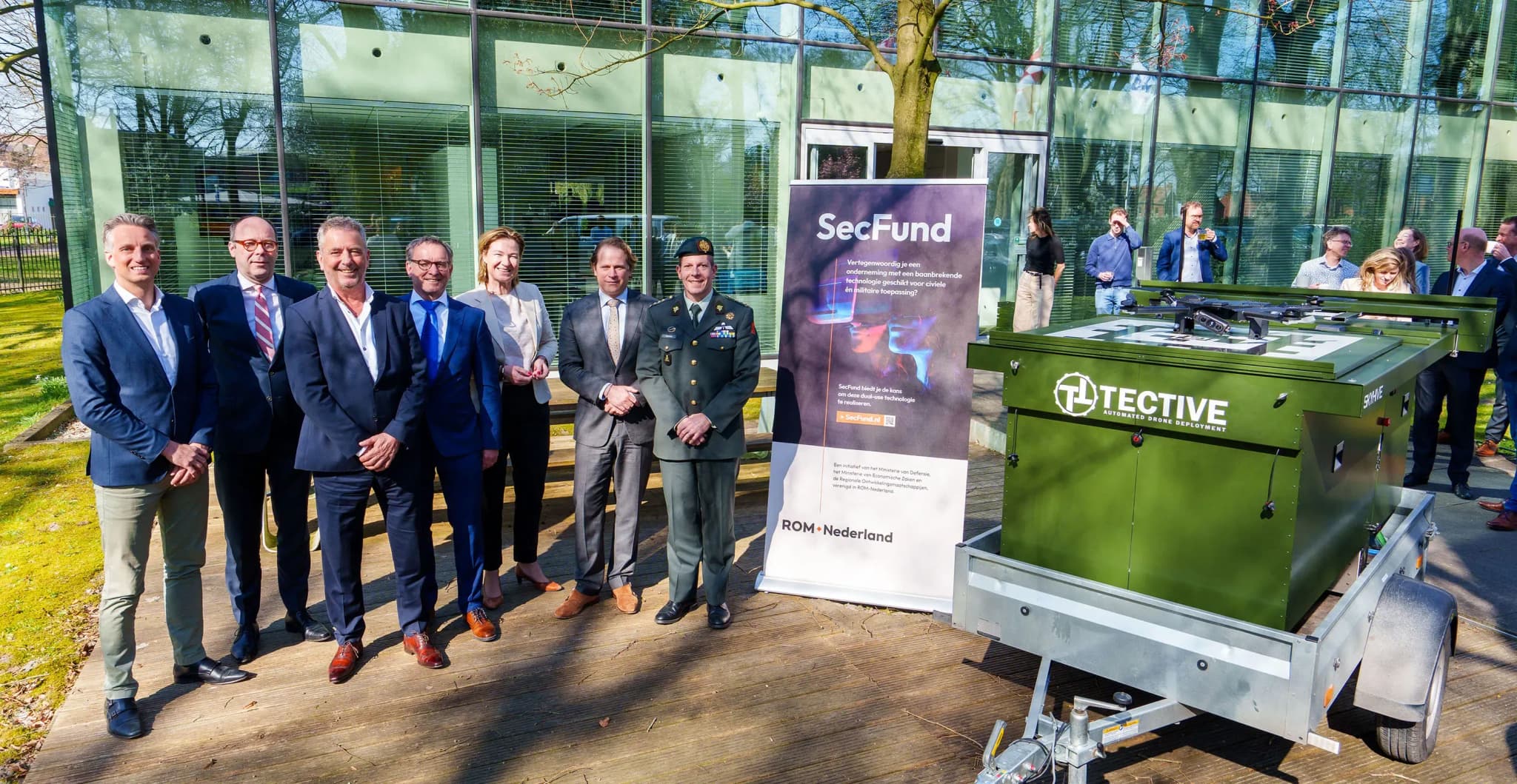
“Through the national SecFund, which is managed by BOM, we invest risk capital in new technologies that can be applied both civilly and militarily,” Van Dijk – van de Reijt explains. “This strengthens defence innovation and resilience.”
The SecFund, a collaboration with the Dutch Ministry of Defence, launched in April last year and has so far made six investments across the Netherlands.
The importance of a consistent policy
Sustainable economic growth rarely results from sector policy alone, Raspe and Van Dijk – van de Reijt conclude. Equally important are the conditions under which companies, knowledge institutions, and governments collaborate.
Labour markets, knowledge infrastructure, access to capital, and international networks ultimately determine whether regions can realize their potential.
That conclusion closely mirrors Peter Wennink’s analysis. In his report, he argues for a consistent policy focused on productivity, knowledge development, and technological innovation, conditions that allow ecosystems such as Brabant’s to continue driving prosperity in the decades ahead.