
Imaging technologies: crucial to Netherlands' high-tech position
In the series The People of Holland High Tech, you will get to know the people behind Holland High Tech.
Published on January 21, 2026
.png&w=2048&q=75)
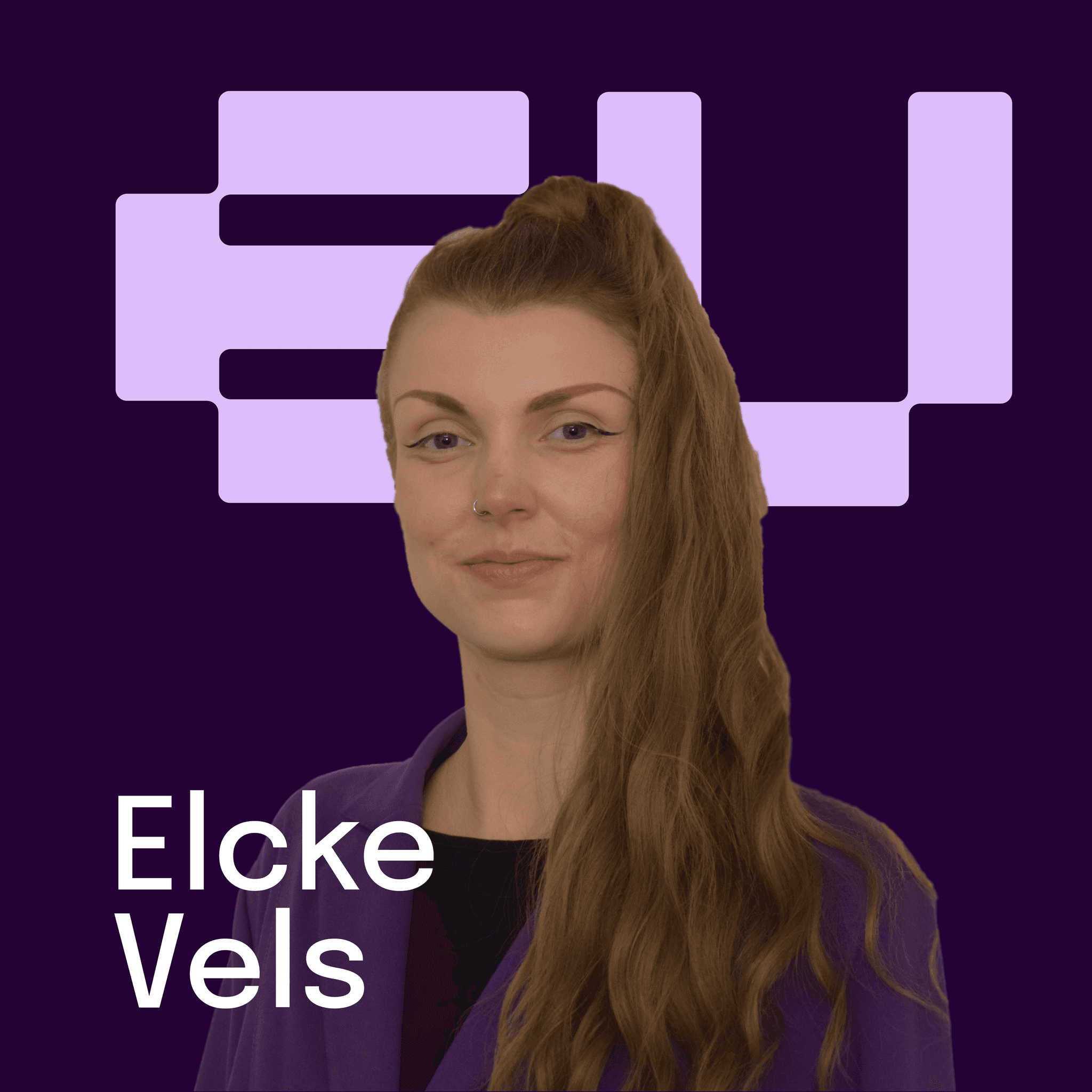
Our DATA+ expert and Editor-in-Chief, Elcke Vels, explores AI, cyber security, and Dutch innovation. Her "What if..." column imagines bold scenarios beyond the norm.
Quantum, sustainable mobility, security. High tech is playing an increasingly important role in our daily lives. Today, we interview Roelien Attema, who is involved with Holland High Tech as a program council member in the field of imaging technologies. Attema is also R&D director at Astron, the Netherlands Institute for Radio Astronomy. She knows everything there is to know about imaging technologies: “technologies in which the Netherlands excels.”
External Content
This content is from youtube. To protect your privacy, it'ts not loaded until you accept.
Or listen to the episode on Spotify.
How would you describe yourself in one word?
“I'm going to cheat. I'd like to use two words. Building together describes well what I stand for. It gives me a lot of energy to do things together. By working together, the results ultimately improve, even though the complexity increases due to multiple interests and perspectives.”
What exactly are imaging technologies?
“These are technologies that deal with generating, collecting, duplicating, analyzing, modifying, and visualizing images. This includes not only optical images, but images across the entire electromagnetic spectrum. For example, X-rays, microwaves, and radio waves.”
That definition is also broad in technological terms. It covers both hardware, such as sensors, telescopes, and cameras, and processing. Creating an image often requires many processing steps. That processing takes place largely in software and in visualization. That combination of hardware, software, and visualization forms the core of imaging technologies.”
What is the social importance of imaging technologies?
"They are used in a wide range of sectors and deliver various social benefits. One important area is the medical sector. New forms of diagnosis and treatment can directly improve the quality of care. Indirectly, they can also contribute to greater efficiency, which can limit staff shortages and healthcare costs.
Another area of application, unfortunately, is very topical: defense and security. Think of detection and situational awareness: knowing what is happening around you.
Imaging technology is also crucial in science. In my own field, it is essential to be able to answer fundamental questions with it."
Are there areas in which the Netherlands really excels?
“Imaging technologies are used on a large scale in semiconductors, for example, in ASML's machines. The Netherlands has a unique position in this field and is a leader both in Europe and worldwide.
In addition, applications in medical imaging are a strong point for the Netherlands. The high quality of our academic hospitals and the historical role of companies such as Philips contribute significantly to this.”
How does Holland High Tech contribute to the ecosystem of imaging technologies in the Netherlands?
"Imaging technologies touch on many sectors, including semiconductors. That cross-pollination is very interesting. However, one major challenge is the collaboration between academic partners, who often look at issues from a fundamental perspective and make great inventions, and the business community, which is looking for more concrete applications.
That is precisely the task and role of Holland High Tech. You see that innovation funds almost always focus on public-private partnerships. How do we bridge the gap between universities and companies, and how do we ensure that knowledge actually accelerates the innovative capacity of the business community?"
What is your role as a program council member at Holland High Tech?
"We have recognized that a program council member can never represent the field on their own. That is why, together with others, I have set up an innovation council. This is a group of experts with experience across a wide range of technology and application domains. The innovation council is a great place to make new connections in the Netherlands.
In addition, the program council members advise the board of Holland High Tech. We also have to assess the proposals. There are several funding calls and mechanisms. All proposals for imaging technologies are reviewed by experts. As a program council member, I am responsible for the final advice to the board: whether or not to accept the proposals."
You also work at ASTRON. What is the current focus there?
“There are a lot of exciting things happening at the moment. The most visible is the major upgrade of the LOFAR telescope, the world's largest low-frequency radio telescope that observes the universe with radio waves. It has produced wonderful science for ten years and is now ready for a new phase.
We have been working on this for years in the R&D department and are now in the process of rolling it out. This is the moment when everything comes together, and we need to see whether the telescope actually works."
Do you have a closing message for the reader?
We need engineers, technicians, and scientists, but retaining that talent is also important. We must ensure that enough students choose STEM: Science, Technology, Engineering, and Mathematics.
I would also like to mention women in particular. How do we ensure that they find their way into these programs? And how do we ensure that the educational offerings remain strong, so that we can train tomorrow's talent and match it to the needs of industry and innovation challenges? These are important questions today."
Sponsored
This story is the result of a collaboration between Holland High Tech and our editorial team. IO+ is an independent journalism platform that carefully chooses its partners and only cooperates with companies and institutions that share our mission: spreading the story of innovation. This way we can offer our readers valuable stories that are created according to journalistic guidelines.
Want to know more about how IO+ works with other companies? Click here