
How Washington exports its ideology via tech dominance
The American sanctions against European policymakers are not about a trade conflict, but about ideology
Published on December 24, 2025
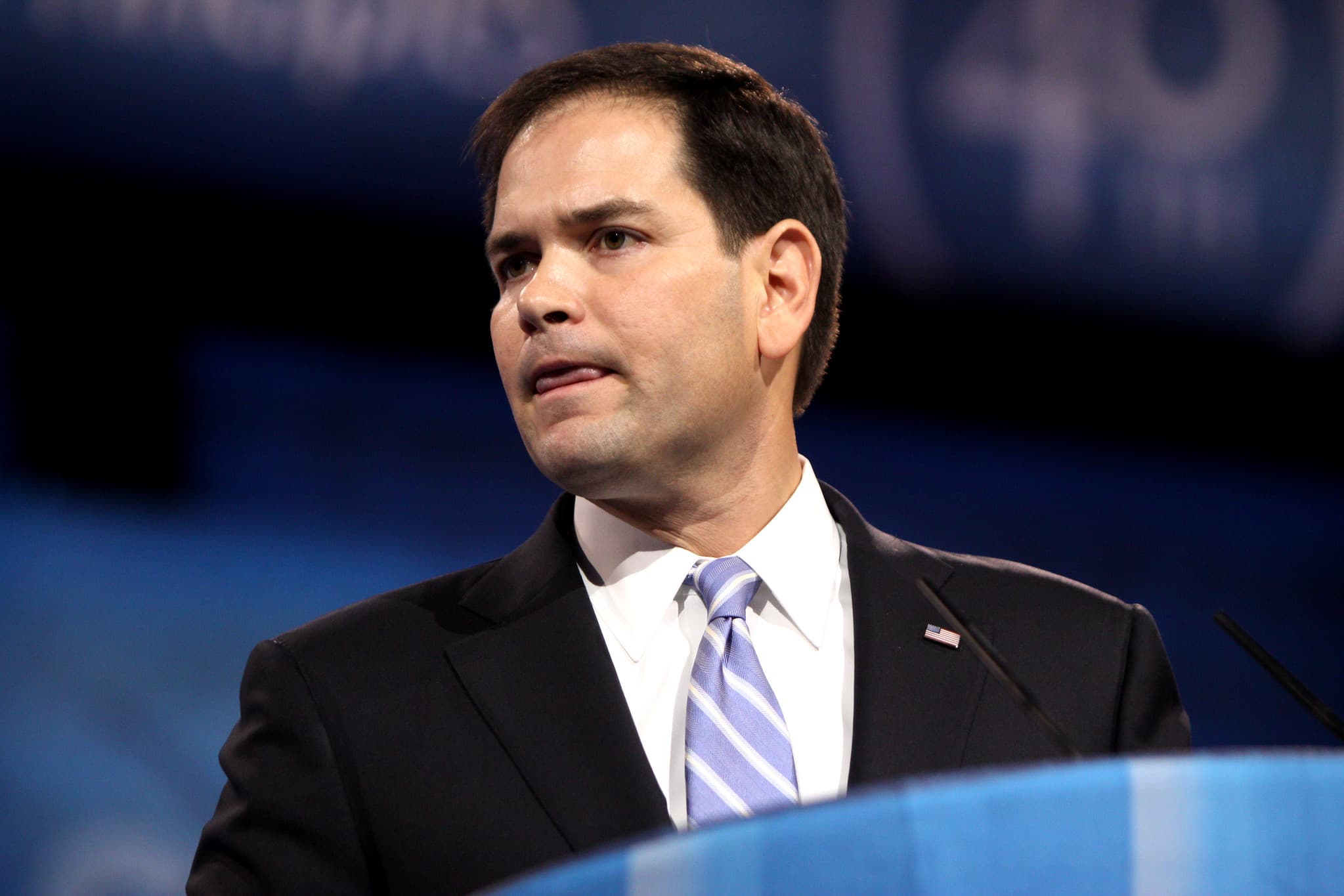
Marco Rubio speaking at the 2013 CPAC - photo CC-BY by Gage Skidmore

Merien co-founded E52 in 2015 and envisioned AI in journalism, leading to Laio. He writes bold columns on hydrogen and mobility—often with a sharp edge.
The verdict is in, and it is an ice-cold shower for European policymakers in Brussels. The announcement by U.S. Secretary of State Marco Rubio, just before Christmas 2025, to impose visa sanctions on prominent European critics of Big Tech is not a minor diplomatic incident. It is a declaration of war. Where the transatlantic relationship was once characterized by shared values, there is now a desire from the U.S. for the digital colonization of Europe. The United States is now openly deploying its technological and legal dominance as a weapon to enforce the MAGA ideology worldwide. For European companies and governments, the message is clear: whoever uses American infrastructure submits to American whims.
A Declaration of War on Brussels' regulatory zeal
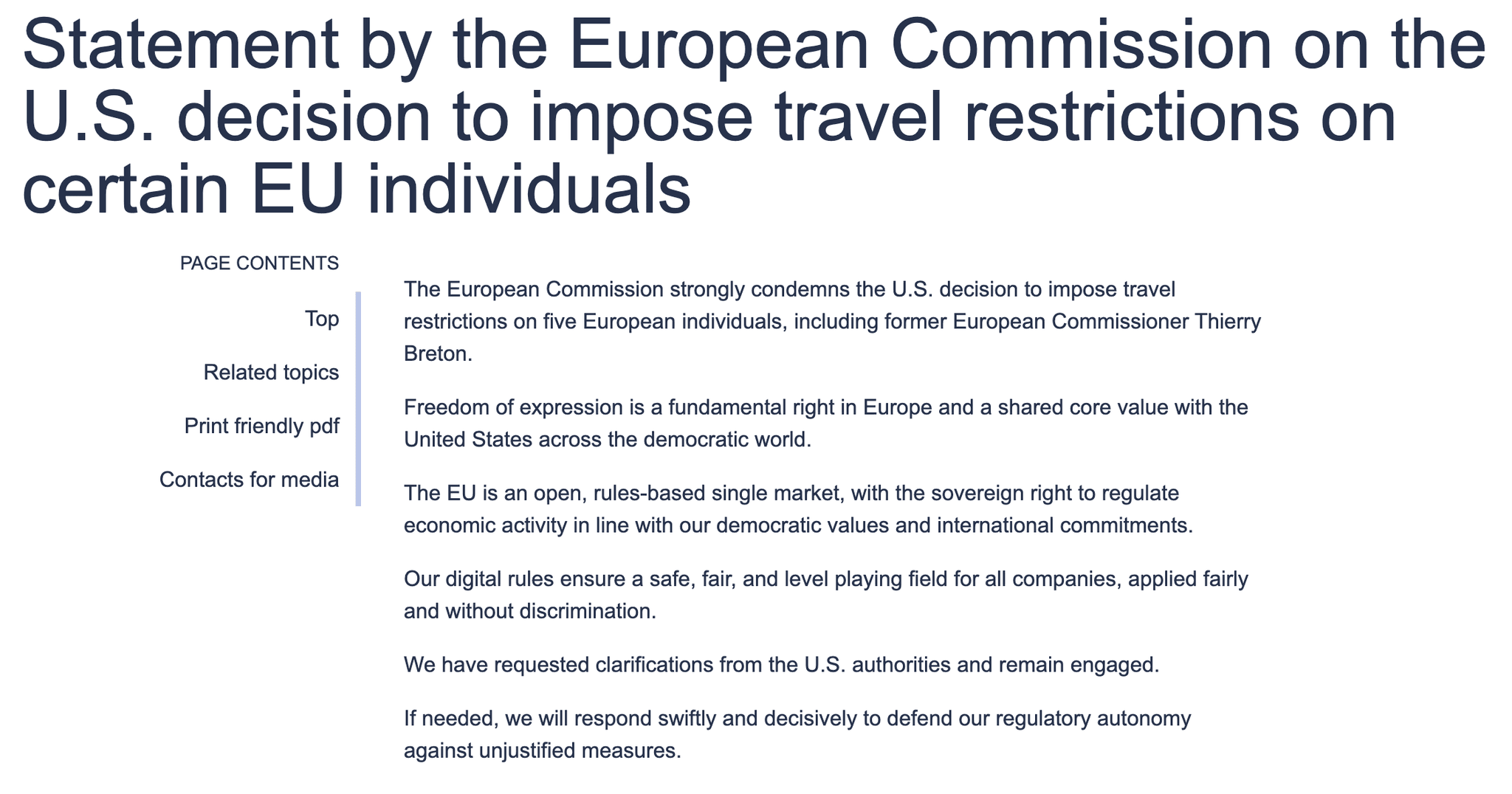
The measures announced by the U.S. State Department on December 23, 2025, are unprecedented within the Western alliance. Secretary Rubio aimed his arrows directly at what he calls the “Global Censorship-Industrial Complex”: a network of policymakers and NGOs that, according to Washington, force American platforms into censorship. The list of targets reads like a ‘who's who’ of the European digital civil rights movement. Among them are Thierry Breton, the former Euro-Commissioner and architect of the Digital Services Act (DSA), and Imran Ahmed of the Center for Countering Digital Hate.
The irony is staggering: in the name of freedom of speech, critical voices are being silenced. The accusation is that these actors are conspiring to suppress “American viewpoints.” In practice, this means the U.S. is using sanctions against individuals trying to regulate disinformation and hate speech (or in more extreme terms: neo-fascist propaganda) via democratically established legislation like the DSA. Breton aptly called the action a return of “McCarthy’s witch hunt.” This is not legal hair-splitting; it is a direct attack on European legislative power. The U.S. is effectively stating that American platforms stand above European law, and that attempts to regulate these companies will be met with personal retaliation.
The export of the MAGA Doctrine
We must sharply analyze the ideological underpinnings of this action. In the rhetoric of the current White House, the term ‘censorship’ has undergone an Orwellian redefinition. Where Europe attempts to create a safe online environment and limit the spread of illegal content via the DSA, the Trump administration views every restriction on content as an attack on American sovereignty. The €120 million fine imposed by the European Commission on X (formerly Twitter) for a lack of transparency is not seen in Washington as enforcement, but as a hostile act.
This conflict goes deeper than regulation; it is a clash of fundamental values. The Netherlands, which consistently scores higher on the press freedom index than the U.S., employs a model where freedom goes hand in hand with responsibility. The American approach has now devolved into the law of the jungle: the right of platform owners to let their algorithms prevail undisturbed, regardless of societal damage. By labeling NGOs like HateAid and the Global Disinformation Index (GDI) as “weaponized actors,” the U.S. criminalizes the very civil society trying to protect democracy. It is a classic example of projection: the U.S. accuses Europe of ‘extraterritorial overreach,’ while it simultaneously tries to export its own norms across the Atlantic via visa bans and threats.
Legal Tentacles in the European Cloud
The visa sanctions are merely the tip of the iceberg. Below the waterline lies a much larger, structural problem: the legal stranglehold of American cloud infrastructure. As we have often highlighted in our series ‘The European Alternative,’ the reliance on services like Gmail, Outlook, and American cloud providers is a strategic Achilles heel. The core of this problem is the CLOUD Act of 2018. This law gives American intelligence agencies and the judiciary the right to demand data from American companies, regardless of where that data is physically stored.
The implications of this legal and political pressure are becoming painfully concrete. In our recent podcast we sketched a hypothetical scenario: a journalist denied entry to the U.S. solely based on metadata from their Gmail traffic or cloud files. With Rubio's recent announcement, this scenario has passed the stage of hypothesis. If a former European Commissioner and directors of respected NGOs can end up on a blacklist due to their professional activities, how safe is the average investigative journalist or CEO who is critical of American interests?
Read more
The definition of who counts as a “radical activist” is now unilaterally determined in Washington. The use of American tech services provides the metadata that makes this profiling possible. It is a form of panopticon: we use their infrastructure to communicate, and that very infrastructure is used to determine whether we are still welcome. This strikes at the heart of our democratic rule of law. When a foreign power can determine who may or may not travel based on legitimate political activities or journalistic work, there is a direct infringement on our sovereignty.
The cost of apathy
The actions of Rubio and Trump are a wake-up call that must echo through the boardrooms of Europe. The time for naivety is over. We find ourselves in a situation where our most important ally behaves like a strategic competitor that does not shy away from using legal and economic coercion. The next strategic hurdle for the sector is not technological, but mental. Are European CIOs and policymakers prepared to cut the umbilical cord with Silicon Valley, even if it hurts in the short term? Or will we keep waiting until the next official or journalist lands on the blacklist? The choice is simple: build our own infrastructure, or accept that our digital space becomes a vassal state of American extremism.