
How The Protein Brewery is reshaping food tech
With new funding and EU approval, The Protein Brewery scales its sustainable, allergen-free mycoprotein globally.
Published on July 26, 2026
© The Protein Brewery

Team IO+ selects and features the most important news stories on innovation and technology, carefully curated by our editors.
Dutch food-technology startup The Protein Brewery has recently secured an €18 million Series B extension, bringing its total funding to over €70 million. This milestone coincides with a major regulatory breakthrough. The European Commission has authorized its flagship ingredient, Fermotein®, for sale in the European Union.
As the first fungi-based ingredient cleared under the current EU Novel Food Regulation, Fermotein® represents a shift in alternative protein production. Armed with fresh capital and regulatory approval, the company is transitioning from a research-focused startup to a global commercial player.
The Protein Brewery's biomass fermentation
At the core of the company's innovation is a patented, low-capital biomass fermentation process. The Protein Brewery uses the microfungus Rhizomucor pusillus to convert a sugar-rich base into a nutrient-dense, whole-food ingredient. Unlike precision fermentation, which isolates specific proteins, biomass fermentation harvests the entire fungal organism. This method is highly efficient, scalable, and environmentally friendly.
The production process requires 5 to 30 times less water and 5 to 20 times less land than traditional animal farming. By employing a proprietary, non-sterile fermentation process, the company significantly lowers both capital expenditures and operating costs. As a result, the startup can produce a high-quality ingredient at a price point competitive with conventional proteins.
Deconstructing the nutrient profile of Fermotein
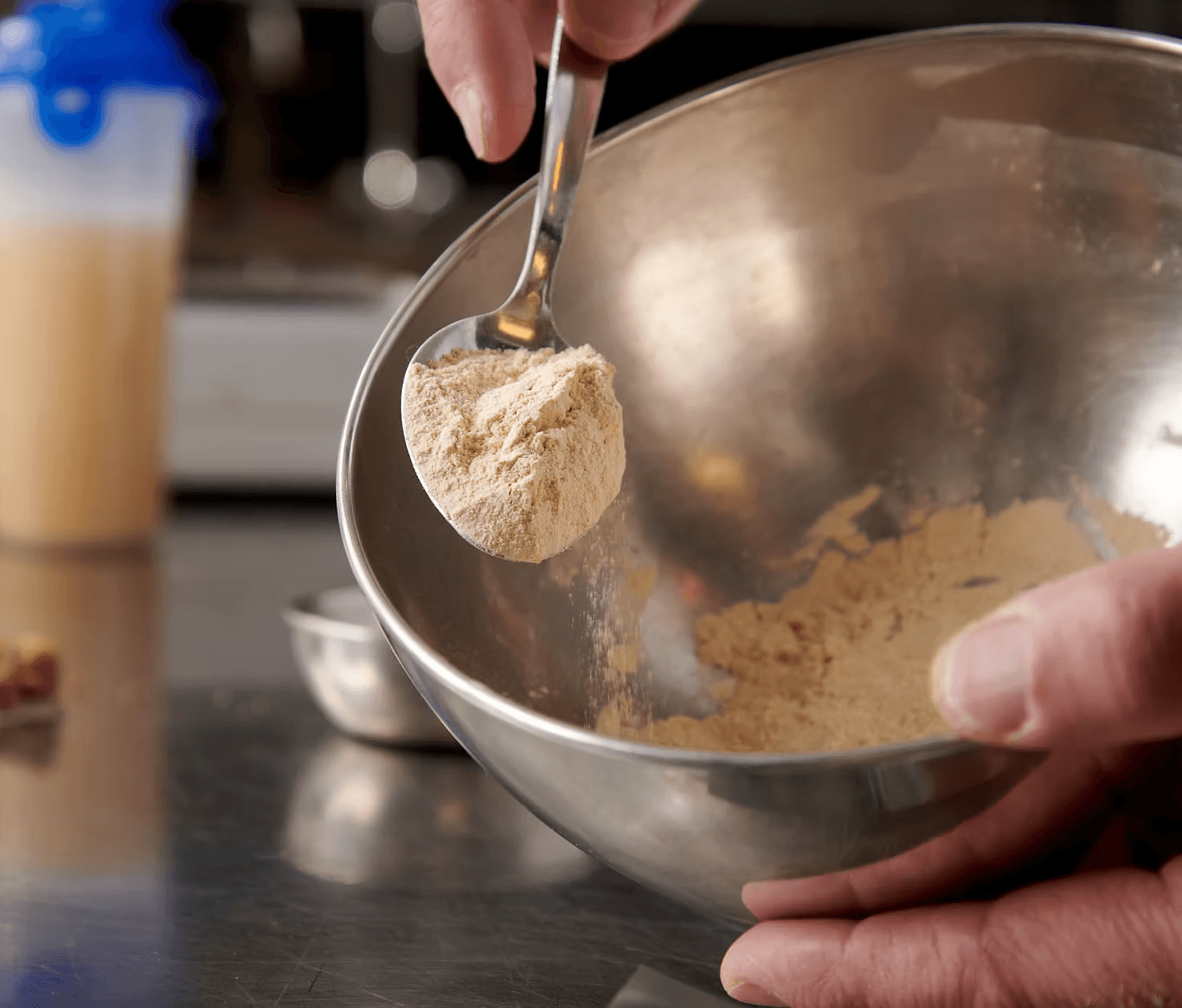
Fermotein® is a versatile, neutral-tasting, and allergen-free ingredient designed for seamless integration into various food products. Structurally, it consists of 50% high-quality protein containing all essential amino acids, and 30% to 35% prebiotic fiber. It also contains valuable micronutrients and fungal bioactives, including spermidine and ergothioneine.
These compounds are associated with cellular maintenance and longevity pathways. Because the ingredient lacks a strong flavor, odor, or color, food manufacturers can easily incorporate it into existing recipes without heavy masking agents. Target applications span a wide range of consumer products, including ready-to-drink nutritional shakes, functional bars, dairy alternatives, and baked goods like muffins and pancakes. The ingredient's physical properties allow it to blend smoothly, maintaining the desired texture of the final product. This combination of high nutritional value, clean taste, and functional versatility makes it an attractive option for food brands seeking to improve the nutritional profile of their offerings.
A six-year journey to get the EU's nod
Securing approval from the European Commission was a six-year journey. The Protein Brewery submitted its initial dossier in May 2020. The European Food Safety Authority issued a positive scientific opinion in December 2025, validating the ingredient's safety. This was followed by a positive vote from the Standing Committee in May 2026, culminating in official authorization in June 2026.
This approval is a watershed moment for the European food sector. Fermotein® is the first mycelium ingredient cleared under the current Novel Food Regulation. Crucially, the authorization grants the company exclusive rights to its proprietary safety data for five years. While competitors must compile their own extensive safety data to gain approval, The Protein Brewery can freely commercialize its product. This regulatory head start allows the company to establish Fermotein® as the industry standard for fungal proteins in Europe.
Commercial scaling and global expansion
With regulatory clearance secured, the company is rapidly scaling its commercial operations. The immediate focus is expanding the production capacity of its facility in Breda, Netherlands. The company aims to produce 600 metric tons of Fermotein® in 2027, with plans to scale production to over 2,000 metric tons by 2029.
To absorb this upcoming volume, the company has already secured customer commitments across Europe, the United States, and Singapore. Beyond these regions, the startup is actively advancing its regulatory filings in other major markets, including the United Kingdom, Canada, Australia, New Zealand, and India. The company expects its first authorization in the UK by the end of 2026.
Strengthening global food security
The rise of mycelium-based proteins like Fermotein® carries profound implications for global competitiveness and strategic food autonomy. As climate change threatens traditional crop yields and livestock supply chains, regions that rely heavily on food imports face severe vulnerabilities. By producing high-quality protein locally using minimal land and water, technology like biomass fermentation strengthens domestic food security.