
How Airbus is building Europe’s autonomous defense shield
Airbus views its mission as a strategic imperative: to build non-dependent, autonomous solutions that guarantee European sovereignty.
Published on April 13, 2026

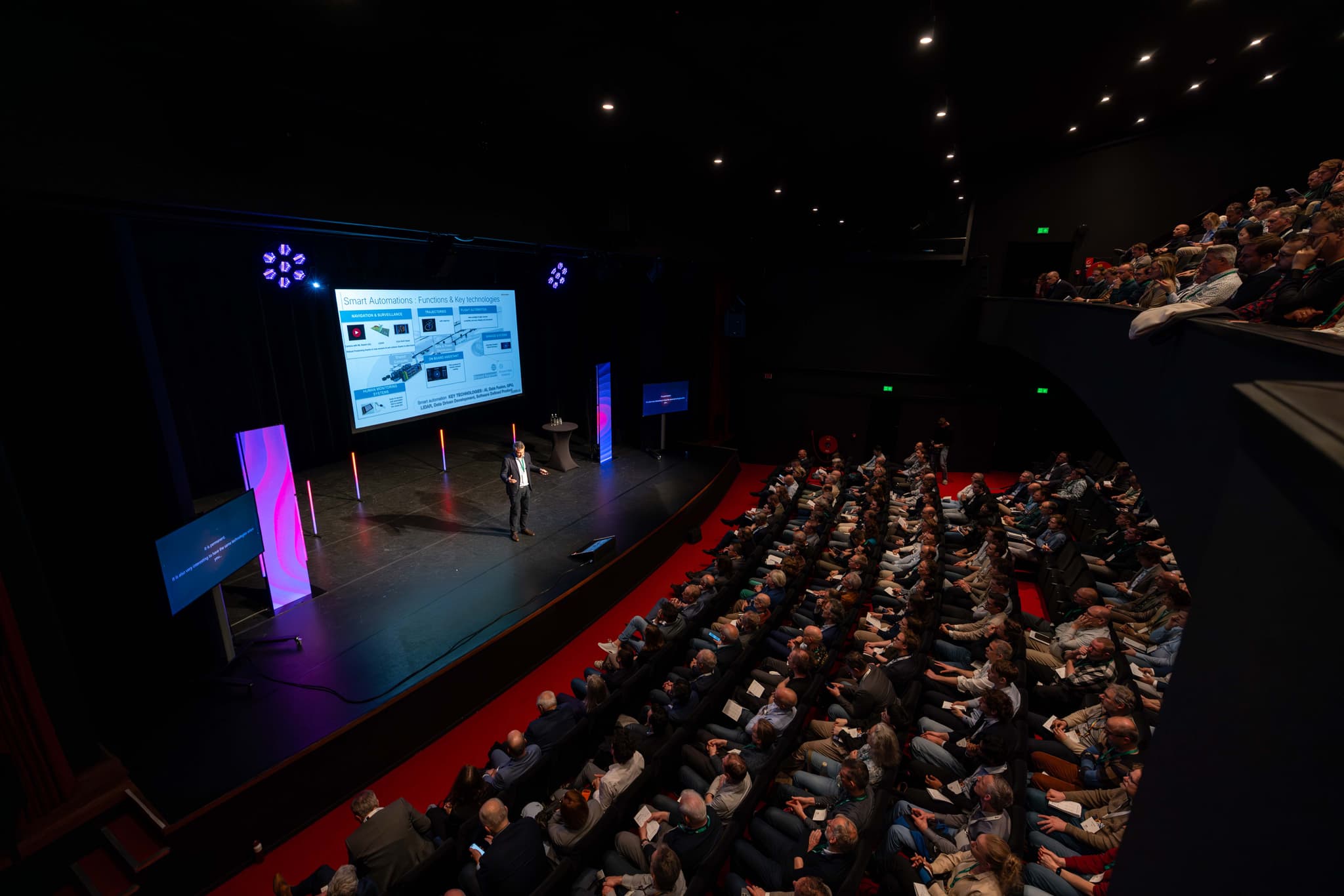
Matthieu Gallas, R&D Lead for Autonomous Systems at Airbus NCAS 2026 © NCAS

Bart, co-founder of Media52 and Professor of Journalism oversees IO+, events, and Laio. A journalist at heart, he keeps writing as many stories as possible.
At the Nationaal Congres Autonomous Systems (NCAS’26) in Drachten, Matthieu Gallas, R&D Lead for Autonomous Systems at Airbus, made it abundantly clear that in today's geopolitical landscape, autonomy is synonymous with security. While Airbus is globally renowned as a €70 billion commercial aerospace giant, a massive €30 billion of its business is dedicated to defense and space.
Faced with a market where the United States and China are aggressively driving the autonomous systems race, Airbus views its mission as a strategic imperative: to build non-dependent, autonomous solutions that guarantee European sovereignty.
Lessons from Ukraine: AI on the battlefield
The urgent need for autonomous capabilities has been starkly highlighted by the ongoing war in Ukraine. Gallas pointed out that GPS is no longer the "magical asset" it once was; as jamming becomes commonplace, the ability for drones and aircraft to navigate in GNSS-denied environments is now a critical necessity.
Furthermore, the conflict has proven the necessity of Automatic Target Recognition. To achieve this, Airbus is moving beyond traditional software coding. Because the complexity of modern military use-cases cannot be handled by standard software, Airbus is heavily integrating Artificial Intelligence, Neural Networks, and Large Language Models (LLMs) to enable autonomous end-to-end flight missions.
Swarming, teaming, and the future of combat
Airbus is fundamentally changing how air missions are executed by developing advanced "human-machine teaming" and swarming capabilities. In the near future, European Ministries of Defense expect to deploy combat aircraft and helicopters that are accompanied by autonomous drones. These drones will execute highly dangerous missions on behalf of the human pilot who remains safely in the loop.
This vision culminates in the Future Combat Air System (FCAS), a massive European defense program. FCAS will feature a manned combat aircraft at its center, seamlessly teaming with drones and relying on massive data connectivity to function as a unified, autonomous combat network.
Alongside combat operations, Airbus is also prioritizing the development of military cargo drones. Supplying troops in the field is a notoriously tricky and dangerous operation, making the ability to deploy goods autonomously with minimal human risk a "magical product" for national defense forces.
The certification wall and the software-defined aircraft
Bringing these systems from the lab to the sky requires overcoming monumental hurdles. Much like the automotive industry a decade ago, aerospace is shifting to become fundamentally software-oriented. The amount of code required for next-generation aircraft is exponentially higher than legacy models.
The biggest bottleneck in this transition is certification. Aviation authorities must shift their entire paradigm from certifying deterministic systems (where every outcome is hard-coded and predictable) to a statistical approach required for artificial intelligence. Airbus is actively working with safety authorities to define how these highly complex, self-learning systems can be proven safe and secure.
From the trenches to the commercial cockpit
Ultimately, the high-stakes innovations forged in the defense sector will not remain solely military. Gallas concluded that the autonomous technologies developed for defense, such as smart automation, GNSS-denied navigation, and AI-assisted decision making, are actively crossing over into Airbus's commercial airliners. By deploying these military-grade technologies in the commercial cockpit, Airbus aims to support pilots, drastically increase passenger safety, and optimize flights to lower global emissions.
Airbus NCAS 2026 © NCAS