
Holland High Tech wants acceleration: from strategy to execution
Holland High Tech positioned itself at its networking event in The Hague as the orchestrator: the place where all high-tech lines converge.
Published on June 18, 2026
Bart, co-founder of Media52 and Professor of Journalism oversees IO+, events, and Laio. A journalist at heart, he keeps writing as many stories as possible.
At Holland High Tech’s annual Networking Event, high-tech, government and defence came together around one central question: how can the Netherlands ensure that innovation does not remain stuck in plans, but grows into strategic strength?
At the Fokker Terminal in The Hague, the event's message was already evident in its title: Ignite Innovation: Accelerating Dutch High Tech. Technology is no longer a choice, Holland High Tech stated in the run-up to the event, but a foundation for resilience, autonomy and sustainable growth. The programme therefore brought together industry, knowledge institutions and government around themes such as cognitive robotics, future of compute, semicon, circular economy, the National Technology Strategy and defence innovation.
That breadth was no accidental sum of parts. In the words of Peter Stolk, chair of Holland High Tech, the organisation stands “at the intersection of government policy and the high-tech ecosystem”. Where last year he still expressed the hope that a new cabinet would embrace the knowledge and innovation economy, he could now conclude that “a major step” has been taken in that direction. According to him, the National Technology Strategy, the industrial policy agenda and the strategic markets provide direction to a landscape in which Holland High Tech is increasingly taking on the role of connector, programmer and adviser.
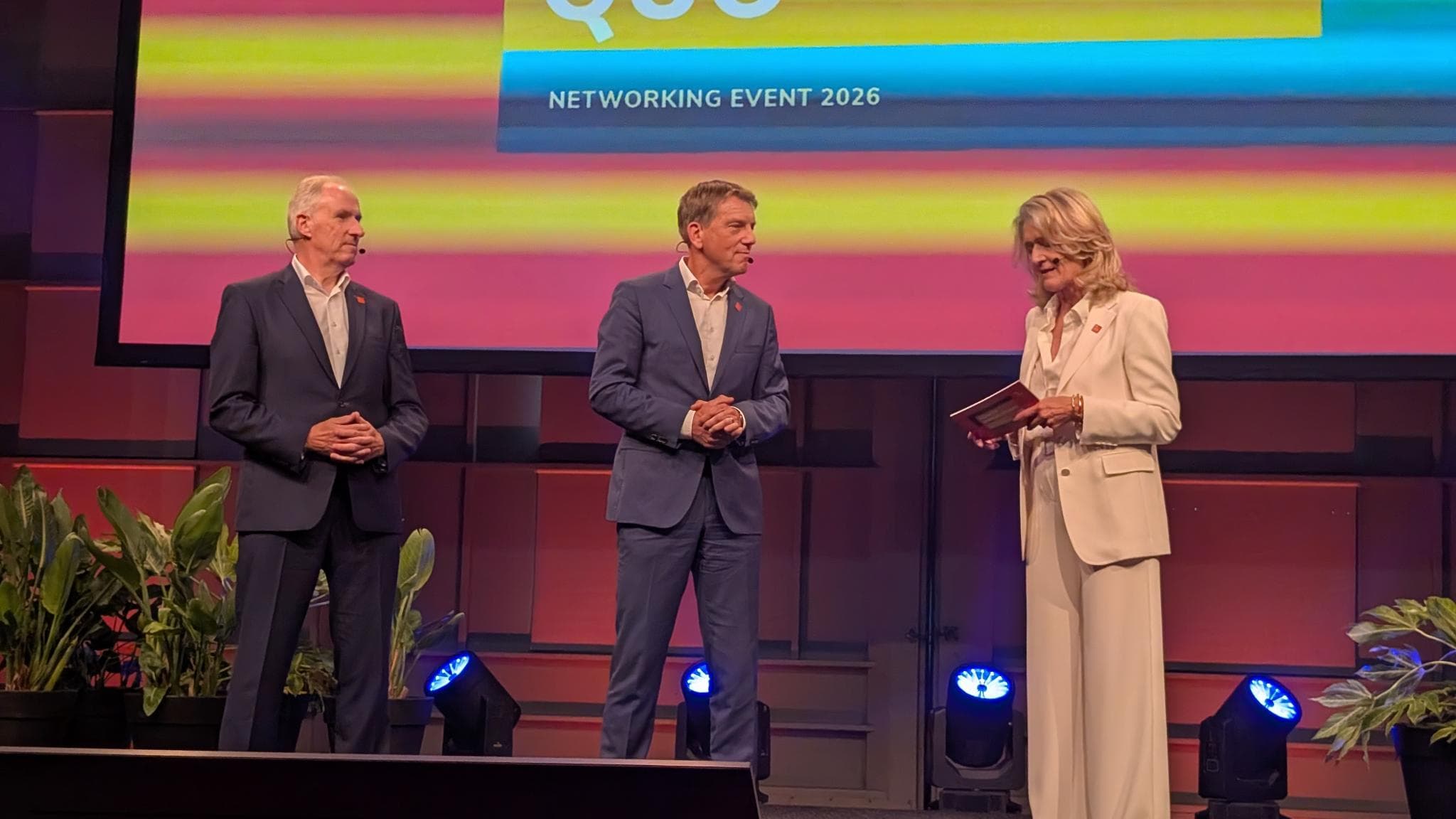
Leo Warmerdam, executive director of Holland High Tech, made that role concrete. In 2025, Holland High Tech funded 168 projects with a total project volume of €87 million, about half of which came from subsidies and the other half from contributions by participating companies. He also pointed to the programme council that is now up and running, with eleven innovation domains closely linked to the National Technology Strategy (NTS). The underlying message: public-private cooperation is no longer a side issue, but the way in which the Netherlands must organise its technological position.
Robotics evangelist
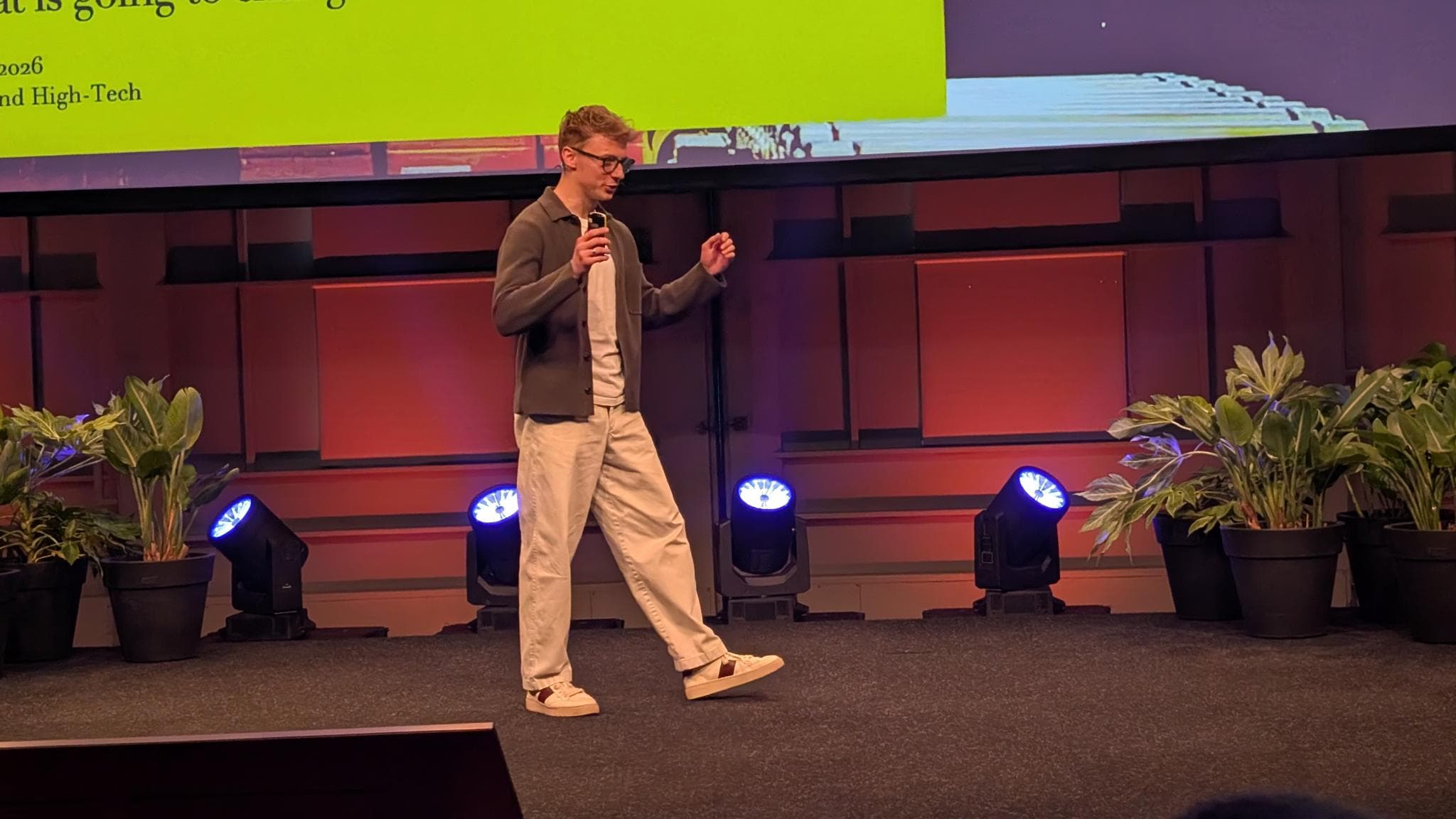
The urgency became immediately clear in Lukas M. Ziegler's keynote. The European robotics evangelist, who says he has seen more than 150 robotics companies from the inside since 2018, placed cognitive robotics at the heart of the next industrial wave. According to him, AI has already changed the digital world; now AI is getting a body. “Physical AI”, he said, is no longer a hobby topic for nerds but is recognised by young engineers, investors and institutes as a strategic field. Robots that can perceive, reason and adapt are, according to him, no longer a distant future. “We are no longer approaching Robotics 2.0,” he said, “we have entered a new era.”
.jpg&w=2048&q=75)
Lukas M. Ziegler © Igor Vermeer
Ziegler linked that technological leap to three developments: ageing, labour shortages and the explosion of e-commerce. According to him, labour is becoming a luxury for the first time in history. At the same time, consumers still want their package delivered tomorrow. In that tension, robotics is not a gadget but a necessary engine for productivity. Still, he warned against hype. The most promising humanoids, he said, do not start as all-rounders, but with one task: welding, moving boxes, inspecting, sorting. First, excel in one application, only then expand horizontally. And “in all honesty”, he added: “At the moment, there is still no logical business model available that would justify purchasing a batch of humanoid robots.”
Flexible automation
Ton Peijnenburg, CTO of VDL Enabling Technologies Group and member of the programme council, extended that line to the Dutch manufacturing industry. For him, the great promise of cognitive robotics lies in flexible automation. While classical automation often gets stuck at low volumes, with limited variation and difficult ROI, robots with recognition and learning capabilities can become more widely deployable. In that way, they can strengthen productivity and competitiveness. But Peijnenburg also made clear where the real value lies: in data and craftsmanship. “There is an enormous amount of craftsmanship in our industries,” he said. “If we want to automate that, we need to transfer that craftsmanship to robots; that makes craftsmanship an asset.” The Netherlands should not simply give away that asset.
This also made robotics a matter of strategic autonomy. Peijnenburg saw three routes: applying robots in domestic industry, supplying components and production capacity for robotics, and building automation systems in which new types of robots can find their place. According to him, Holland High Tech can take on the missing role of orchestrator in this. Earlier robotics initiatives partly failed because parties moved past each other. What is needed now is system development: technology, application knowledge, chips, AI, sensors, data and production must come together.
.jpg&w=2048&q=75)
© Igor Vermeer
Sharper choices
Tjerk Opmeer, deputy director-general for Enterprise & Innovation at the Ministry of Economic Affairs and Climate Policy, placed that call in a geopolitical context. The world is becoming more complex, he said, with the rise of Asia, China’s strategic position and changing relations with the United States. Precisely for that reason, Europe, and within it the Netherlands, must make sharper choices. The Dutch high-tech position is strong, from fundamental research to system integration, from start-ups to major companies. But the question is where the Netherlands wants to be indispensable. “We cannot be the best at everything,” was the underlying message. Focus is necessary.
That focus took different forms in the programme. In the breakout session Next Steps in Semicon, the move from roadmap to execution was central, with Semicon Vision 2035 as the starting point. In the session on the National Technology Strategy, the discussion focused on action agendas and innovation coalitions: how policy is translated into consortia, calls and projects. The circular economy session focused on scalable, joint value chains for high-tech systems. And in the live podcast sessions by IO+, the discussion was broadened to include voices from the innovation ecosystem, including Ziegler, Opmeer, and Neways CEO Hans Büthker.
Dual use
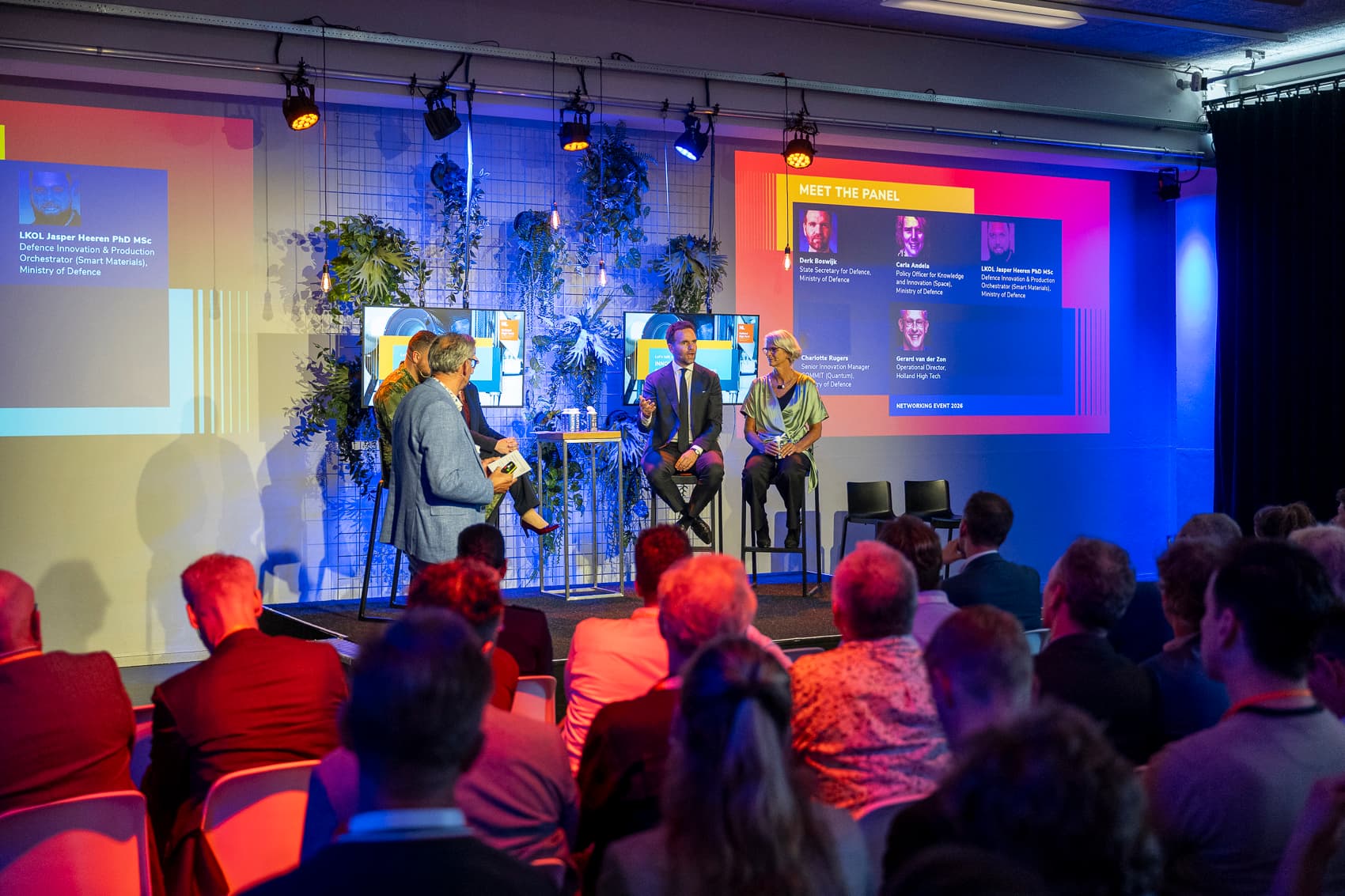
The most urgent tone came from the defence sector. In the breakout Innovation in Security & Defence, the focus was on accelerated dual-use ecosystems: how high-tech SMEs can contribute to defence innovation and European strategic autonomy. Holland High Tech pointed to a new innovation domain: High-Tech Security. In addition, there is a strategic programme with €2.5 million in annual funding for three years, and the SME Defence Call was mentioned, for which interest was “unprecedentedly” high.
© Igor Vermeer
Carla Andela, responsible for space technology at Defence, showed how concrete that cooperation is becoming. Spaceflight is no longer a niche, but part of military and civil resilience, she said. A range of factors plays a role in this: GPS disruption, space weather, space debris, and the protection of satellites require sensors, cyber technology, quantum technology, and launch capacity. According to her, Europe still launches far too little compared with SpaceX. The message to the room was clear: Defence may want many things, but it needs industry and knowledge institutions to develop the armed forces of the future.
Charlotte Rugers, senior innovation manager COMMIT for quantum, brought a sober test to a domain that is quickly surrounded by big promises. For Defence, she said, the principle is: “Only quantum if it really makes a difference.” Quantum can be relevant for sensors, computing, networks and understanding new threats, but soldiers in the field have no use for technology for technology’s sake. It must work, be integrated into systems and contribute to a successful mission.
Jasper Heeren, Defence Innovation & Production Orchestrator for smart materials, zoomed in on materials. “Composites can save weight and provide protection; additive manufacturing can enable local production and reduce dependence on logistics chains; metamaterials can help make things less visible at radar, infrared or acoustic level.” But perhaps his most important point was that materials are worth little without a manufacturing industry. “Ultimately, those materials are of no use to us if we cannot also produce them,” he said.
Innovation can go wrong
That idea connected with the plenary speech by State Secretary Derk Boswijk. He began with a story from 1888, when a fatal accident involving electricity was seized upon by the oil and petroleum industry to portray electrical innovation as dangerous. Yes, innovation can go wrong, Boswijk said. But that must not be an excuse to stop. “When it comes to defence, the most dangerous thing you can do is play it safe.” The war in Ukraine shows, according to him, that playing it safe is not an option: those who fall behind lose.
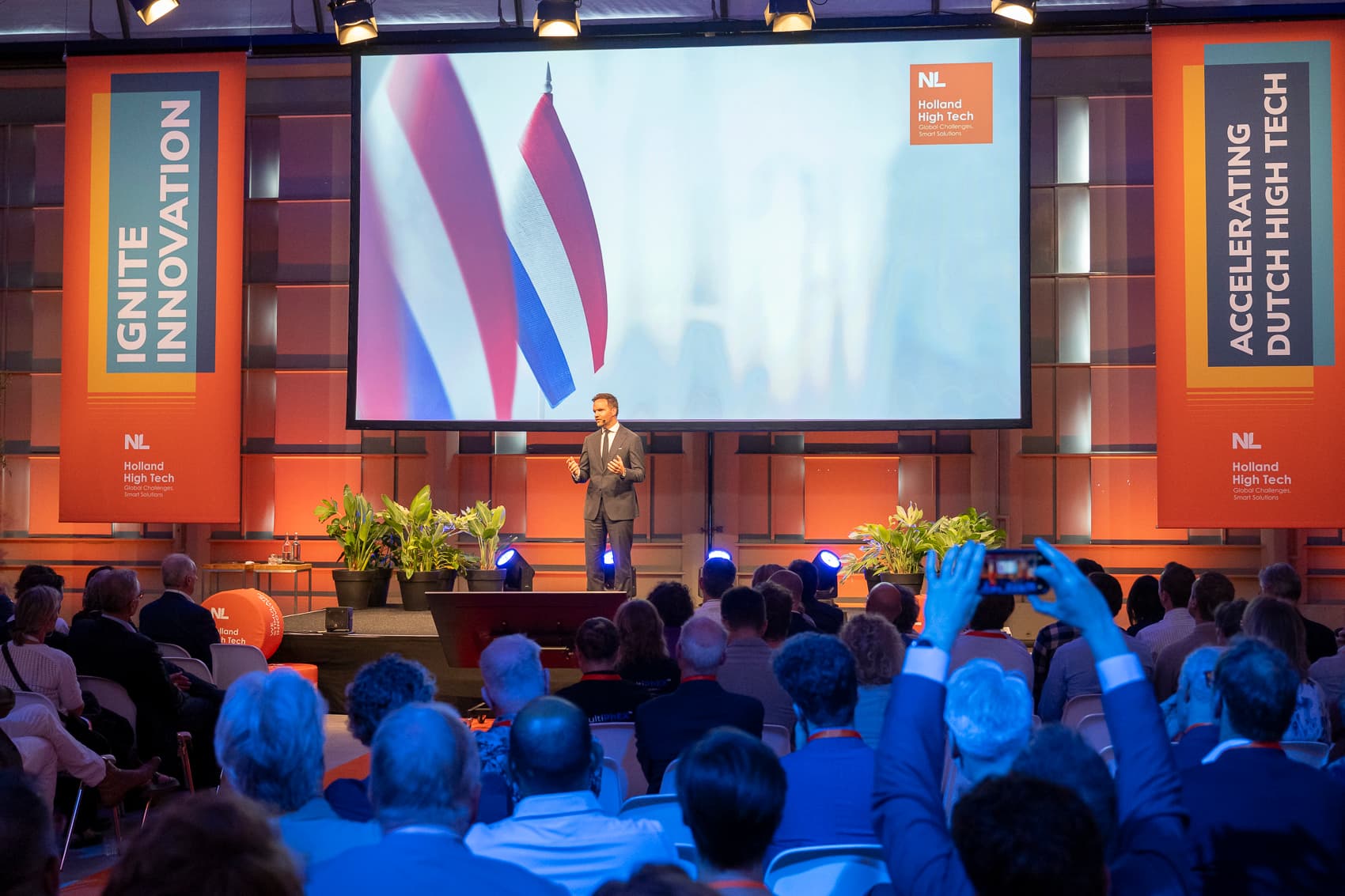
Derk Boswijk © Igor Vermeer
Boswijk placed the biggest innovation challenge not with a new type of drone or tank, but with collaboration. “The biggest innovation we need to realise is closer cooperation between knowledge institutions, schools, universities and companies.” In doing so, government must learn to accept that not everything can be captured in Excel in advance. Defence will more often formulate effects and ask the ecosystem to help think about solutions. That requires trust, risk acceptance and a willingness to make mistakes.
Demand for computing power
Freeke Heijman-te Paske, vice president QuIC for Qblox and strategic adviser to Holland High Tech, then shifted the gaze to the future of compute. Demand for computing power is growing explosively, while energy consumption and geopolitical dependencies are increasing. “With ASML, the Netherlands has an exceptionally strong control point, but it needs more such strategic positions in the value chain.” In advanced semiconductors, quantum, integrated photonics, neuromorphic computing and high-performance computing, she sees an ecosystem that is already much stronger than is often said. Research shows, according to her, that 65 fast-growing companies are active in this domain, representing a substantial share of tech capital. But the bottleneck lies in scaling up: from lab to fab, the Netherlands must “step up our game”.
Her appeal was pragmatic. Stop constantly inventing new structures; break down walls between initiatives and connect what already exists. “We need the cables, we need the sensors, AI, the whole stack,” she said. The future of compute is therefore not a separate technology dossier, but the digital backbone of the economy, industry and defence.
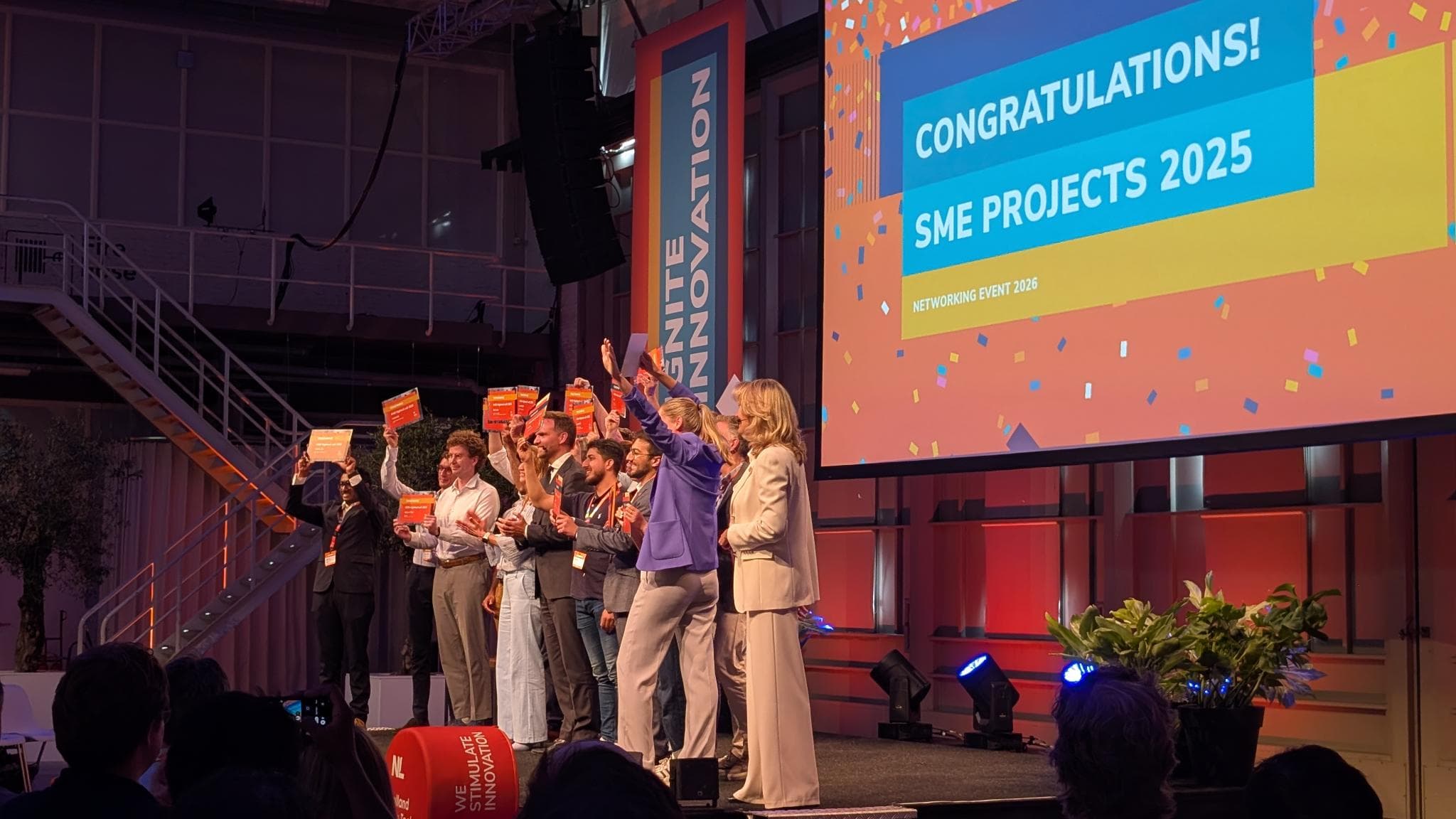
At the end of the programme, that line came together in the presentation of the SME High-Tech and SME Defence call projects. With Esther Kersten on behalf of Holland High Tech and Derk Boswijk on behalf of Defence, the importance of SMEs was further emphasised. Kersten highlighted the role of SMEs as the engine of the economy: teams that push the boundaries every day of what is possible and manufacturable. Boswijk praised the quality of the proposals and saw in them exactly the connection needed: linking the innovation ecosystem to Defence's needs.
Tangible foundation
In this way, the Networking Event became more than an annual meeting with lunch, an innovation market and dinner. The stands with innovation brokers, KIEM Hightech projects, student teams, SME Call projects and Growth Fund programmes gave the programme a tangible foundation: this is about companies, consortia and people bringing technology into application. The closing networking reception was therefore not a side issue, but part of the method.
The relevance of the day lay precisely there. The Netherlands has strategies, agendas and strong ecosystems. But the speakers repeatedly raised the bar: accelerate, choose, scale up and dare. Cognitive robotics requires industrial data and system integration. Future of compute requires new control points. Defence requires dual-use innovation that does not stop at R&D, but pushes through to implementation. Semicon, circularity and the National Technology Strategy all require execution.
Holland High Tech positioned itself in The Hague as the place where those lines come together. Not because one organisation has all the answers, but because no one can deliver them alone. Or, as Stolk and Warmerdam showed at the start: the high-tech ecosystem stands at a crossroads. The question is no longer whether the Netherlands must accelerate. The question is whether it will succeed in converting the energy of this day into production, cooperation and strategic strength.
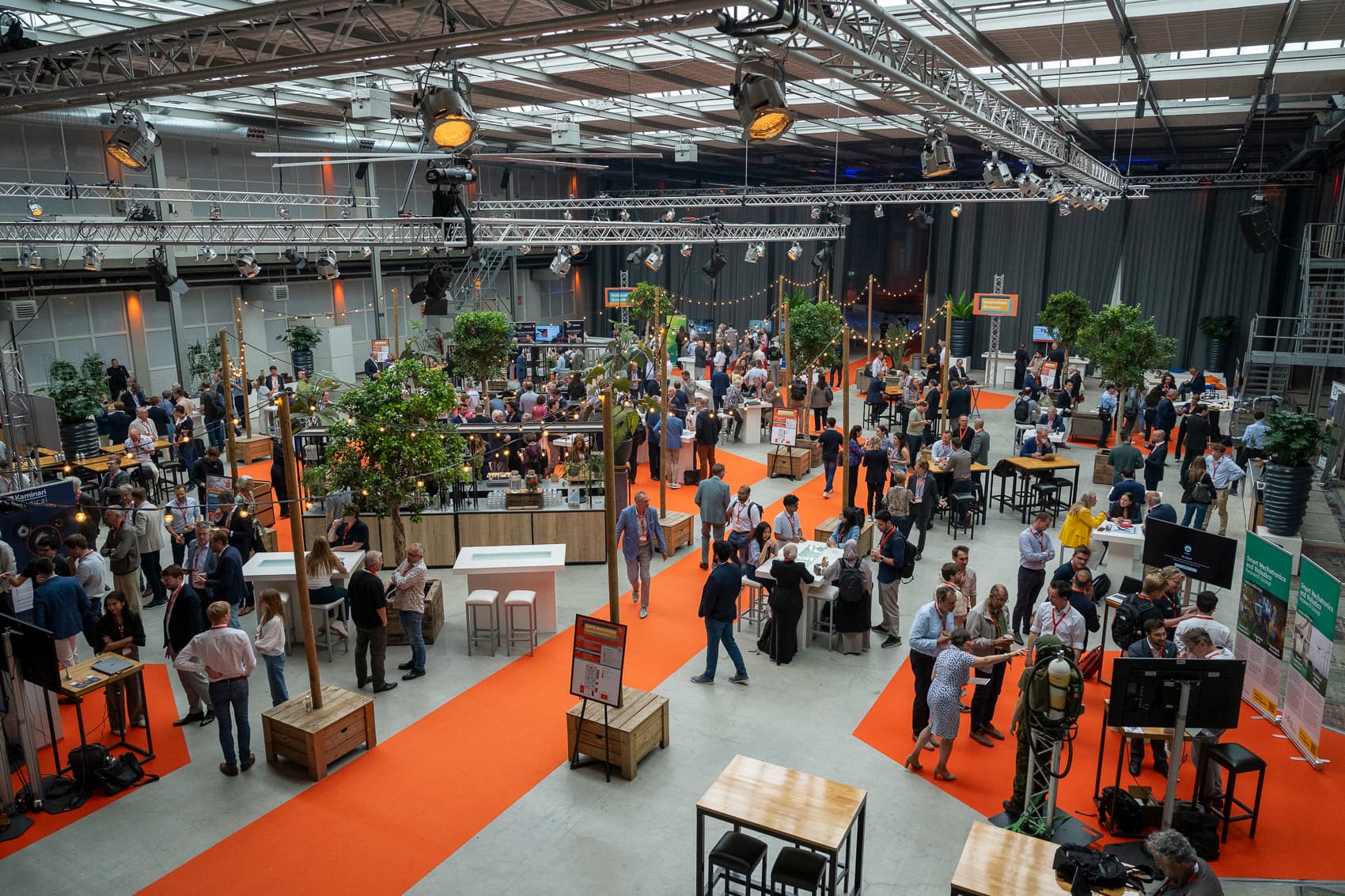
© Igor Vermeer