
Healthy ageing starts with good measurement
Lifelines is building a unique long-running research cohort - one that still holds untapped opportunities for market players as well.
Published on January 16, 2026
Bart, co-founder of Media52 and Professor of Journalism oversees IO+, events, and Laio. A journalist at heart, he keeps writing as many stories as possible.
How can we grow old in better health? Why does one person remain healthy throughout life while another becomes ill? Many of these questions can only be answered through scientific research. That is precisely why Lifelines exists: to enable scientific research into healthy ageing. It does so by collecting data and biological samples from 167,000 people in the Northern Netherlands and making these available to researchers and policymakers.
Lifelines is a not-for-profit company with a simple yet ambitious mission: to make healthier ageing possible. Since 2006, the organization has been collecting data and biological materials from around 167,000 residents of Northern Netherlands and, under strict conditions, making them available to researchers and policymakers. “Ultimately, we want to create impact in the form of more healthy years of life for the population,” says director Debbie van Baarle. “That is the higher goal.”
In doing so, Lifelines aims to bridge the public and private spheres. “We have a public mandate and entrepreneurial energy. That tension is precisely our strength: we bring science and society together, build partnerships, and ensure that knowledge and research reach practice more quickly.”
What makes Lifelines unique
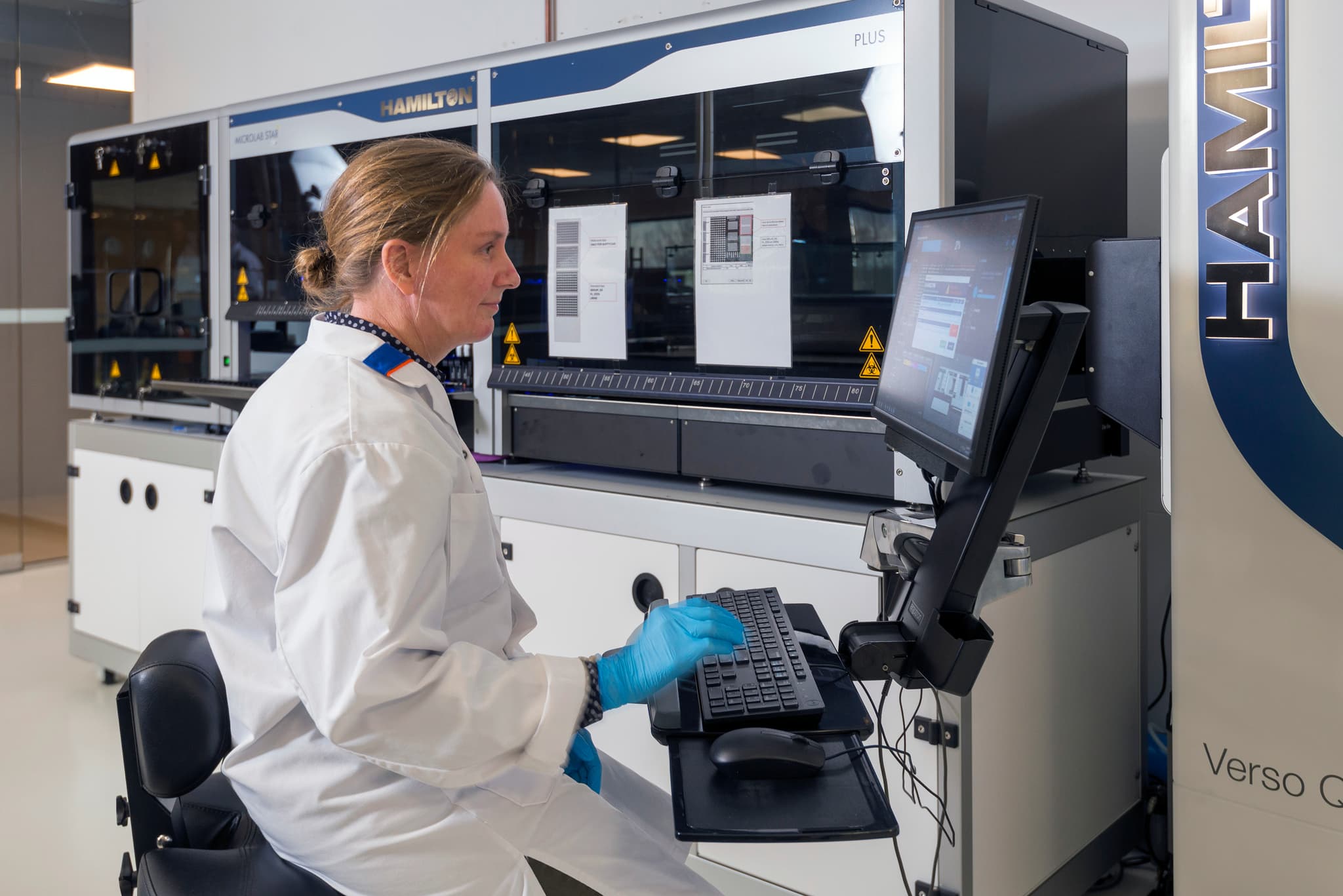
The Netherlands has several cohorts and biobanks - such as the Rotterdam and Maastricht studies, or ageing cohorts in Leiden - but Lifelines stands out for its scale and duration. “We serve a large region and follow participants longitudinally,” says Van Baarle. “Every five years, they visit a Lifelines location for an extensive health examination.” The fourth research round is currently underway. About half of the roughly 70 staff members are involved in data and sample collection (questionnaires, cognitive tests, blood sampling, and biobank management); the other half focus on making data and samples available. “We don’t analyze the data ourselves,” the director emphasizes. “But we ensure that researchers can extract maximum value from it, for example through data linkages, support with additional questionnaires, or the execution of supplementary measurements.”
From data to decision-making
Lifelines’ strength becomes apparent when long-term data can be linked to current questions. Using this approach, researchers identified, for instance, a relationship between BMI and the density of fast-food outlets in a neighborhood. That kind of information is actionable for local policymakers, from licensing policy to health interventions.
During the COVID-19 pandemic, the societal value became even more immediate. Van Baarle: “We already had fifteen years of data and added current questionnaires. The results showed that lower socioeconomic groups were disproportionately affected by lockdowns, partly because they exercised less. Such insights helped justify reopening gyms earlier.”
Engaging and retaining participants
A long-running cohort requires sustained attention to representativeness. “Keeping people engaged for twenty years isn’t easy,” Van Baarle says. “Certain groups drop out more quickly: people with limited mobility, or those with a lower socioeconomic status. Those are exactly the groups you want to retain.” That’s why Lifelines invests in personal follow-up: letters, phone calls, and increasingly targeted communication. “We’re also developing an app that allows us to give more back to participants, from test results to personal tips. That can be a strong motivation to keep participating: people want to know how their health is doing and what they can do about it.”
Public funding and entrepreneurial thinking
Lifelines is funded by its shareholders UMCG and the University of Groningen, as well as by major grants, currently mainly from the Ministry of Health, Welfare and Sport (VWS). But relying solely on public funding is risky. Moreover, VWS contributions are declining while internal costs are rising. New sources are therefore needed. The goal is a healthy balance: public funding where necessary, supplemented by partnerships that strengthen both independence and societal value. “Researchers already pay a fee for data or samples; in addition, we’re exploring collaborations with biotech and pharma, always within clear societal frameworks,” says Van Baarle. “Our test is simple: does it contribute to more healthy years of life, and does knowledge flow back into our database? If the answer is ‘no’ or ‘ambiguous,’ we generally don’t proceed. Separately, we’re also developing a set of standard conditions so expectations toward the market are clear.”
This is where the Northern Netherlands Development Agency (NOM) comes into play. “We’ve been big fans of Lifelines from the start, but our involvement has become more concrete recently,” explains project manager Gerard Lenstra. One visible step is the appointment of a ‘dealmaker’: someone who will explore collaborations with industry and other external partners. “Lifelines is an outstanding initiative that truly sets Northern Netherlands apart. A stronger line to the market can further reinforce that foundation, both by making better use of the database and by creating an additional financial source for Lifelines.”
The dealmaker, funded by the NOM for at least one year, can, according to Lenstra, help meet concrete industry needs (initially in pharma and food) without jeopardizing Lifelines’ position. “These market players are the missing link between fundamental research and the individual citizen. This allows us to further amplify Lifelines’ impact. Naturally, everything will continue to happen under transparent and responsible agreements with participants. In fact, I’m a participant myself, and I would personally welcome it if the results ultimately had even greater impact.”
Technology as an accelerator
The future lies in measuring more frequently and more intelligently. Wearables and ‘swallowables’ offer enormous opportunities for continuous monitoring. The first step has already been taken with a large-scale physical activity study conducted with Radboud University Medical Center in Nijmegen, in which participants wear a small activity sensor on their upper leg for a week. “That yields a week of continuous data instead of a completed questionnaire,” says Van Baarle.
Although the focus is on the Northern Netherlands, Lifelines regularly collaborates with partners across the country. National alignment and harmonization between cohorts are high priorities. What remains crucial is a well-functioning network: with RIVM and public health services for population health, with academic groups for science, and with companies for translation into applications. “Research publications are step one; real impact requires translation into practice and policy,” Van Baarle says.
A call to entrepreneurs
Lifelines has a clear message for the outside world: “We are seeking collaboration and exploring new markets. Organizations that can create value from our unique combination of scale, duration, and depth, from preventive care to data-driven policy, are invited to get in touch. Lifelines exists to bring science and society closer together.”
Good to know: participation in Lifelines is not financially rewarded; participants receive their results and a factual ‘health check’. That reciprocity (measuring, giving back, improving) is what makes the program what it is: a driving force behind healthier ageing.