
From vehicle to ecosystem: why Europe needs Brainport
Brainport connects technology, talent and industry to strengthen Europe's mobility sector and make it more independent.
Published on November 12, 2026
Europe is at a crossroads. As demand for electric vehicles grows and digitalisation transforms the mobility sector, international competition is intensifying. The question is no longer who builds the best vehicle, but which ecosystem can bring together innovation, production and talent most effectively.
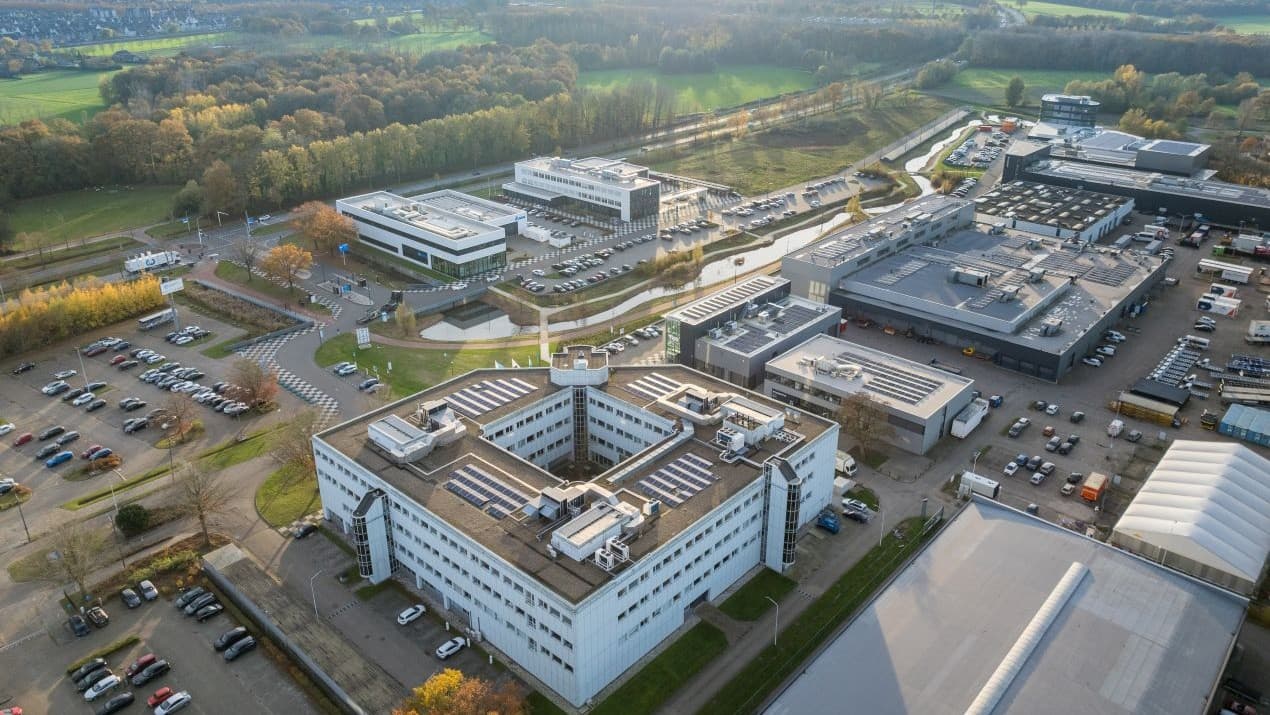
This challenge lies at the heart of the Brainport region. At the Automotive Campus in Helmond, companies, knowledge institutions and governments work every day on technologies that will shape the mobility of tomorrow. From battery technology and smart charging infrastructure to digitalisation and autonomous systems, developments are no longer confined to the boundaries of a single sector.
Collaboration is essential
According to Sascha Bloemhoff, managing director of the Automotive Campus, this growing interconnectedness makes collaboration essential. "The sector has grown significantly and is merging with other sectors. No one can do it alone anymore. The most important thing is collaboration between parties that do not necessarily work together under normal circumstances, all focused on R&D and innovation."
To accelerate this collaboration, Drive Forward will bring together international players from the mobility sector in Helmond on April 14 and 15, 2027. Rather than a traditional conference, it will serve as a meeting place where innovation, entrepreneurship and strategic partnerships come together.
Several representatives explain how this collaboration takes shape in practice, each from their own perspective: Sascha Bloemhoff on cooperation at the Automotive Campus, Mustafa Amhaouch on Europe's battery value chain, and Martijn van Gruijthuijsen on the industrial ambitions of North Brabant.
European independence starts with the value chain
Collaboration is also important for Europe's industrial independence. Europe has strong car manufacturers, but depends on other continents for crucial parts of the mobility value chain. These include batteries, critical raw materials, semiconductor components, digital vehicle platforms and power electronics. Strategic independence does not require complete self-sufficiency, but it does require sufficient domestic knowledge, production capacity and control over standards, interoperability and safety regulations.
Mustafa Amhaouch, director of Battery Competence Cluster - NL, warns that Europe must not repeat the same mistakes with batteries that it made with chips and solar cells. "If you look at those sectors, you see that 80 per cent or more is produced in Asia," he says. To prevent similar dependencies, Europe needs to build its own battery value chain, including both factories and expertise in materials, production processes and battery management systems.
Developing this value chain is not limited to the mobility sector or the Brainport region. Battery Competence Cluster - NL operates across the Netherlands, with each region contributing its own technological strengths. Brainport also has a role to play, for example through the knowledge and expertise of suppliers in the high-tech industry. At the Automotive Campus, the Open Battery Industrialisation Centre (OBIC) helps companies test battery technology and prepare it for industrial production.
A testing ground for mobility
At the Automotive Campus, technologies come together that each contribute to only part of the mobility system of tomorrow. An electric truck, for example, needs more than just a suitable vehicle and a powerful battery. It also requires sufficient charging stations, available energy, energy management systems, smart planning and charging infrastructure suited to the day-to-day operations of transport companies. Vehicle technology, digital systems and energy supply must therefore work together.
The campus provides space to develop and test these kinds of solutions. Bloemhoff describes the location as a "mini-society and living lab". Because the campus is separated from public roads, autonomous vehicles that are not yet permitted on public roads can be tested there. The campus also has approximately 25 testing and laboratory facilities, including facilities for testing powertrains (TNO) and batteries (VDL ETS).
The added value lies not only in the individual technologies, but also in the opportunity to study how they work together. Companies and knowledge institutions can exchange expertise and jointly develop applications that require multiple disciplines. This is important in a sector where vehicles are becoming increasingly connected to digital infrastructure, traffic systems and the electricity grid.
From innovation to industrial strength
A strong innovation environment does not automatically guarantee that technology will also be manufactured in Europe. The municipality of Helmond and the province of North Brabant therefore want to take greater control over the development of the Automotive Campus by bringing its real estate into public ownership. Their aim is to strengthen the campus in the long term as a hub for innovation, business activity, education, research and collaboration.
Martijn van Gruijthuijsen, member of the provincial executive of North Brabant, emphasises the strategic importance of the location: "It is a strategic place where companies, researchers and talent work on the technologies behind tomorrow's vehicle, mobility and energy systems. This is where automotive, digitalisation, electrification and energy come together. In this way, we strengthen the innovative capacity and economic potential of Brabant, the Netherlands and Europe."
To achieve this ambition, companies must also be able to grow beyond the campus and scale up their production. "The campus cannot do that on its own," Bloemhoff emphasises. The location is part of a larger Brainport ecosystem, which includes knowledge institutions, development organisations and other business parks.
When a company outgrows its facilities on the campus, the next step is to explore whether production can take place elsewhere in the region, in Brabant or elsewhere in the Netherlands. In some cases, production abroad is necessary, for example because of costs. In those situations, it is important to keep knowledge and strategic activities as closely connected to the Netherlands as possible.
From collaboration to competitive advantage
Drive Forward can play a connecting role as an international platform. By bringing companies, knowledge institutions and other stakeholders together, it can help create new partnerships. Ultimately, however, success should not be measured by how many parties meet, but by what comes out of those encounters: technologies that are further developed, companies that can scale up, and production capacity that is retained or established in Europe.
The ambition for the Automotive Campus therefore extends beyond vehicles. It is about creating a place where mobility, energy and digital technology come together. Europe's challenge is to turn that collaboration into industrial capacity and economic value. Only when knowledge also leads to production can innovation become a lasting competitive advantage.
Drive Forward takes place on April 14 and 15, 2027, at the Automotive Campus in Helmond. Find more information here: https://www.driveforward.nl/
Sponsored
This story is the result of a collaboration between Drive Forward and our editorial team. IO+ is an independent journalism platform that carefully chooses its partners and only cooperates with companies and institutions that share our mission: spreading the story of innovation. This way we can offer our readers valuable stories that are created according to journalistic guidelines.
Want to know more about how IO+ works with other companies? Click here