
From lab to life: Exploring the autonomy economy at NCAS’26
A wide range of stakeholders explored in Drachten how AI-driven and self-learning systems are reshaping every sector of the economy.
Published on April 3, 2026

Bart, co-founder of Media52 and Professor of Journalism oversees IO+, events, and Laio. A journalist at heart, he keeps writing as many stories as possible.
For a second year in a row, Schouwburg De Lawei in Drachten transformed into the epicenter of technological innovation for the Nationaal Congres Autonomous Systems (NCAS’26). Operating under the theme “Autonomous Systems: The Next Big Thing,” the event brought together CTOs, scientists, and technology providers to explore how AI-driven and self-learning systems are reshaping every sector of the economy.
The day’s core message was perfectly encapsulated during the closing remarks delivered by Lars de Groot, Managing Director of Industrial Systems at Demcon, and Jacquelien Scherpen, Rector of the University of Groningen. Reflecting on the event's "From Lab to Life" ethos, Scherpen emphasized that true acceleration requires co-creation across the entire knowledge chain, seamlessly blending the theoretical insights of universities (WO) with the practical applications of vocational schools (MBO and HBO) and industry. Groot echoed this by issuing a powerful call to action: he urged companies to join Infinitech, a newly launched, long-term ecosystem in the Northern Netherlands. By pooling complex technological building blocks, Infinitech allows businesses to implement autonomous solutions rapidly without having to master every underlying complexity on their own.
More on the NCAS26 event
This article covers some of the highlights of the 2026 edition of the Nationaal Congres Autonomous Systems. Stay tuned on IO+ for more in depth articles from a selection of the keynotes and sessions.
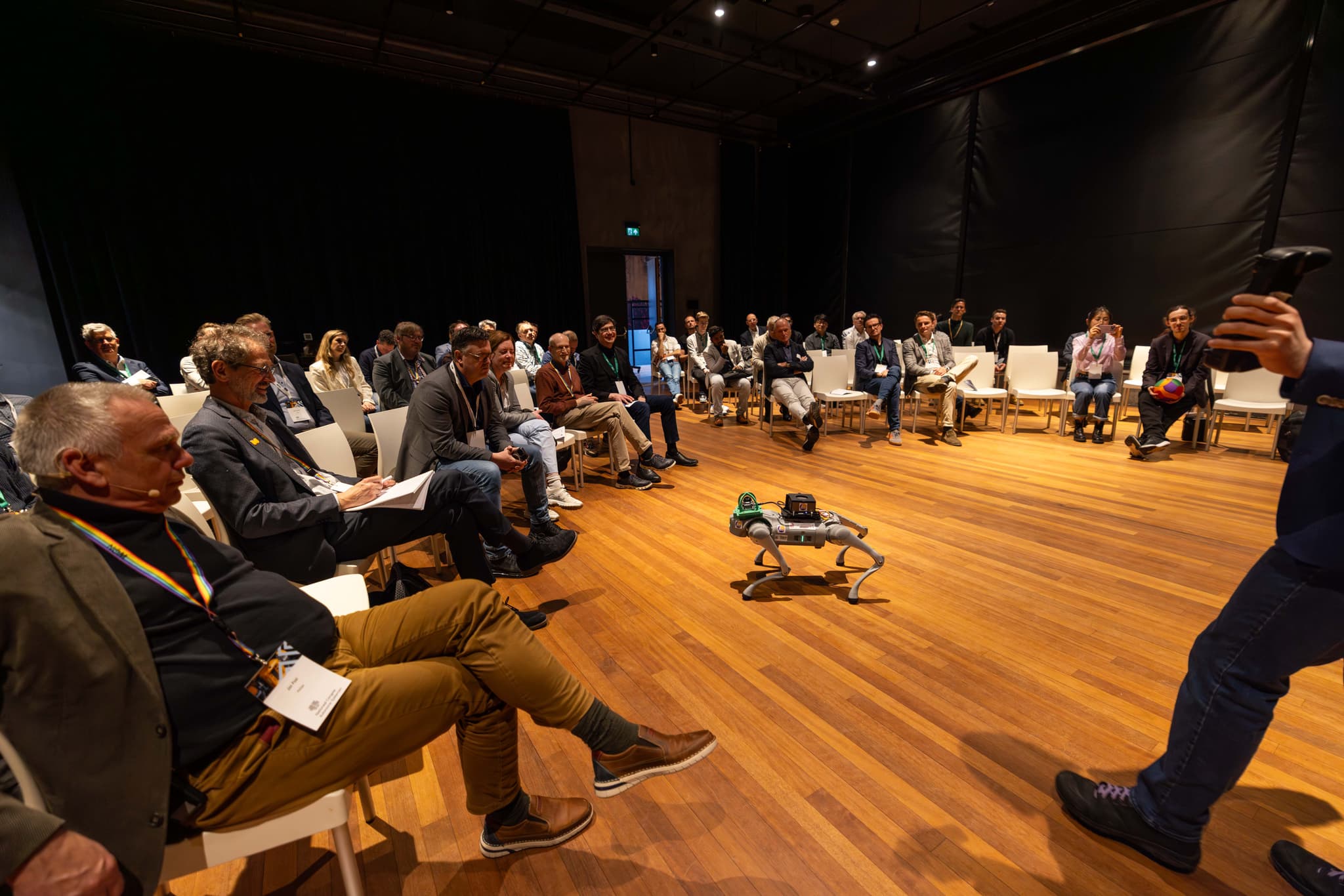
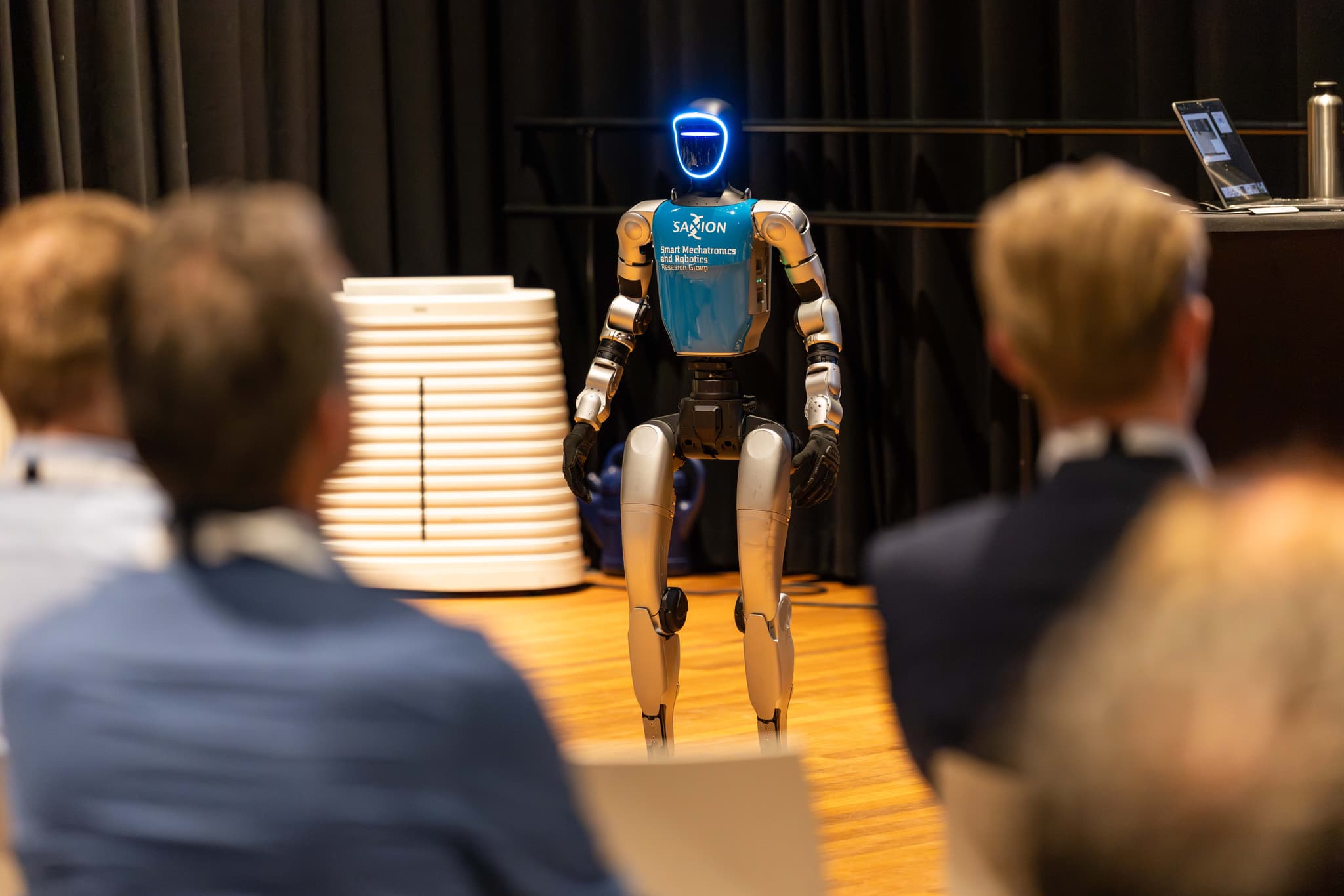
"On the eve of the autonomy economy", the event focused on the whole value chain, from academic research to applications that have already found their way to specific markets. The business side of this journey was never far away during the day, with live demos as well as pitches by representatives of the companies that have already shown their autonomy-readiness.
NCAS 2026 Demoplein
Geopolitics and the push for sovereignty
A major undercurrent throughout the congres was the role of autonomy in global security. Christa Hooijer, Chief Scientist at TNO, opened the day by stressing that the geopolitical world is no longer predictable, making technological autonomy a strategic necessity if Europe is to maintain its sovereignty and "have a seat at the table".
Matthieu Gallas, Airbus R&D Lead for Autonomous Systems, illustrated how autonomous capabilities such as drone swarming, cargo drones, and navigation in GPS-denied environments are now operationally critical in modern defense. Gallas further explained how these military innovations are crossing over into commercial aviation, driving "smart automation" to increase safety, reduce pilot workload, and lower global emissions.
Taking defense autonomy to the tactical level, Timo Roestenberg, CTO of Demcon, showcased how deep reinforcement learning and simulated environments are being used to train unmanned ground and aerial vehicles (UxVs) to make complex tactical decisions on the battlefield.
For NVIDIA's Carlo Ruiz, AI has proven to be the perfect accelerator of autonomous systems. In his talk, he demonstrated how computing architectures, AI software platforms, generative AI, and digital twins have served as a boost for the design, training, and validation of complex autonomous machines.
NCAS 2026 © IMAZZO
Revolutionizing logistics and manufacturing
In the business tracks, industry leaders demonstrated how autonomy is already transforming the factory floor and the supply chain. Christian Schwaiger from KUKA highlighted a shift from classical, rigidly programmed industrial robots to "intent-based robotics". He introduced a new dual-arm mobile robotic embodiment designed to flexibly take over human-centric tasks, such as mixed-case palletizing in highly dynamic warehouse environments.
Ken Fleming, CEO of Fizyr, presented a compelling local success story utilizing Vision AI. In collaboration with Pallet Sorting Systems in Heerenveen, Fizyr developed an AI solution that analyzes camera data to autonomously inspect and sort a massive, unpredictable variety of wood pallets, a highly repetitive, physically demanding job previously reliant on human labor.
Consumer logistics also took center stage with Frederik Nieuwenhuys, CEO of Picnic. He detailed how the online supermarket relies heavily on machine learning for forecasting orders, optimizing routing for their iconic electric delivery vehicles, and even monitoring safe driving. Furthermore, Picnic is successfully scaling robotic arms to pick groceries, overcoming hardware quirks like vacuum pumps clogging with spilled sugar, to automate warehouse fulfillment.
Trustworthy AI and healthcare
The urgent need for autonomous systems was perhaps most starkly presented by Stephanie Klein Nagelvoort of the UMCG. Facing a future where one in four Dutch workers will be needed in healthcare to sustain the system, she argued that autonomy is the only viable solution. UMCG is actively integrating AI to increase "Patient Self-Service" (PSS) and save "Professional Time", such as using AI to instantly generate patient summaries from electronic health records, a task that traditionally ties up doctors for hours.
Providing the academic foundation for these leaps, Professor Shankar Sastry from UC Berkeley delivered a keynote on building trustworthy systems. He discussed the intricacies of neurosymbolic reasoning and physical AI, highlighting "Moravec's paradox": the reality that while it is easy to teach AI complex games, programming a humanoid robot to execute simple human tasks, like reliably opening a door or grasping an object, remains incredibly difficult.
From simulated battlefields to robotic grocery pickers and AI-assisted doctors, NCAS’26 vividly demonstrated that the Autonomy Economy is no longer a futuristic concept, but a present reality. Through collaborative initiatives like Infinitech, the region is perfectly poised to bring these technologies out of the lab and into daily life.
NCAS 2026 © NCAS