
From concrete to greenery: how the environment affects health
The environment surrounding us has an impact on physical, mental, and social health. How can we make the most of it? Two experts explain.
Published on December 18, 2025
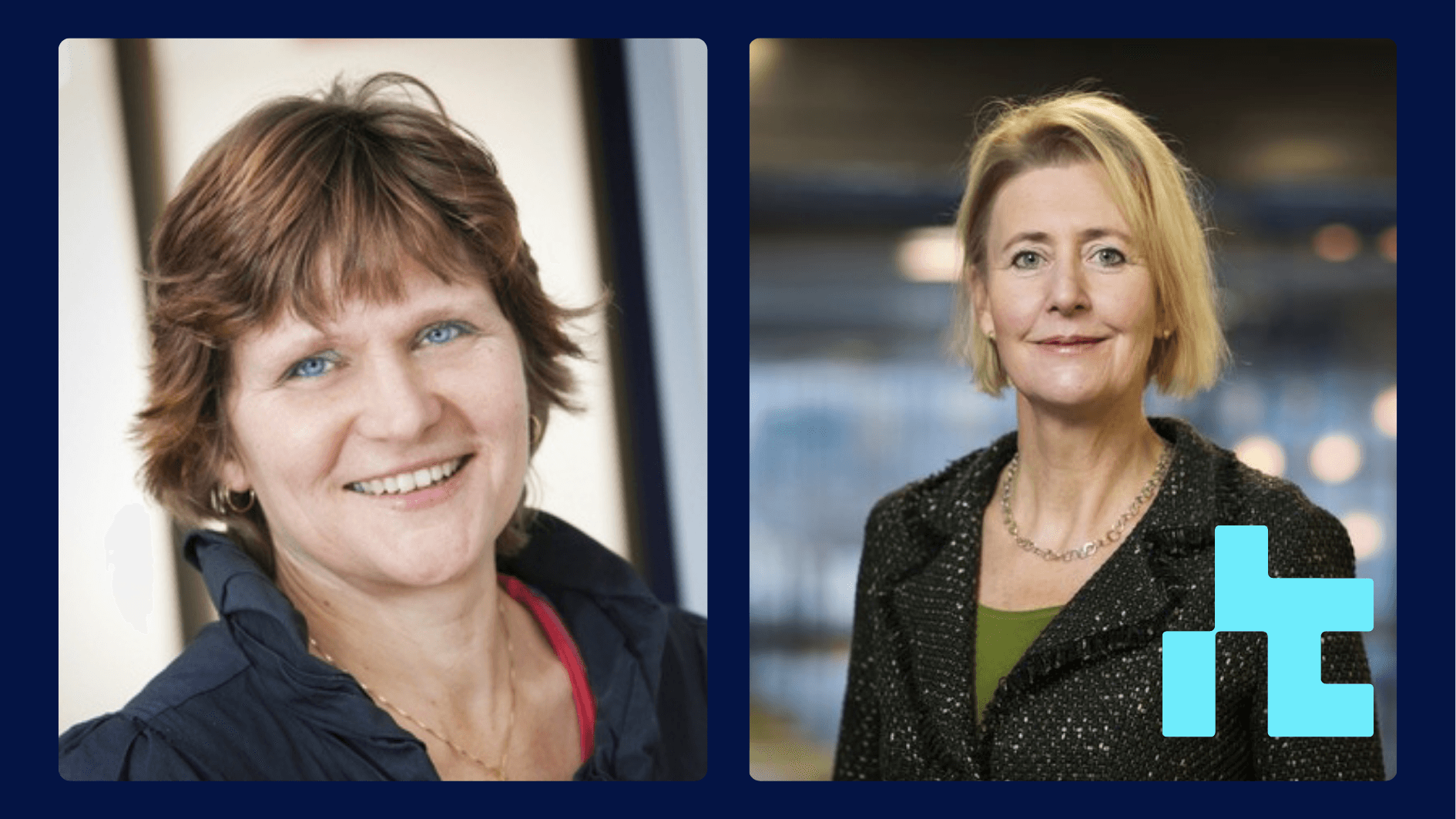
Lenneke Vaandrager en Astrid Kemperman

As Head of Partnerships, Linda liaises with new partners. She coordinates all ongoing collaborations and connects our journalistic editorial and commercial articles. She is not only the connector behind our articles, but also all of our events.
Whereas in the past the focus was on building neighborhoods quickly and efficiently, there is now much more attention to the health and well-being of the people who live there. However, designing the environment appropriately is easier said than done. “You can't just impose change on people; it's a joint process,” says Lenneke Vaandrager, university principal lecturer in Health and Society at Wageningen University & Research (WUR).
4TU.Built Environment, the partnership between the construction-related faculties of the four technical universities in the Netherlands, has a strong focus on health in the built environment. Among the six Domain Acceleration Teams (DAT), Health in the Built Environment focuses exclusively on this theme. Vaandrager is part of the team and, together with his colleague Astrid Kemperman, professor of Urban Planning & Healthy Living at Eindhoven University of Technology (TU/e), discusses the research and their vision for a healthier built environment in the future. Both have been committed to a healthier living environment for decades and seek to inspire others to pay greater attention to it as well.
Different layers
Kemperman distinguishes between three types of environments. Firstly, the spatial environment, which concerns the buildings and other physical elements around us. Secondly, the social environment, for example, the way people interact with each other. Finally, the digital environment encompasses digital aspects, such as data collection, to challenge and motivate people. At present, she is focusing primarily on research into active living environments and community connections, specifically social interaction.
Active and involved
According to Kemperman, the creation of active living environments has become increasingly important in recent years. Many people do not exercise enough (they do not meet the exercise standard), which can lead to obesity and other health problems. “One of the questions we are trying to answer in our research is: how can we motivate people to exercise? Examples include good walking or cycling infrastructure to work or school, using parks to encourage people to exercise, or creating safer outdoor play areas for children,” she explains.
This is also an essential theme for Vaandrager, whose research focuses primarily on healthy, inclusive environments. “Designing and building a pleasant park or a beautiful playground does not guarantee that children will actually play there,” she says. "If the decision to build a new park or playground is made externally, without further consultation with residents, we see that people are less inclined to use it. It is important to make such changes in a collaborative process and to involve people in the creation and implementation of the plans. Then you see that people use it and even take care of things like maintenance together."
A broader perspective
For Vaandrager and Kemperman, working in a multidisciplinary way and involving end users in their research is natural; they have been doing this for years. But they also see it differently sometimes. “Just asking people what they would like is often not enough. Sometimes you have to experience something. That's why it's critical to try something out and see what the reaction is,” explains Vaandrager.
However, she recognizes that securing funding for this type of research is challenging. “There is much less funding available for preventive care (to prevent health problems) than for the curative side (treating health problems that have already arisen). Yet we can see that this type of research and the changes it brings about can yield significant health benefits in the long term.” Moreover, greater cooperation within the government is needed to achieve significant results at scale. “For example, creating more green spaces and restricting traffic in neighborhoods encourages people to exercise more, which in turn reduces obesity. But this falls under the remit of separate ministries, which means there is less attention and funding for improvements in this area.”
Combating loneliness
Another recurring theme in Kemperman's research is the reduction of loneliness. “There is a relatively high level of loneliness among older people. Society is becoming more individualistic; social cohesion in neighborhoods is declining; people are living further apart; and we are increasingly doing things digitally. This can be difficult for older people to keep up with,” she says. TU/e was involved in a project to develop a tool to support older adults' mobility and reduce loneliness. “When people go outside and are active, it's good for their physical health, but also for their mental well-being. They make contact more easily and are among other people.”
In addition, there has been an increase in loneliness among young people, particularly emotional loneliness. “This is a growing problem,” says Kemperman. That is why she started the CARE project (funded by the Dutch Research Council, NWO). "We are trying to find out how young people feel in certain environments, what they do there, and who they are with. We measure this by sending young people short questions via a mobile application, with GPS tracking. We then conduct workshops to gather additional information on their preferences and needs regarding environments in which they feel comfortable. Finally, using Virtual Reality (VR), we work with young people to design an environment that best supports their well-being. VR is well-suited to this, as it allows us to provide them with an idea without immediately making major and costly changes to the built environment. This speeds up the development process and saves on costs."
Digital as a new dimension
Kemperman regularly employs digital technologies, such as VR, in her research. “It helps to gather better information and provides greater insight and understanding among the various parties involved,” she says. In addition, the digital environment can also help to achieve the goals. Kemperman: "If the goal is to get children to spend more time outdoors because they are currently spending too much time on their screens, we could say that the screens should be removed, but we could also look at how we can combine these two elements. Pokémon GO is a good example of this. If you can't imagine life without it, then you might as well use it positively. The same applies to combating loneliness among young people. Loneliness is partly caused by the use of social media and smartphones, but perhaps we can also use them to find a solution to the problem, for example, a fun app for making contacts."
More attention to greenery
Kemperman has seen shifts and improvements over the years. "If you look at the map of cities, you can see that the image of the spatial environment has changed over the years. For example, you see typical 1960s neighborhoods; these were large-scale, with straight streets, primarily designed for car traffic. In the 1970s, we saw more cauliflower neighborhoods. Here, functions such as living, working, and shopping were more integrated, and one primarily observed smaller, meandering streets. In the 1980s, the focus was on inner cities, with greater attention to tourism. Currently, when constructing new neighborhoods, we pay close attention to a healthier living environment, fewer cars, more greenery, and more space for children to play. In ten or twenty years, we may have a completely different perspective. I can imagine that we will then focus our spatial environment more on shared mobility, for example."
In addition to increased greenery, Vaandrager envisions improved biodiversity in the future. “Humans and nature must coexist. I think we can pay more attention to greening, local ecology, and local food production. In any case, if we ensure that our environments promote our health, we can make gains in various domains.”
Sponsored
This story is the result of a collaboration between 4TU.Built Environment and our editorial team. IO+ is an independent journalism platform that carefully chooses its partners and only cooperates with companies and institutions that share our mission: spreading the story of innovation. This way we can offer our readers valuable stories that are created according to journalistic guidelines.
Want to know more about how IO+ works with other companies? Click here