
EU rules are squeezing startups, minister wants action
The Netherlands and seven other EU countries are demanding more flexible rules for startups classified as an “undertaking in difficulty”.
Published on May 31, 2026
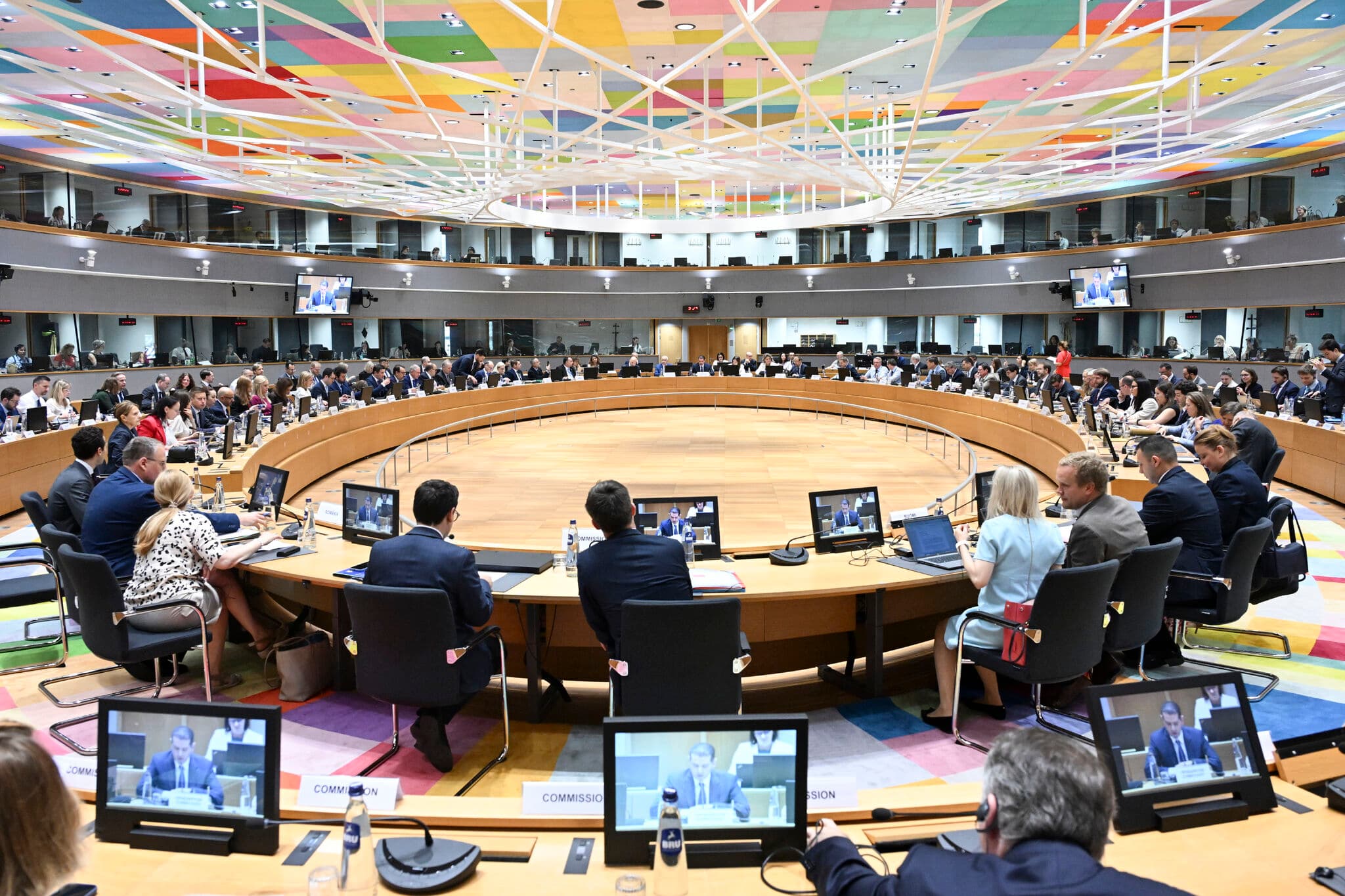
© Ministry of Economic Affairs

Team IO+ selects and features the most important news stories on innovation and technology, carefully curated by our editors.
Europe wants to lead in the global technology race. Yet its own European rules are currently holding back innovative startups and scale-ups. Minister of Economic Affairs and Climate Policy Heleen Herbert is now raising the alarm together with seven other European member states 🔗. The coalition has submitted an official proposal to the European Commission in Brussels. The aim of this initiative is to thoroughly revise the definition of an “undertaking in difficulty” (UID).
This definition was originally intended to prevent unfair state aid to non-viable companies 🔗. In practice, however, the regulation is having exactly the wrong effect on young, fast-growing technology companies. As a result, they miss out on crucial grants, loans, and government guarantees. This not only hampers the growth of individual companies but also damages Europe’s economic position as a whole. The ministers are therefore demanding swift action to repair this bureaucratic flaw.
The flaw in European rules
The core of the problem lies in the strict criteria of the so-called UID definition. This definition determines whether a company is financially healthy enough to receive public support. The European Union uses it to prevent governments from artificially propping up weak companies. That principle makes sense for traditional sectors. But it does not match the reality of the modern tech sector.
Innovative startups have a unique financial structure in their early years. They first invest millions of euros in research and product development. Only later do they become profitable. Current European rules do not regard these financing structures as full-fledged equity. As a result, healthy and promising growth companies are wrongly labeled as “undertakings in difficulty”. The direct consequence is that they are excluded from essential public financing. This slows their growth precisely when they need support most.
Why startups are wrongly left out
The current accounting approach looks solely at the ratio of share capital to equity. For many promising scale-ups, this ratio appears distorted on paper. This is because they use so-called quasi-equity and convertible loans. These are flexible instruments that are only converted into shares at a later stage.
European rules, however, completely ignore these modern forms of financing. As a result, these vital companies immediately fall under the state aid exclusion criteria. Minister Heleen Herbert stresses that, in practice, these companies are financially sound and highly viable. They often have millions in private capital committed to them. Yet European regulation blocks additional public support. That support is badly needed for further scaling.
This creates an uneven playing field with competitors in the United States and Asia. There, this kind of rigid accounting definition does not apply to young technology companies. In this way, European rules unintentionally act as a brake on Europe’s own innovative strength.
A coalition for European renewal
The Netherlands is not alone in this fight for better regulation. Minister Herbert has formed a strong coalition with seven other influential EU member states. Germany, Latvia, Luxembourg, Poland, Slovakia, Spain, and Czechia have backed the Dutch initiative. Together, these eight countries have submitted a so-called “non-paper” to the European Commission. This took place last week during the Competitiveness Council in Brussels.
The joint action by this diverse group of countries sends a powerful signal to the European Commission. It shows that the problem is widely felt across Europe. Both major economies and fast-growing digital frontrunners are running into the same barriers. The coalition demands that the Commission stop relying on temporary exceptions. What is needed is a structural and permanent adjustment of the state aid rules. Only in this way can Europe continue to offer an attractive business climate for top international talent and capital.
The impact on the European economy
The discussion about the UID definition does not stand alone. It directly touches on Europe’s broader objectives for economic autonomy and competitiveness. The European Union has long been working to strengthen the capital markets union. The aim is to make cross-border investment easier. Companies' financing costs must also come down.
The harmonization of insolvency rules is an important part of this strategy. Because of outdated definitions, innovative companies sometimes lack access to capital. If this continues, the whole strategy will fail. Without sufficient growth capital, European startups will move to other parts of the world. They will scale there instead. That means a direct loss of high-quality jobs and technological knowledge for Europe. The economic impact is therefore enormous.
Europe wants to safeguard its strategic autonomy. Promising technologies must therefore be able to mature within Europe’s borders. A flexible and realistic definition of healthy companies is an absolute precondition for that.
Concrete solutions on the table
In the submitted document, the eight member states propose two concrete solutions. These are intended to remove the bottlenecks immediately. The first proposed solution is to explicitly include quasi-equity in the calculation of the UID definition. This would mean that subordinated loans and convertible instruments would count as a buffer from now on. This is much more in line with modern venture investors' practice.
The second proposed solution focuses specifically on small and medium-sized enterprises. The coalition wants to extend the current exemption period for young small and medium-sized companies. At present, an exemption often applies for only a few years for young companies. The countries want to extend this period to up to 15 years. This gives innovative companies the breathing space they urgently need. They can then fully develop and commercialize their technologies. These measures do not cost the European Union any extra money. They only require modernization of the existing legal frameworks.
Missing link
The ball is now in the European Commission’s court in Brussels. The submission of the proposal coincides with a broader European movement. The EU wants to harmonize insolvency law. In the spring of 2026, the Council of the EU already adopted a new directive. This better aligns procedures around bankruptcies. These steps are intended to increase legal certainty for investors and strengthen the capital market.
The adjustment of the UID definition is the missing link in this major reform. There is not yet a firm deadline for the Commission's formal legislative proposal. Still, pressure from the member states is now at its highest. Minister Herbert and her European counterparts will keep up the pressure during the upcoming ministerial meetings. After all, the future of Europe’s tech sector depends on fast and decisive decision-making in Brussels.