
EU recognises four Dutch critical raw materials projects
The EU has designated four Dutch recycling projects as strategic for securing supplies of raw materials such as lithium and copper.
Published on October 11, 2026

Team IO+ selects and features the most important news stories on innovation and technology, carefully curated by our editors.
On Friday, the European Commission officially recognised four Dutch projects as strategic under the Critical Raw Materials Act (CRMA). This recognition speeds access to EU funding and permitting for projects that help secure Europe’s critical raw materials supply. Minister of Economic Affairs and Climate Policy Heleen Herbert emphasises that the projects reduce dependence on high-risk import supply chains by turning innovation and recycling into large-scale applications.
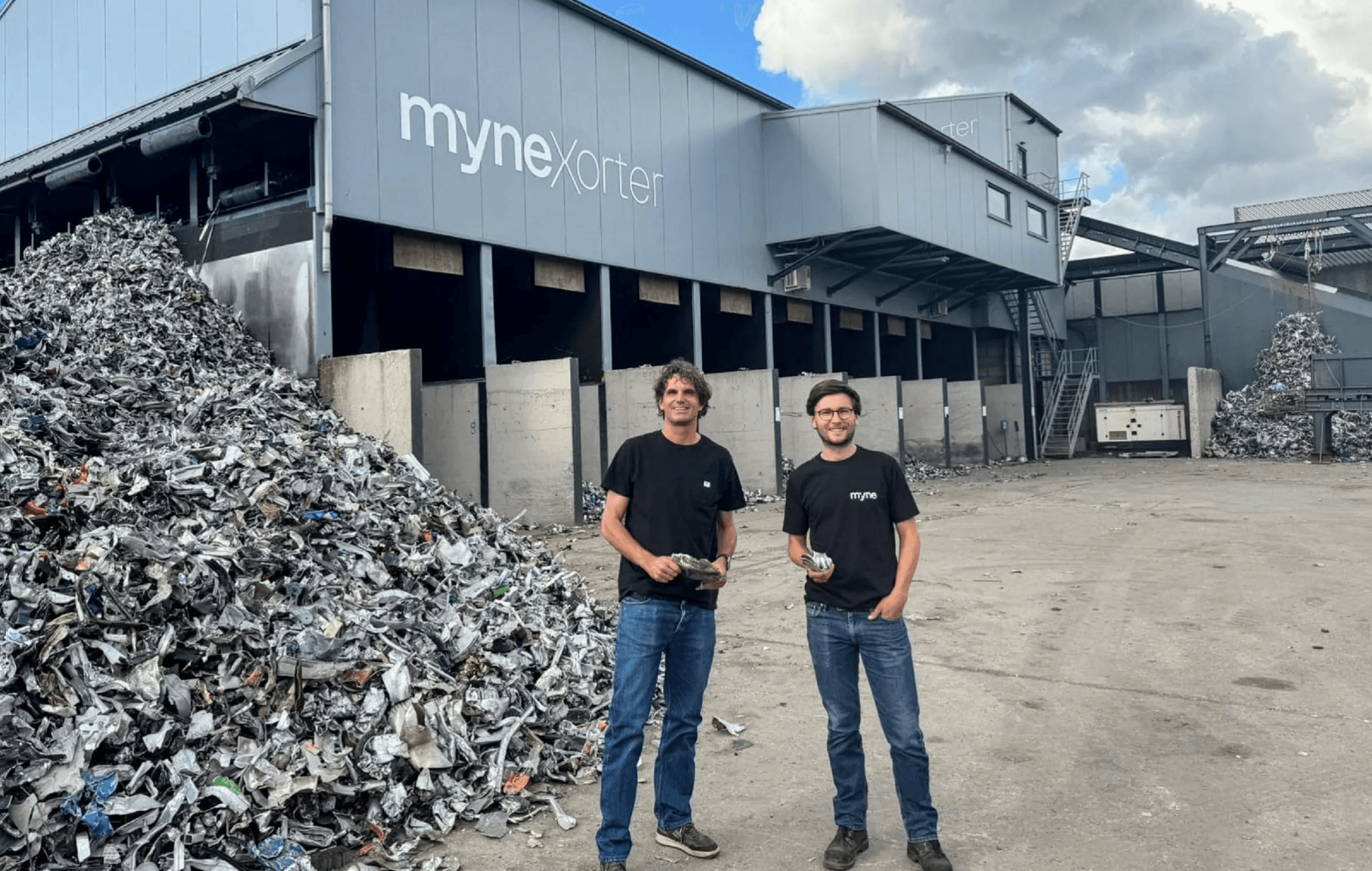
Myne Circular Metals: Recycling scrap metal
Myne Circular Metals focuses on recycling low-grade scrap metal into high-quality secondary aluminium and copper. The project replaces primary raw materials in industrial applications and aims to expand to multiple EU facilities, each with a capacity of 50,000 tonnes per year. This directly contributes to the CRMA target of recycling 25% of critical raw materials by 2030. Recognition as a strategic project provides access to accelerated permitting and EU funding, strengthening its commercial viability. Through this project, the Netherlands plays a key role in Europe’s ambition to reduce dependence on external suppliers.
Back2Battery: Recovering materials from lithium-ion batteries
Back2Battery focuses on recovering materials from lithium-ion batteries through hydrometallurgy. The project produces lithium, cobalt, nickel, manganese and graphite for the EU market. Its initial capacity in the Netherlands is 2,000 tonnes per year, with plans to scale up to 26,000 tonnes annually: about 10% of the European market in 2030. This expansion is crucial to the energy transition, as batteries are essential for electric vehicles and energy storage. Recognition as a strategic project highlights the importance of secondary raw materials for European autonomy.
Mitsubishi Materials: Secondary smelting and refining
Mitsubishi Materials focuses on secondary smelting and refining operations for copper and tungsten. The project uses a closed-loop metallurgical process to recover high-purity copper from electronic waste. This technology is already in commercial use at other European facilities, supporting its feasibility. Planned production is 60,000 tonnes of copper cathodes per year. The project also recovers tungsten, a critical raw material for defence and industry. Recognition as a strategic project gives it priority in the permitting process, shortening lead times from years to months.
CRITICAL.: Recovering materials from printed circuit boards
CRITICAL. focuses on the sustainable recovery of critical raw materials and metals from discarded printed circuit boards. These boards contain a wide variety of elements, but current processors recover only a limited number. CRITICAL.’s Urban Mining Factory / Printed Circuit Boards (UMF/PCB) aims to recover and refine nine elements initially, with the ambition to eventually process 24 different elements. From 2029, the factory will process approximately 15,000 tonnes of discarded printed circuit boards per year. Recognition as a strategic project facilitates coordinated permitting and financing, accelerating development.
Impact on European autonomy and the economy
Recognition of these four projects strengthens Europe’s autonomy in critical raw materials. The CRMA aims to reduce strategic dependencies in supply chains essential to the economy, security, the energy transition, and digitalisation. The projects contribute to the targets of extracting 10%, processing 40% and recycling 25% of critical raw materials domestically by 2030. Through these projects, the Netherlands demonstrates that innovation and recycling capacity can translate into large-scale commercial applications, improving supply security for European industry.