
Estonia to open Baltic region’s first AI factory in 2026
Nebius is building 22 MW of AI infrastructure in Tallinn. What does this mean for Europe’s technological autonomy?
Published on August 16, 2026

Team IO+ selects and features the most important news stories on innovation and technology, carefully curated by our editors.
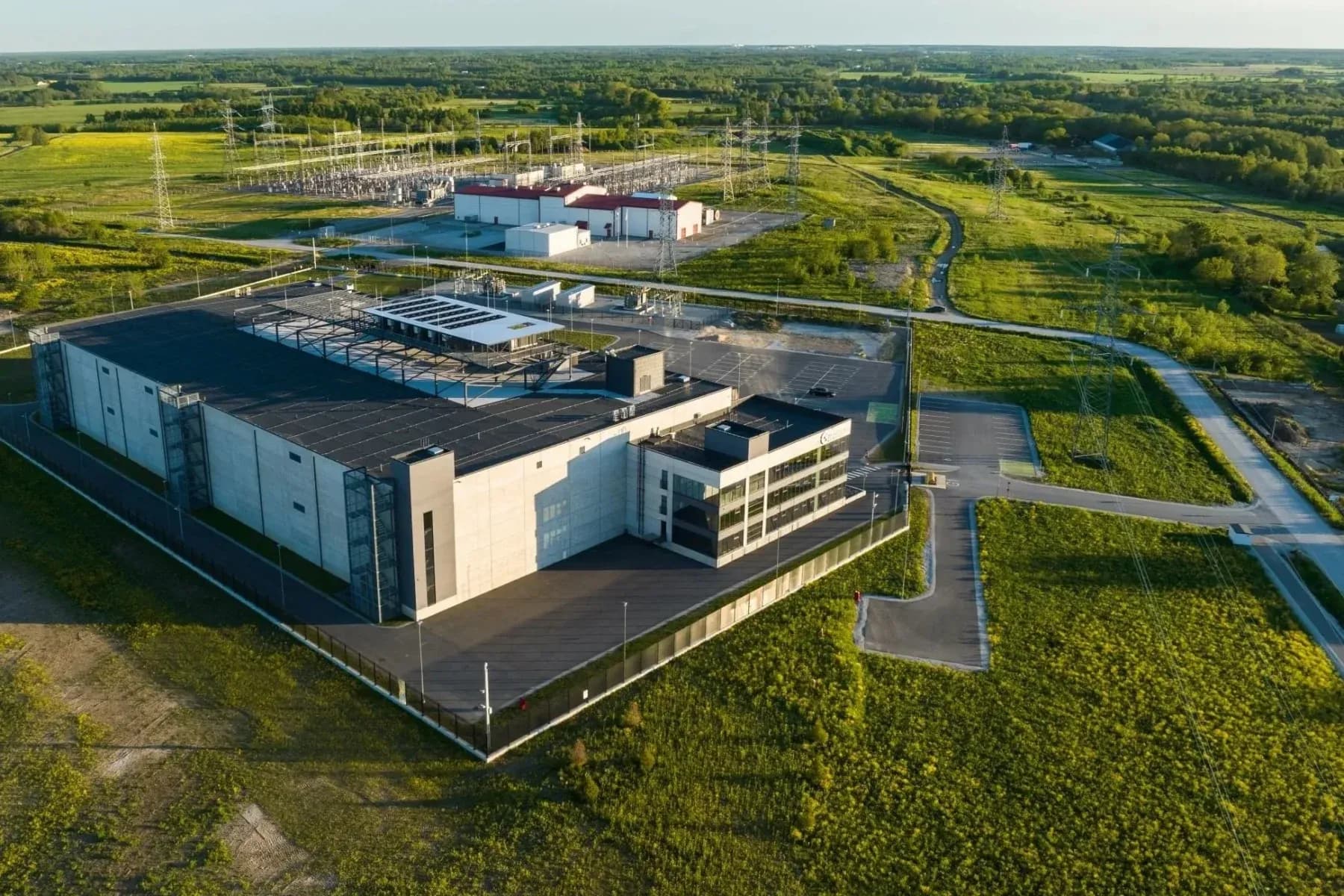
Estonia is taking a new step in the European AI race. Later this year, the country will open its first AI factory in Tallinn: a 22 MW data centre that will be the largest in the Baltic region. Nasdaq-listed AI cloud company Nebius is entering the Baltic market for the first time, in partnership with local data centre specialist Greenergy.
The site, in Hüüru near Tallinn, marks a strategic shift: after years of dominance by Finland, Sweden and Norway, Estonia is now positioning itself as a serious player in European AI infrastructure.
An AI factory: what is it and why does it matter?
An AI factory is not a traditional factory, but a specialised data centre equipped with powerful processors, high-speed networks and advanced cooling systems. These facilities are designed to train and run large AI models. The Tallinn facility, developed by Nebius, is the first in the Baltic states and complements existing sites in Finland, France and other European countries.
Nebius, which serves customers such as Microsoft and Meta, is bringing high-performance computing capacity closer to European researchers, startups and companies. The choice of Estonia is no coincidence: the country has a strong digital economy, talented engineers and an ambitious plan for AI and clean energy. This combination makes it attractive to international investors looking for reliable, scalable infrastructure.
A multi-million-euro investment and a strategic location
The AI factory in Hüüru is part of a €50 million expansion of the Greenergy Data Centers campus, which will have a total capacity of 31.5 MW once completed. The first 22 MW phase will come online later this year. Greenergy is investing almost €200 million in the site, with support from Tensor Estate, a group of Estonian entrepreneurs that has been a shareholder since July 2026.
The location is strategic: Estonia offers not only a favourable business climate, but also access to a growing ecosystem of tech companies and research institutions. Nebius Chief Communications Officer Tom Blackwell called Estonia a ‘natural choice’ because of the cooperation between government, universities and industry to improve AI skills and access. This cooperation is crucial to making the region competitive with the traditional Northern European AI hubs.
European autonomy and economic impact
The opening of the AI factory in Tallinn has direct implications for Europe’s strategic autonomy. By developing local AI infrastructure, the continent reduces its dependence on foreign computing capacity, which is essential for sovereignty in critical sectors such as defence, healthcare and energy.
Nebius’ expansion in Europe – with projects in Finland, France, the UK and Spain – shows that demand for local, reliable AI capacity is growing. For Estonia, Nebius’ arrival means a boost to the economy: new jobs, knowledge transfer and a stronger position as an innovation hub. Martin Salo, co-founder of Tensor Estate, emphasises that this project is the first phase of a broader plan to develop Estonia into an international player in AI infrastructure.
Security and trust: a crucial condition
The partnership with Nebius also raises questions about security. Nebius emerged in 2024 from a restructuring of Yandex, a Russian tech company that came under sanctions following the invasion of Ukraine. Although Nebius is now based in the Netherlands and has severed its ties with Russia, concerns about potential risks remain.
Estonian Minister of Economic Affairs Erkki Keldo confirmed that the government is examining the security implications in consultation with intelligence services. ‘We welcome groundbreaking investments, but we must weigh the risks to sensitive data and technologies,’ Keldo said. Greenergy, however, stresses that Nebius has already been vetted by major customers such as Meta, Microsoft and Nvidia, as well as by the US government and the New York Stock Exchange.