
Dutch companies stronger than ever, but risks are looming
RaboResearch: extreme weather remains a major risk, but electricity shortages, geopolitical measures and AI are emerging as new threats.
Published on January 23, 2026

Bart, co-founder of Media52 and Professor of Journalism oversees IO+, events, and Laio. A journalist at heart, he keeps writing as many stories as possible.
The Dutch business community appears more resilient than ever. In recent years, more companies have taken measures to protect themselves against risks ranging from cyberattacks to geo-economic shocks. Yet the real threats have not disappeared. On the contrary, the impact of modern risks remains significant, and the differences between sectors are stark.
Based on a representative survey of more than 1,200 Dutch companies, RaboResearch paints an intriguing picture: entrepreneurs are taking risks increasingly seriously, but the nature of those risks is shifting; in 2025, some were perceived as even greater than a year earlier.
When cybercriminals and geopolitical tensions become part of everyday business
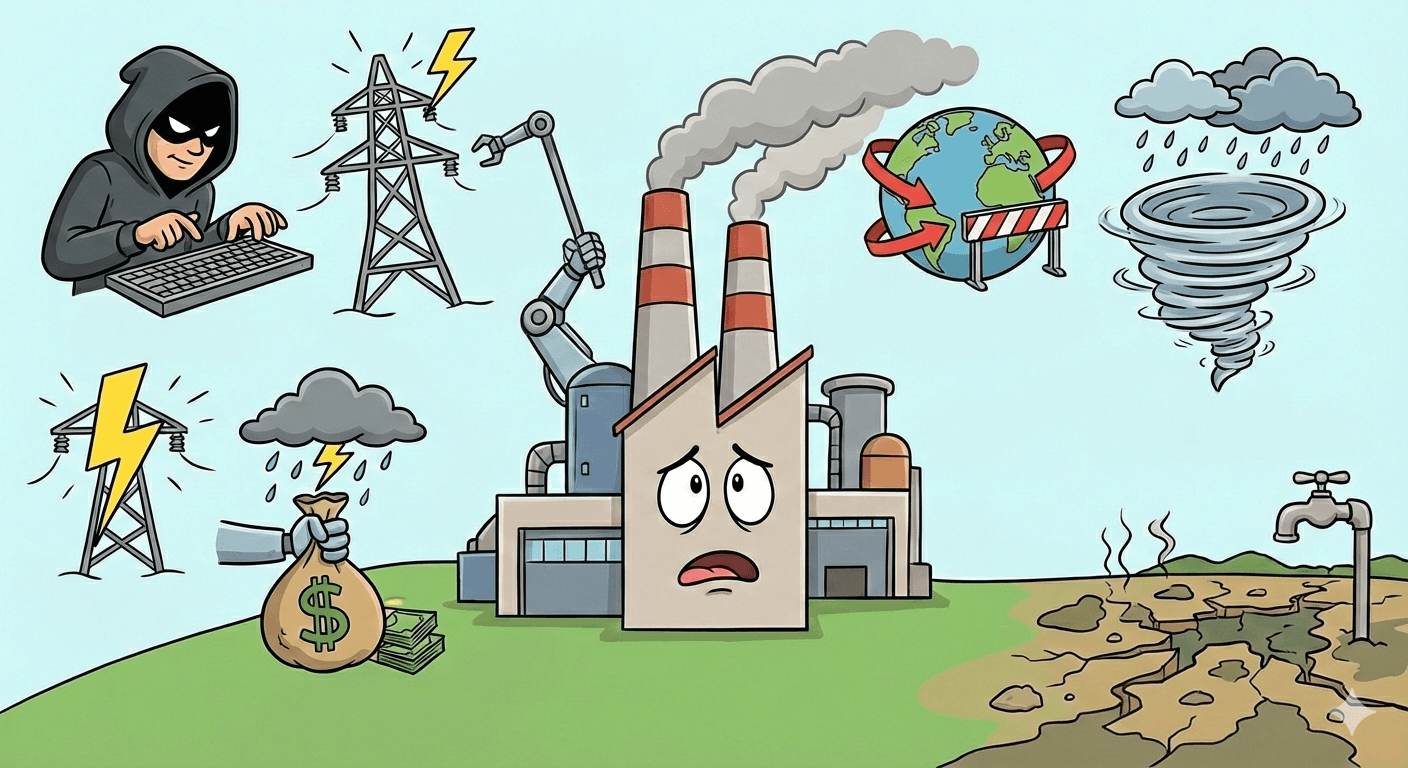
Cybercriminals top the list of modern threats that worry Dutch companies. According to Rabobank’s analysis, around two-thirds of entrepreneurs say that cyberattacks, hacking, and digital insecurity could have a major negative impact on their business continuity.
Dutch companies more resilient? © IO+, source RaboResearch
While digital threats have not yet pushed traditional risks such as extreme weather off the throne everywhere, electricity shortages, geopolitical measures such as import tariffs, and uncertainty surrounding new technologies are doing so with increasing frequency.
In the industry, the focus is mainly on geopolitical and energy-related risks. In agriculture, climate and environmental factors dominate concerns. And in the service sector, digital vulnerability prevails. One thing is clear: no sector is immune; only the nature of the threats differs.
Resilience: not just a buzzword, but an action plan
What stands out is not only that companies recognise risks, but also that a large majority are taking action. The research shows that 82% of businesses have implemented one or more precautionary measures to mitigate risks.
These measures range from:
- Digital security improvements such as firewalls, additional backups, and cybersecurity experts;
- Reducing dependence on individual customers or suppliers;
- Strategic repositioning, such as lowering reliance on foreign suppliers.
Nearly one-third of companies have implemented more than half of the proposed risk-mitigation measures. And one in five businesses is actively working to reduce strategic dependencies by, for example, bringing processes back to the Netherlands or engaging more local partners.
More resilient, but not invulnerable
This sounds like good news: companies are proactive and taking measures. But there is a crucial nuance in the figures. Despite rising resilience, the potential impact of risks remains high. Many entrepreneurs indicate that if certain risks do materialise, they could still seriously affect the continuity of their business.
In other words, the measures may dampen the sense of threat somewhat, but they do not eliminate it. And some risks—such as geopolitical disruptions or electricity shortages—are harder to hedge against with traditional business strategies.
A lesson in risk management for the future
Above all, this research shows that modern risk management must be broader than traditionally assumed: not only cybersecurity and process resilience, but also strategic flexibility, supply-chain robustness and adaptive business models. Companies that succeed in this are not only more resilient, but also more innovative and future-proof.
Risk management is thus increasingly becoming not a cost item, but a core competence: a way not only to fend off threats, but also to seize opportunities in a world that is changing ever faster.