
Defying physics: new material tough as plastic, moldable as glass
Scientists have unveiled a material that is strong as plastics and shapeable as glass at the same time, defying physics rules.
Published on February 12, 2026
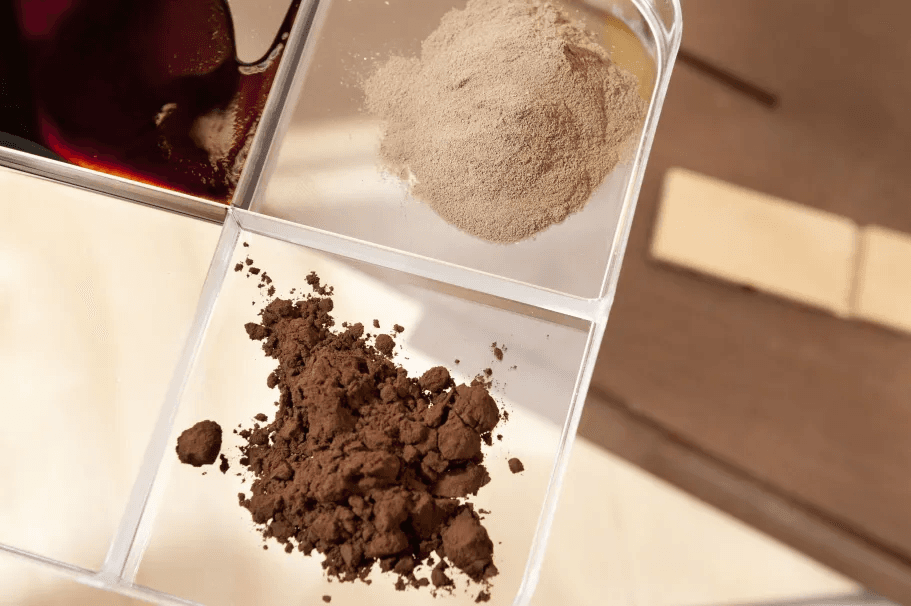
© WUR

Team IO+ selects and features the most important news stories on innovation and technology, carefully curated by our editors.
Researchers at Wageningen University & Research (WUR) have developed a new type of material that defies long-standing rules in material science. The material, called 'compleximer', combines the impact resistance of plastic with the ease of reshaping and blow molding of glass.
Most materials follow a simple rule: if they melt slowly and are easy to process, they tend to be brittle. For example, "strong" glass formers (such as inorganic network glasses) lose viscosity slowly over a broad temperature range, giving them useful processing properties. In contrast, "fragile" organic glass formers experience a sudden drop in viscosity within a small temperature window, making them harder to process without precise control.
The secret behind the material
The secret to the compleximer's unique properties lies in its molecular structure. In conventional plastics, molecules are composed of long chains, 'glued' by chemical cross-links. By contrast, in the new material, these chains are held together by physical forces. One half of the chain has a positive charge, while the other has a negative charge. This way, the two parts attract each other, as magnets do. “That’s how the chains stay together, without being chemically fixed,” explains Sophie van Lange, first author of the publication.
WUR scientists themselves were very surprised after seeing the first results. “It cast a completely new light on something scientists have been trying to understand for decades,” says Jasper van der Gucht, Professor of Physical Chemistry and Soft Matter.
Why do compleximers behave this way?
The researchers compared the material properties with those of other substances containing charged components, such as ionic liquids. These, for instance, can conduct electricity and are used in solar panels and batteries. Other charged materials behave differently as well, the scientists observed, demonstrating that these materials behave differently.
The first hypothesis scientists have formulated to justify such behavior lies in the spacing between molecular chains within plastic molecules. The chemical crosslinks found in conventional plastics pull the chains together. Conversely, the electric charges work over a greater distance, leaving more space between the chains. On a molecular level, this results in a different structure, which may explain this unusual behavior.
Thanks to this structure, the material properties open up to new possibilities. Compleximers are both impact-resistant and easy to process, facilitating repair. Think of a roofing panel made with this material. In the case of a crack, the material could be heated up, pressed together, and the gap could be sealed again.
A leap into repairability and circularity
WUR scientists will now focus on follow-up studies to better understand the compleximers ' physics, delving deeper into how these properties could serve specific applications. In addition, they will investigate the feasibility of developing bio-based versions of these materials, which are currently made from fossil-based raw materials.
According to Wouter Post, a senior researcher in Sustainable Plastic Technology at WUR, the study highlights a blind spot in materials research. “Most applied research focuses on improving recycling, whereas this work opens the door to plastics that are easy to repair or even break down biologically very quickly.”
As scientists study compleximer properties and behavior further, their discoveries can potentially reimagine the future of everyday objects, making durability and sustainability go hand in hand. Cracked cups, shattered glass, or damaged car bodies could be repaired with some heat and pressure, reducing resource usage and truly embracing repairability and circularity.