
‘Craftsmanship is a mindset’: LiS scales precision engineering
At the Beethoven Chip Talent Summit 2026, the national alliance for precision craftsmanship was officially launched.
Published on October 11, 2026
.jpg&w=2048&q=75)
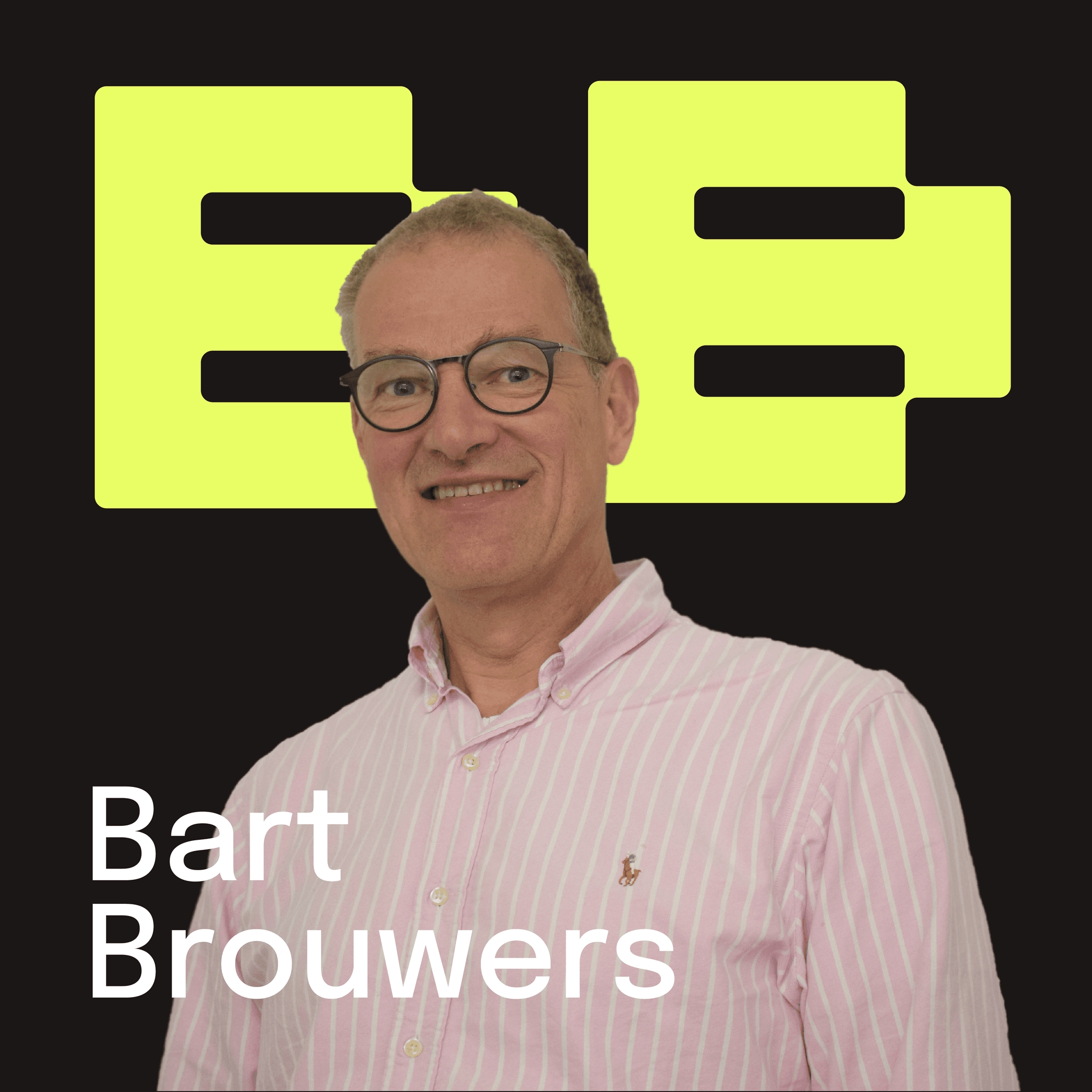
Bart, co-founder of Media52 and Professor of Journalism oversees IO+, events, and Laio. A journalist at heart, he keeps writing as many stories as possible.
Without the people who can manufacture, measure, and assemble down to the micrometre, even the most brilliant high-tech designs remain stranded on the drawing board. At the Beethoven Chip Talent Summit 2026, the national alliance for precision craftsmanship was officially launched: the 125-year-old Leidse Instrumentmakers School (LiS) is expanding beyond Leiden to a nationwide footprint, working in close partnership with Summa, ROC van Twente, Firda, and a robust coalition of industrial partners.
The contrast could hardly be sharper: while the semiconductor industry pours billions into the world’s most advanced lithography systems, everything ultimately rests on something seemingly elementary. A miniature compressed-air lathe. A flawlessly machined wheel-suspension component. Or a student sensing by touch whether a tolerance holds true.
At the Beethoven Chip Talent Summit in Rotterdam, educators, students, and industry leaders sent a clear message: the Dutch high-tech ecosystem doesn't run on academic system architects alone; it depends just as much on craftspeople working at the millimetre and nanometer scale.
From Heike Kamerlingh Onnes to 700 students
.jpg&w=2048&q=75)
Stef Vink, © Robèrt Kroonen
"We celebrate our 125th anniversary this year, making us the oldest vocational school in the Netherlands," said Stef Vink, director of LiS, opening the session. The school was founded in 1901 by Nobel laureate Heike Kamerlingh Onnes under the famous motto Door meten tot weten ("Through measuring to knowing"). Onnes quickly recognized that scientific breakthroughs are only possible when skilled instrument makers can actually build the required experimental apparatus.
In 2026, the Netherlands faces an identical challenge on an industrial scale. "In Leiden, we are hitting our physical ceiling; we are reaching our cap of 400 students," Vink explained. "That is why we deliberately chose not to set up our own satellite branches, but to collaborate within a networked structure alongside strong regional vocational colleges in the north, east, and south: Summa in Brainport Eindhoven, ROC van Twente, and Firda in Friesland. Together, our goal is to scale up to 700 students."
According to Vink, the urgency is obvious: precision craftsmanship must become a lasting cornerstone of the national Beethoven program and endure well beyond it. "Craftsmanship is a mindset. Our students must be able to communicate fluently with scientists and design engineers, but then make the practical leap to turn those concepts into tangible reality."
What we make vs. how we make it
.jpg&w=2048&q=75)
Antoine Keetels, © Robèrt Kroonen
Antoine Keetels, Head of the TWINSCAN Factory LAB at ASML, echoed that translation into practice. With a personal journey rooted in practical vocational education (LTS, MTS, and HTS), Keetels knows the factory floor inside out.
"When I joined ASML 26 years ago, I still had to explain at birthday parties what the company actually did," he recalled with a grin. "At ASML, we constantly talk about what we make, but far too little about how we make it. We have brilliant system architects who invent machines, but we need the people just as much who can say: this is how you build it, and this is how to build it faster, smarter, and repeatably."
Keetels presented a map of ASML's supplier network, highlighting roughly 1,600 domestic suppliers spread across the Netherlands. "The manufacturing industry is everywhere: from Enschede to Rotterdam, and from Brainport to Friesland. That is why my appeal to both schools and companies is simple: open your doors wide. Let young people discover firsthand just how rewarding manufacturing really is."
The passion of the makers
The students on stage proved that this trade captures the imagination like few others.
.jpg&w=2048&q=75)
© Robèrt Kroonen
- Connor Korstanje, a second-year student at LiS, proudly showcased a miniature compressed-air lathe he manufactured. "What I value most is seeing the appreciation for vocational education growing so noticeably. The old stigma that vocational training wasn't good enough is finally disappearing. Major corporations and high-tech initiatives are proving how essential our skills are."
- Thimo Steenbekkers, who progressed from preparatory vocational education (VMBO-basis) to Level 4 Machining Technologist at Summa and now works as a research instrument maker at Eindhoven University of Technology: "Occasionally, a professor approaches me with a purely theoretical design. These academics are brilliant, but as the saying goes in the workshop: they strip every single bolt." The audience erupted in laughter. "They bring the theory, but we possess the practical craftsmanship to actually build the prototype. The moment I finished my very first project, I knew: this is where my talent lies."
- Priscila Alves, a work-study (BBL) student at LiS, shared a personal story from Brazil about her grandmother, who once watched an airplane fly over the countryside for the first time without understanding what it was. "Precision changes the way you see the world," she said warmly. Balancing classroom learning with hands-on industry work, Alves presented a finely crafted brass precision component.
Pushing the button: the national alliance
.jpg&w=2048&q=75)
Erwin Borgmeier, LiS, © Robèrt Kroonen
Erwin Borgmeier, coordinator of the national expansion on behalf of LiS, had the final word. "Creating training capacity is step one, but we must embed it sustainably alongside industry, educational institutions, and sector associations," Borgmeier urged. He pointed to the broad coalition backing the initiative: alongside LiS, Summa, ROC van Twente, and Firda, around ten prominent industry and ecosystem partners have committed to the program, including ASML, TNO, ChipNL, DSPE, and Nearfield Instruments.
Starting next school year, Summa will roll out its first cohorts of research instrument makers ‘powered by LiS’, followed closely by the partner colleges in other regions.
To loud applause, Borgmeier invited representatives of the partner organisations onto the stage. Alongside students Connor, Thimo, and Priscila, the entire auditorium counted down from ten to zero. With a joint press of the large green button, punctuated by a celebratory burst of confetti, the national scaling of Dutch precision craftsmanship officially became a reality.
The summit's takeaway was unmistakable: anyone discussing the future of chips and high tech in the Netherlands cannot overlook the makers. Breakthrough concepts may be conceived in cleanrooms and research labs, but their foundation is laid millimetre by millimetre, callipers and dial indicators in hand.
.jpg&w=2048&q=75)
© Robèrt Kroonen