
Catching diseases fast: the spinout taking tests out of the lab
Nuxa Diagnostics is working on a technology that allows testing for diseases on-site and gives an answer in 30 minutes.
Published on November 10, 2026
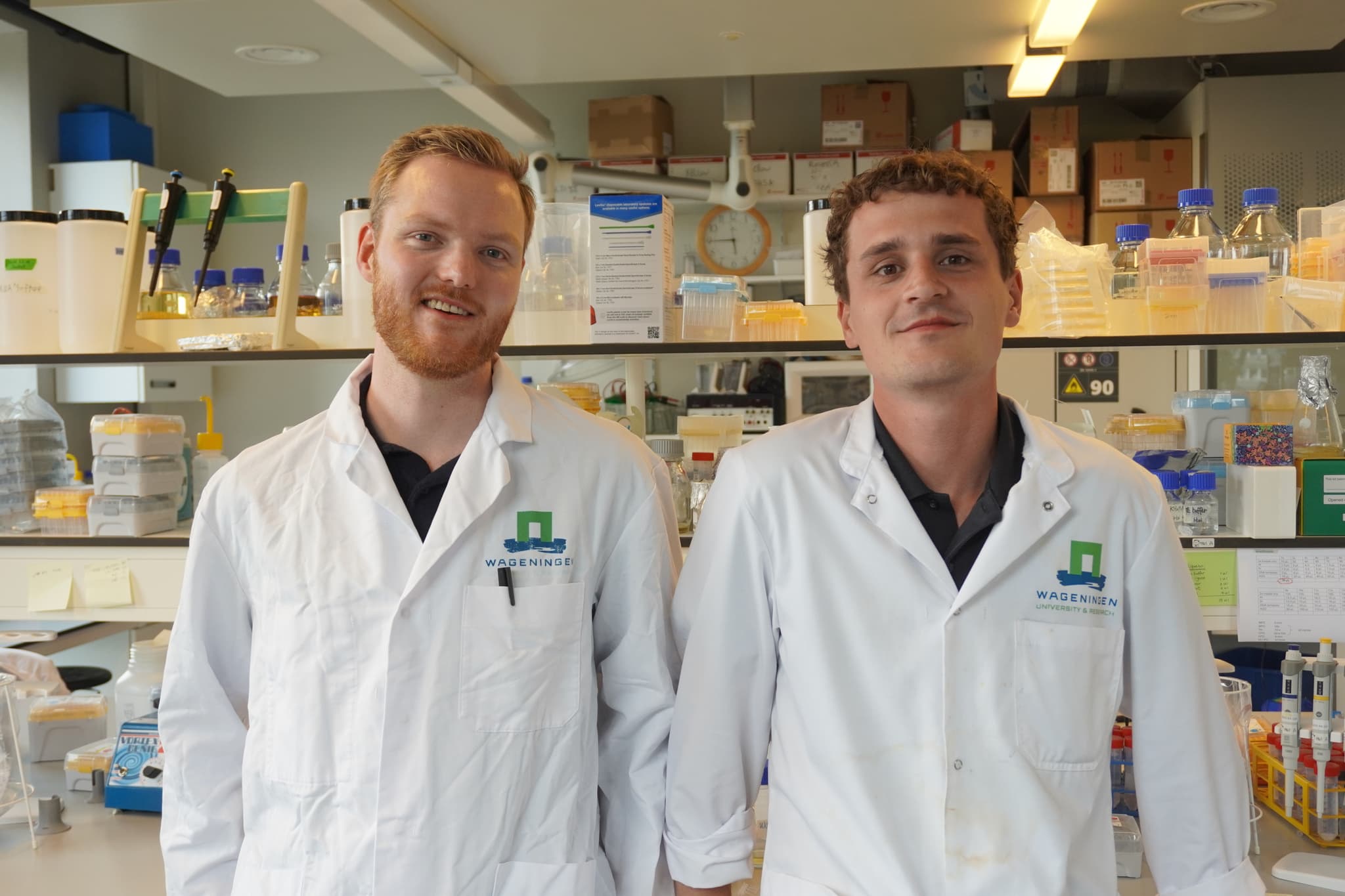
Nuxa's founders: Patrick Barendse and Daniel Besselink - © Nuxa Diagnostics

Mauro swapped Sardinia for Eindhoven and has been an IO+ editor for 3 years. As a GREEN+ expert, he covers the energy transition with data-driven stories.
As a farmer, if you need to test your crops for a virus, the next step is to send a sample to a lab. “Today, you send samples to a central laboratory and wait about a week for an answer,” says Daniel Besselink, co-founder and CEO of Nuxa Diagnostics. In that week, a disease can spread through a field — impacting more plants and the harvest accordingly.
Nuxa aims to bridge this gap by developing technology that lets it test samples on-site and, according to the company, deliver answers in 30 minutes. Agriculture is just one application: water treatment and human health could benefit from it, too.
The startup's answer is a handheld device that tests samples on-site and delivers a swift answer. Lab tests have shown high accuracy and can also detect mutations, the company says.
A tunable protein that spots diseases
The company grew out of years of fundamental research at Wageningen University and Research (WUR), where scientists studied an enzyme in the bacterial immune system known in the scientific literature as prokaryotic Argonaute.
WUR researchers, including the other Nuxa Diagnostics co-founder Patrick Barendse, found that this protein is easy to reprogram. By giving it a custom RNA sequence, researchers can direct it to a matching target, such as a disease. Detecting the presence, absence, or quantity of a disease is a three-step process.
First is sample preparation, which means adding organic matter to the buffer, an all-in-one pot that also contains the enzyme. Then, the protein starts working, finding the target disease. Finally, Nuxa’s machine reads the disease’s quantitative amount. Results are then sent to the cloud.
Beyond agriculture, the CEO underlines another application for human health, such as spotting Ebola. “In certain African countries, there aren’t nearly as many central laboratories as in the Netherlands, so you need an on-site solution.”
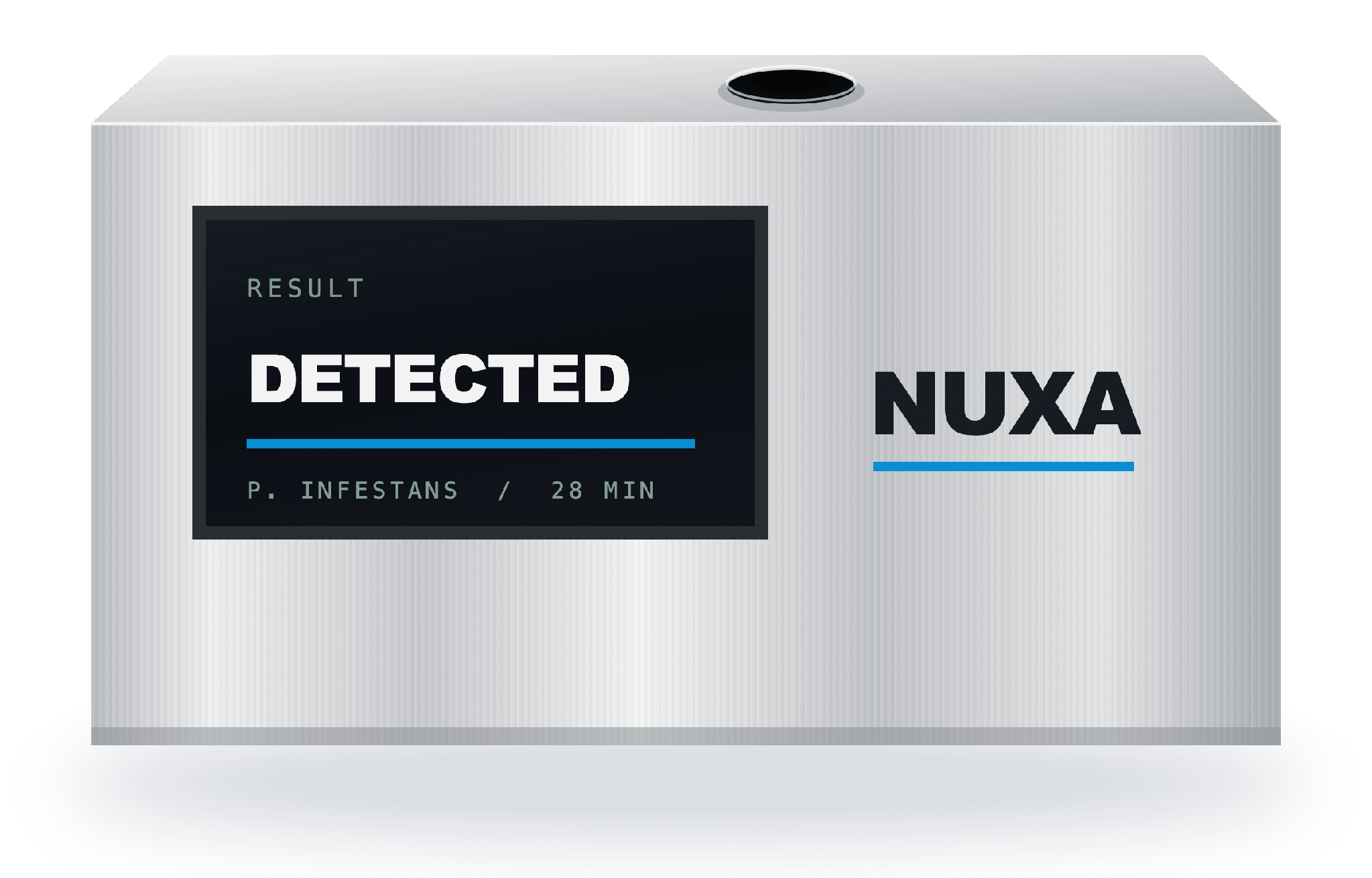
An impression of the handheld design - © Nuxa Diagnostics
Where the stars aligned
Besselink previously served as chief of staff at the Berlin-based climate tech company NeoCarbon. Driven to start his company, he scouted for promising technologies developed at Dutch universities and found the Argonaute enzyme a project worth pursuing.
His co-founder, Barendse, earned a cum-laude PhD in the lab where the technology was invented and proved to be the person he was looking for. Nuxa’s CTO also started a company in his bachelor’s days, matching the entrepreneurial spirit Besselink wanted to fuel.
Nuxa spun out of WUR earlier this year, receiving funding through the Biotech Booster, a national program to support the commercialization of biotech innovations.
Besselink says that “all stars rarely align,” stressing how finding the right technology, market, and co-founder was hard. “We believe our technology is a cheaper alternative to what’s available today; we can have more impact, and our concept is financeable.”
Many problems to solve, more capacity needed
A selling point the company leverages is the adaptability of its technology, which can be tuned to find different diseases. "Plants, animals or humans, the underlying technology is the same," Besselink explains.
In the company's early stages, this versatility is hard to manage. “We are having discussions with different players, but we can’t develop a test for all of them. Within agriculture, developing a test for potatoes or tomatoes is quite different. And we also want to do water treatment,” he underlines.
Having a test ready for each of the thousands of existing pathogens is too big a task right now. Choosing what application to target first will be key, as will the pilots Nuxa plans to start at the beginning of 2027.
Reliable, adaptive, and cheap
Yet, the co-founder believes on-site diagnostics is a rising trend in the space, and the capability to potentially detect any target disease can be a significant advantage.
Other on-site diagnostics technologies have limitations. Some of them, says Besselink, need an extra sequence — known as a PAM sequence — next to their DNA target, limiting them in spotting mutations. LAMP technology, another on-site option, often leads to false positives or false negatives.
“To succeed in on-site diagnostics, your technology must be extremely reliable; it must detect mutations as they emerge, and it must be cheap. Our platform has all of these characteristics, which is why we believe we are a very strong candidate to become a major player,” says the CEO.
Finding a path
Nuxa plans to sell a small handheld device to analyze samples, next to a consumable per test. While the device is a one-off purchase, selling cartridges would create a recurring revenue stream. As development continues, prices are yet to be determined.
If the pilots succeed, the week-long wait that opens this story could shrink to a single afternoon in the greenhouse. The growers Nuxa talks to already know what they want, Besselink says: faster diagnostics, because they can’t afford to wait on central labs that are simply too slow.