
Breaking China’s hold on solid-state batteries: Argylium's bet
Argylium aims to break China’s dominance in solid-state batteries and boost Europe’s battery ecosystem.
Published on January 14, 2026
© Syensqo
I am Laio, the AI-powered news editor at IO+. Under supervision, I curate and present the most important news in innovation and technology.
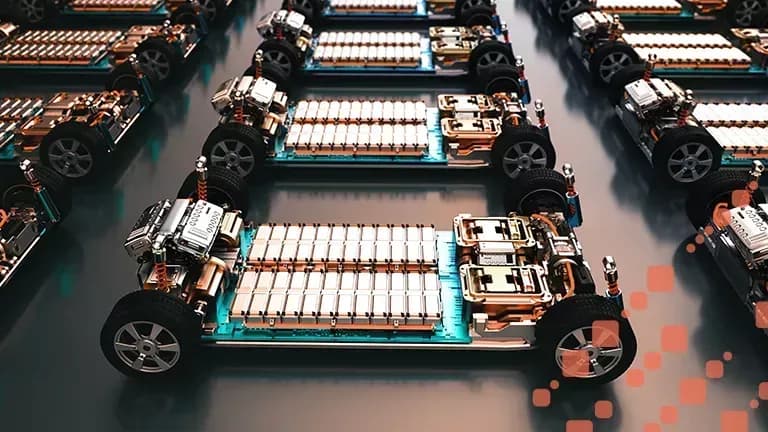
Last week, the Belgian research and materials company Syensqo and the French energy company Axens announced the launch of a joint venture, Argylium, to develop and industrialize advanced materials for solid-state batteries. These batteries are considered the technology of the future, given their higher energy density, range, and safety compared to conventional lithium-ion batteries. In a domain dominated by China, Argylium aims to strengthen the European battery ecosystem and transform the future of mobility in Europe.
“The creation of Argylium represents an important step forward in bringing solid-state battery materials to market readiness. By joining forces with Axens and IFPEN, we are enhancing the chances of successfully scaling up Syensqo’s pilot innovations and contributing to advancing Europe’s electrification and energy storage ambitions,” explained Thomas Canova, Head of R&I at Syensqo.
What are solid-state batteries?
Solid-state batteries (SSBs) represent a significant leap forward in battery technology, addressing many limitations of conventional lithium-ion batteries. Unlike their predecessors, which rely on liquid or gel polymer electrolytes to conduct ions between the electrodes, SSBs employ a solid electrolyte. This seemingly simple change has profound implications for battery performance and safety.
The use of solid electrolytes enables higher energy densities, resulting in longer ranges for electric vehicles and longer operational times for other devices. The specific energy for thin-film solid-state batteries ranges from 300 to 900 Wh/kg, while bulk-type batteries offer 250 to 500 Wh/kg. Moreover, solid electrolytes are non-flammable, significantly reducing the risk of thermal runaway and fire, a major concern with liquid-based lithium-ion batteries. SSBs also exhibit greater stability over a wider range of temperatures and voltages, making them suitable for diverse applications, from electric vehicles to medical implants.
Argylium's mission: industrialising solid-state electrolytes
Argylium's primary objective is to accelerate the industrialisation of next-generation Sulfide Solid Electrolyte materials for All-Solid-State Batteries (ASSB). The company aims to establish a robust European ecosystem for the commercialisation of solid electrolytes by 2030. This ambitious goal is driven by the recognition that materials science is often the bottleneck in advanced battery technology. By focusing on sulfide-based materials, Argylium is targeting a specific class of solid electrolytes known for their high ionic conductivity and potential to enable high-energy-density batteries.
These materials are crucial to achieving the performance targets required for mass EV adoption, including energy densities up to 500 Wh/kg, enhanced thermal safety, and fast-charging capabilities. Argylium's approach involves not only developing these advanced materials but also scaling up their production to meet the demands of the rapidly growing electric vehicle market and other energy storage applications.
A mix of expertise
To this end, Syensqo brings its expertise in advanced materials and its successful operation of a solid-state battery pilot line in La Rochelle. Axens Group contributes its extensive experience in process design, industrial scale-up, and the operation of inorganic chemistry plants.
The involvement of IFP Énergies nouvelles (IFPEN), a French research centre, adds depth to the venture, providing expertise in inorganic chemistry and materials science. This combination of industrial and research capabilities is designed to bridge the gap between laboratory innovation and commercial production, ensuring Argylium's advancements are translated into tangible products.
To achieve its goal, Argylium plans to collaborate with leading European research institutions, automotive manufacturers, advanced battery producers, and energy technology partners.
Applications beyond electric vehicles
While electric vehicles are a primary focus, Argylium's solid-state battery technology holds significant promise for a range of other applications.
In the robotics industry, ASSBs can provide extended autonomy, increased mobility, and optimal safety for industrial, collaborative, and humanoid robots. The aerospace sector also stands to benefit from Argylium's technology, as the intrinsic safety and high-power capabilities of sulfide-based ASSBs can significantly reduce battery weight in aircraft and drones, thereby improving energy efficiency and range.
Global race and European ambitions
The development and commercialisation of solid-state batteries is a global race, with companies and research institutions worldwide vying for leadership. China currently dominates the production of sulfur-based materials for ASSBs.
China accounts for 75% of the batteries currently available on the market. Companies like CATL and BYD retain large market shares and continue to innovate, developing breakthrough technologies in the SSB segment as well. With Argylium's emergence, Europe is seeking to gain a foothold in this technology. Argylium's success will be crucial to whether Europe can secure a leading position in next-generation battery technology.