
Braven solves data chaos for the chip and photonics sectors
The Eindhoven-based startup Braven organizes experimental data to accelerate innovation in the high-tech sector.
Published on September 28, 2026
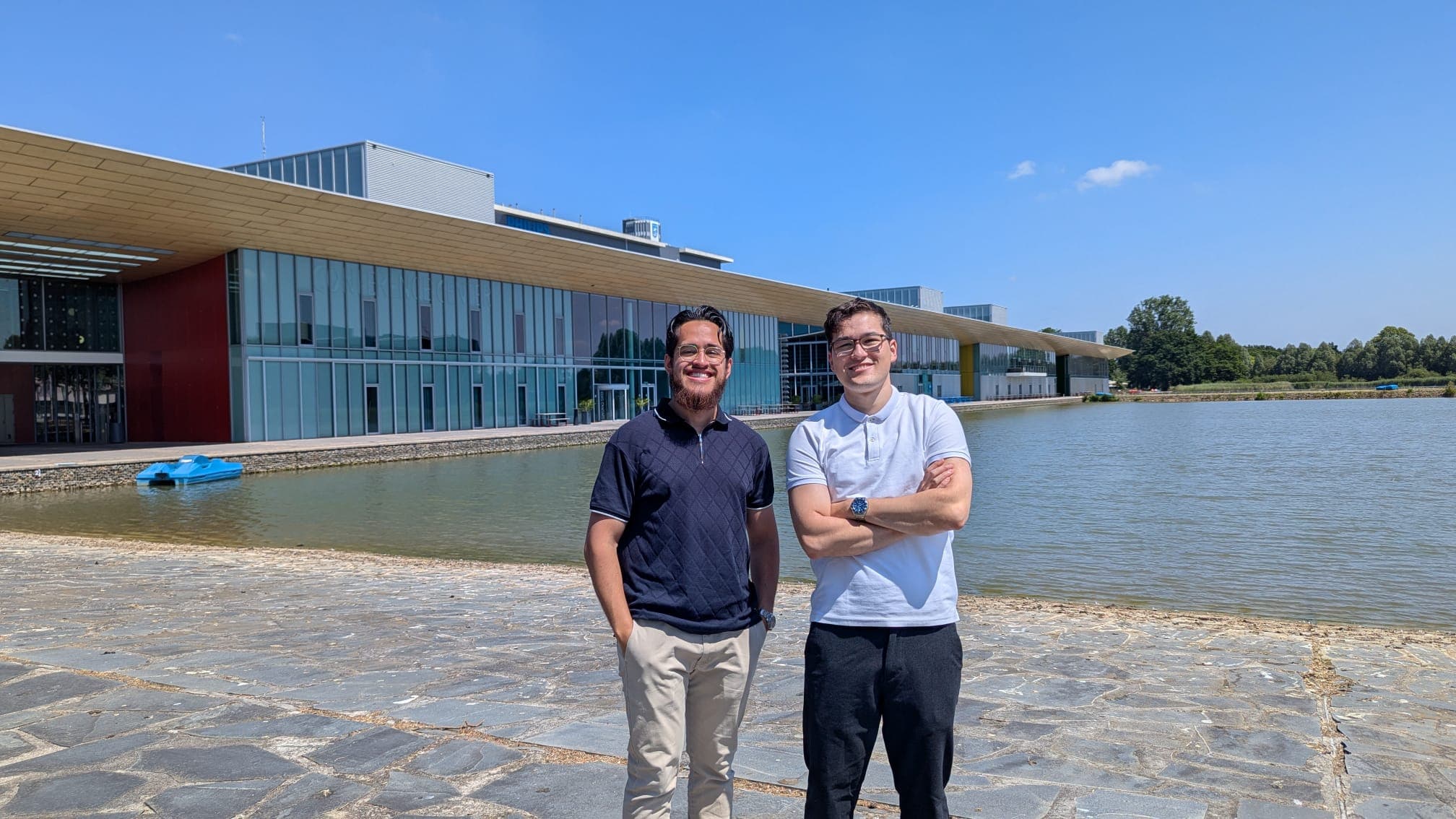
Braven co-founders Thomas van Bodegraven and Benji van den Brand
Our DATA+ expert and Editor-in-Chief, Elcke Vels, explores AI, cyber security, and Dutch innovation. Her "What if..." column imagines bold scenarios beyond the norm.
In the high-tech sector, the volume of experimental data is growing exponentially, but the way companies manage that data is often still limited to Excel spreadsheets and scattered folders. It’s time for a change. The Eindhoven-based startup Braven, founded by two graduates of TU/e, has developed a web platform that breaks down data silos and accelerates R&D cycles.
Semiconductor and photonics companies generate enormous amounts of data every day. Every simulation, measurement, or calibration yields new data points. These then end up in separate folders on OneDrive or local drives. The result? Knowledge becomes fragmented, and teams waste time searching through past experiments. Braven founders Thomas van Bodegraven and Benji van den Brand experienced this firsthand during their work in research and industry.
Van Bodegraven: “Over the years, we’ve seen firsthand that experimental data management can become quite challenging and complex—especially as a company matures and requires more structure. Engineers naturally want to innovate. But documentation is also very important in that process. How do you ensure that all your experiments are neatly organized?” The founders saw this as a gap in the market. So they got to work.
One central hub
Braven’s solution is a web application that connects all steps in the R&D process: from simulation and manufacturing to measurement, analysis, and reporting. Instead of separate folders or specialized tools for each phase, the platform offers a central location where all data is structured and searchable. A recent €50,000 grant from the Eindhoven Metropolitan Region is giving the startup a significant boost in the right direction.
Semiconductors and photonics: booming in the Brainport region
Braven is currently in the pilot phase and is collaborating with Firefly Sensing and MantiSpectra, both based at the High Tech Campus in Eindhoven. Braven focuses specifically on the needs of hardware R&D teams in the semiconductor and photonics industries, where the demand for structured data management is high but the supply is limited.
“We focus primarily on the semiconductor and photonics industries because they’re really booming in this region,” Van den Brand explains. “That’s why all our pilot projects are in these industries.” He describes how Braven is proving invaluable in the chip industry. “The manufacturing of chips generates an enormous amount of data. For example, you start with simulations and keep iterating on them. Each simulation generates new data. Eventually, you arrive at a design you want to produce. And with every step you take—every measurement, every calibration, and every photo of your chip and of each process step—more new data is generated.” A solution like Braven’s is indispensable.
The benefits at a glance
Having all of this organized and presented clearly offers many benefits. Van Bodegraven: “The engineer can easily answer questions such as: What did the lifecycle of this specific device look like? Or: What trends are visible in a specific design across all devices? What do we need to change in our R&D to achieve a certain KPI? Now that all the data is structured, you can also see the correlations between input parameters and KPIs much more clearly.”
Security as a prerequisite
For high-tech companies, data security is not an option, but a requirement. Van den Brand: “After we pitch, in 90% of cases the first question is: where is our data stored? Of course, we want to build trust. That’s why we’re now also going to support on-premises hosting, so that companies can host the web app and the entire data management system themselves. The data then essentially never leaves their building.”
This approach aligns with the strict requirements of the sector, where compliance with the GDPR and the FAIR principles (Findable, Accessible, Interoperable, Reusable) is non-negotiable. In addition, the team is working on robust security measures, such as encryption and access controls, to prevent data breaches.
The future: AI as the next step
The two founders’ schedules are now quite full. Eventually, Braven aims to apply machine learning to the collected datasets. The platform can actively help engineers optimize their designs.
The coming period will also be focused on discussions with new companies, says Van Bodegraven. “We’re interested in talking to new companies about their processes and the challenges they face.”
In this way, the founders are gaining the knowledge needed to make Braven a great success.