
Brainport Industries Campus ready for its next leap
Entrepreneurs’ breakfast hosted by Brainport Industries Campus and Kempisch Ondernemers Platform explores limits to growth.
Published on March 7, 2026
© Bram Saeys
Bart, co-founder of Media52 and Professor of Journalism oversees IO+, events, and Laio. A journalist at heart, he keeps writing as many stories as possible.
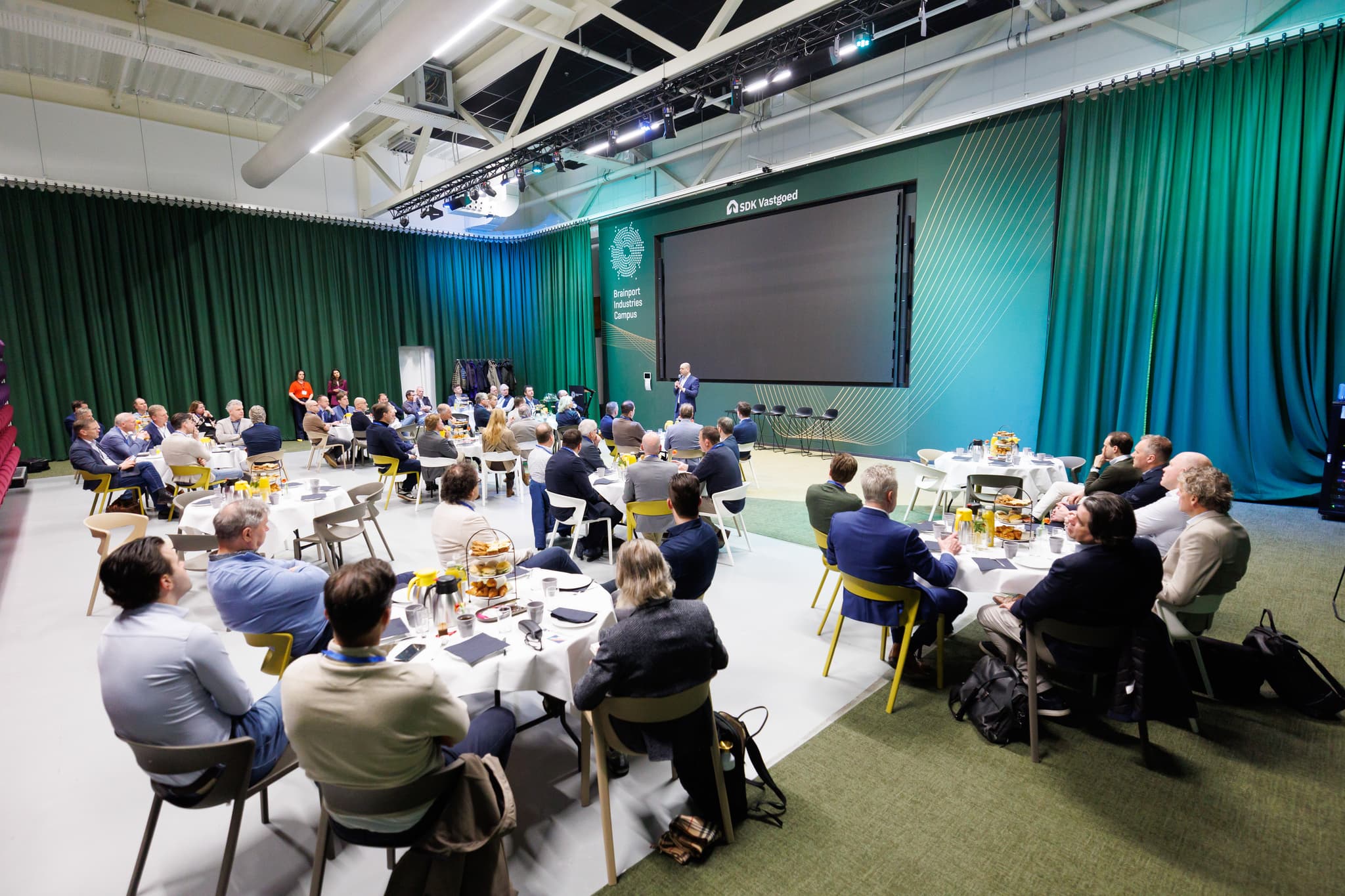
From Cluster 1 to Cluster 2, with ASML establishing itself in BIC North and an as-yet undefined “BIC Mix” in between: Brainport Industries Campus (BIC) is entering a new phase. During a breakfast session organized together with the Kempisch Ondernemers Platform (KOP), it became clear that the campus expansion is about far more than real estate. It is about the future of manufacturing, the limits of growth, and whether Brainport should continue to specialize or deliberately broaden its economic base.
The setting was symbolic, with stakeholders literally gathered around the same table—including future neighbor ASML. The result was exactly the type of conversation the campus organization had hoped for: not merely about buildings and land plots, but about BIC’s role in the regional ecosystem.
Huub Smulders, CEO of the campus development organization, immediately set the tone. His story was not about square meters, but about designing a campus formula for the future. Brainport Industries Campus, he said, has three missions: designing the campus of tomorrow, attracting the right mix of permanent and temporary residents, and actively contributing to the programs that emerge on the campus. In doing so, BIC positions itself not as a landlord, but as an ecosystem builder.
That role is increasingly necessary because campus development no longer stops at the campus gates. Smulders, speaking as a regional economist, pointed to the realities behind the region’s growth narrative: mobility, housing, grid congestion, talent, and accessibility. “If you want to build a top campus, you also have to engage with everything happening around it.” Especially now that the campus will expand significantly in the coming years. One of the central messages of the morning was therefore clear: campus development does not stop at the boundaries of the campus itself.
From separate clusters to one integrated campus
That growth is gradually taking on a clearer spatial form. Cluster 1 is the existing heart of the campus, where companies, education, and shared facilities already come together. Cluster 2 is meant to become the next step. On the northern side, ASML will develop its own area, while the zone in between currently carries the working title “BIC Mix”: a transition area where it is not yet decided whether it will lean more toward ASML, more toward BIC, or become a hybrid of the two.
That middle section is telling. It illustrates that the campus is not a finished product but a design in progress. ASML emphasized during the session that Brainport Industries Campus is attractive precisely because it offers something that became increasingly difficult in Veldhoven: the ability to think about scale, accessibility, environmental impact, and integration with the rest of the campus from the outset, rather than adjusting organically afterwards.
Where decades of growth in Veldhoven gradually put pressure on the surrounding environment, BIC offers the opportunity to create a different type of campus: more integrated, more flexible, and better connected to the region.
Such an ambition, however, requires a shared narrative. Smulders explicitly spoke about the need to present “one BIC” to the outside world—not as a collection of buildings or plots, but as a coherent campus where thinking, developing, and manufacturing come together in one place.
Not only knowledge, but making
That final point was perhaps the most powerful undercurrent of the meeting. In many discussions about innovation, the emphasis lies on knowledge, startups, and R&D. At the working breakfast, a different emphasis emerged: knowledge is essential, but making remains the core.
Smulders challenged the idea that production is merely the rollout of ideas conceived elsewhere. According to him, the real strength of the Brainport region lies precisely in the combination of designing and manufacturing.
© Bram Saeys
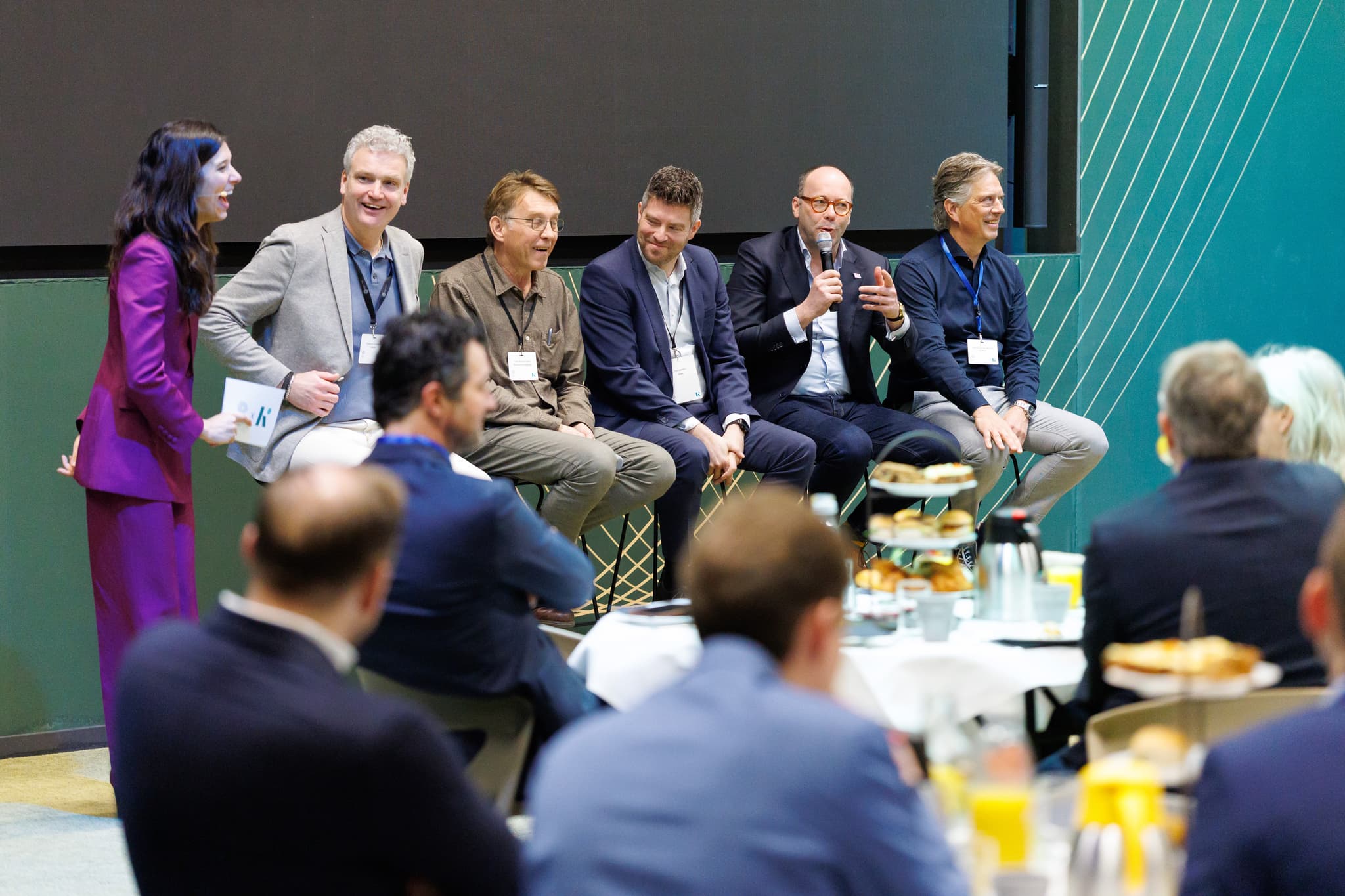
That perspective was reinforced in the panel discussions. Edward Voncken, CEO of KMWE and one of the figureheads of Cluster 1, noted that international visitors do not come to Eindhoven for “yet another campus building,” but for the collaboration across the supply chain. The real value, he argued, lies in the craft of industrialization: transforming a clever design into reproducible, high-quality production. That is exactly the domain in which Brainport stands out globally.
John Blankendaal of Brainport Industries echoed that sentiment. For him, Brainport Industries Campus becomes a true campus only when education, development, and production come together under one roof. Shared facilities, field labs, and meeting spaces create possibilities that individual companies on a traditional industrial park simply cannot organize on their own.
The campus should have a “wow factor,” Blankendaal said—but a wow factor rooted in substance: in what is collectively learned, tested, and manufactured.
The emphasis on making is not nostalgic; it is strategic. In an era marked by geopolitical tensions, productivity pressure, and mounting labor shortages, the question of how Europe maintains its manufacturing capacity has become urgent. Robotics, AI, digitalization, and factory automation repeatedly surfaced as conditions for staying competitive.
Growth? Yes, but not without choices
At the same time, there was little triumphalism in the room. Nearly everyone acknowledged that Brainport’s rapid growth is reaching its limits.
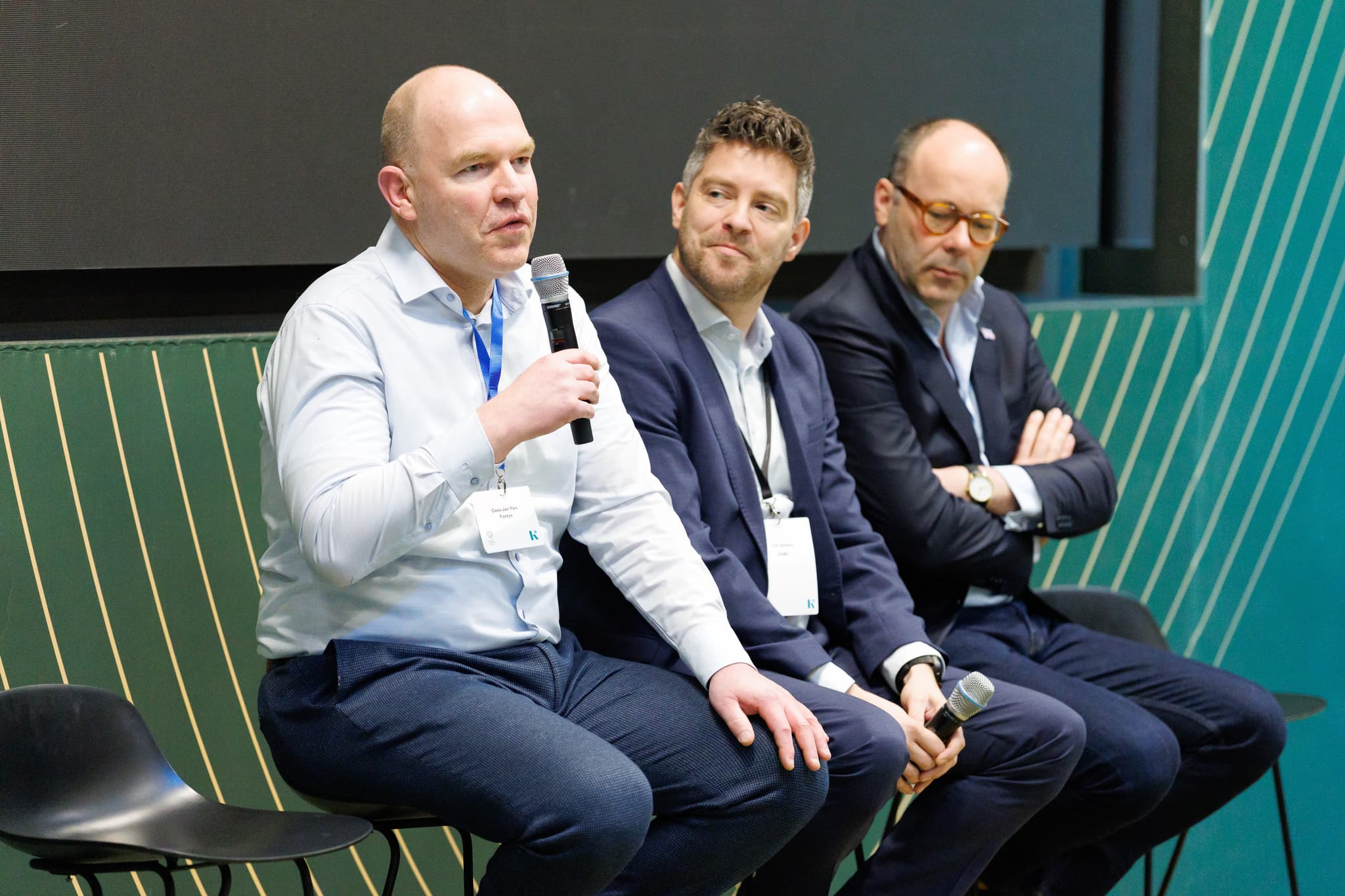
Cees-Jan Pen, who contributed to the first panel discussion, argued that the region’s scale leap should be embraced—but accompanied by a much sharper spatial-economic strategy. Not only more housing and more jobs, but clear choices about where different economic activities should land, also beyond Eindhoven itself.
“And always in balance with industrial land,” Pen stressed. “That balance is currently lacking. There is enormous attention for housing development, but hardly any for business parks—let alone in relation to each other.”
With that remark, the discussion naturally broadened to Southeast Netherlands as a whole. If Brainport continues to grow, which activities must remain in the Eindhoven core—and which could just as well be located in places such as Tilburg, Weert, Venlo, or Born?
Pen implicitly warned against a future in which everything continues to accumulate around Eindhoven without a coherent regional strategy.
Provincial executive Martijn van Gruijthuijsen acknowledged the tension. Governance in the Netherlands is layered and often slow, he said, which makes it all the more important to have early discussions about choices—and to build broad support for them.
Scarcity, he emphasized, has become the defining concept: scarcity of space, energy, infrastructure, and people. That inevitably forces selection, even if such decisions are rarely politically easy.
ASML added a business perspective to the debate, calling for both role clarity and shared responsibility. The company sees itself as a “child of the region” and invests in collective solutions through initiatives such as the Brainport Partner Fund and housing programs. At the same time, ASML does not intend to take over the role of government. The message was clear: collaboration is essential, but each party must act within its own responsibilities. “We are not going to train doctors.”
Diversification: reducing dependency without losing focus
The third major theme of the morning was diversification. Should Brainport broaden its economic base?
Robert-Jan Marringa of Brainport Development introduced nuance. Yes, the region is strongly intertwined with the semiconductor ecosystem, and that share is still growing. But that is not necessarily problematic as long as the dependency remains manageable and the rest of the economy remains healthy.
Alongside semiconductors, Brainport’s diversification strategy highlights energy systems and defense as promising domains. The idea is not to move away from semicon, but to apply the region’s existing manufacturing capabilities in additional sectors.
Blankendaal and Voncken were clear on this point: if Brainport companies can build complex machines, modules, and production systems for semiconductors, they can also deploy that expertise in energy technology, medtech, defense, or agritech.
The underlying message was therefore not “less semicon.” It was: preserve and strengthen the manufacturing base so that diversification can emerge from strength. Or as Voncken effectively summarized it: if you are good at making things, broadening will follow naturally.
© Bram Saeys
A lighthouse for the region, but with light close by
By the end of the morning, one image lingered: that of a lighthouse. BIC as a beacon for the region, visible far beyond its borders. But, as one participant noted, the light of a lighthouse shines far—and close to the tower it can still be dark. That observation captures the challenge facing the next phase of Brainport Industries Campus.
The campus must become more international, attract additional key players, and grow into a place where Cluster 2 gains global significance. At the same time, it must remain connected to the region: the SMEs, the towns, the entrepreneurs outside the campus, and the people who still see “a company” where others see an ecosystem.
In that sense, the development of Cluster 2 is not simply an expansion project. Between Cluster 1, BIC Mix, and BIC North, a testing ground is emerging for the next phase of Brainport itself: a region that continues to grow, but will only remain sustainable if it also learns to choose, share, distribute, and collaborate.