
Brabant in Bavaria: what a top ecosystem can teach us
Munich’s success stems from a tightly coupled system of knowledge, capital, industry, and organizational power.
Published on January 26, 2026
.jpeg%2520Brabant%2520in%2520Bayern&w=2048&q=75)

Team IO+ selects and features the most important news stories on innovation and technology, carefully curated by our editors.
Authors: Bert-Jan Woertman and Matthijs Bulsink
Most regions that look at themselves as innovation hubs share the same ingredients: knowledge institutions, companies, talent, accelerators, funding, and a growing number of initiatives. Yet only a small fraction manage to turn that into an ecosystem that consistently produces startups and scale-ups. The question, then, is rarely what a region has. The question is how it is organized.
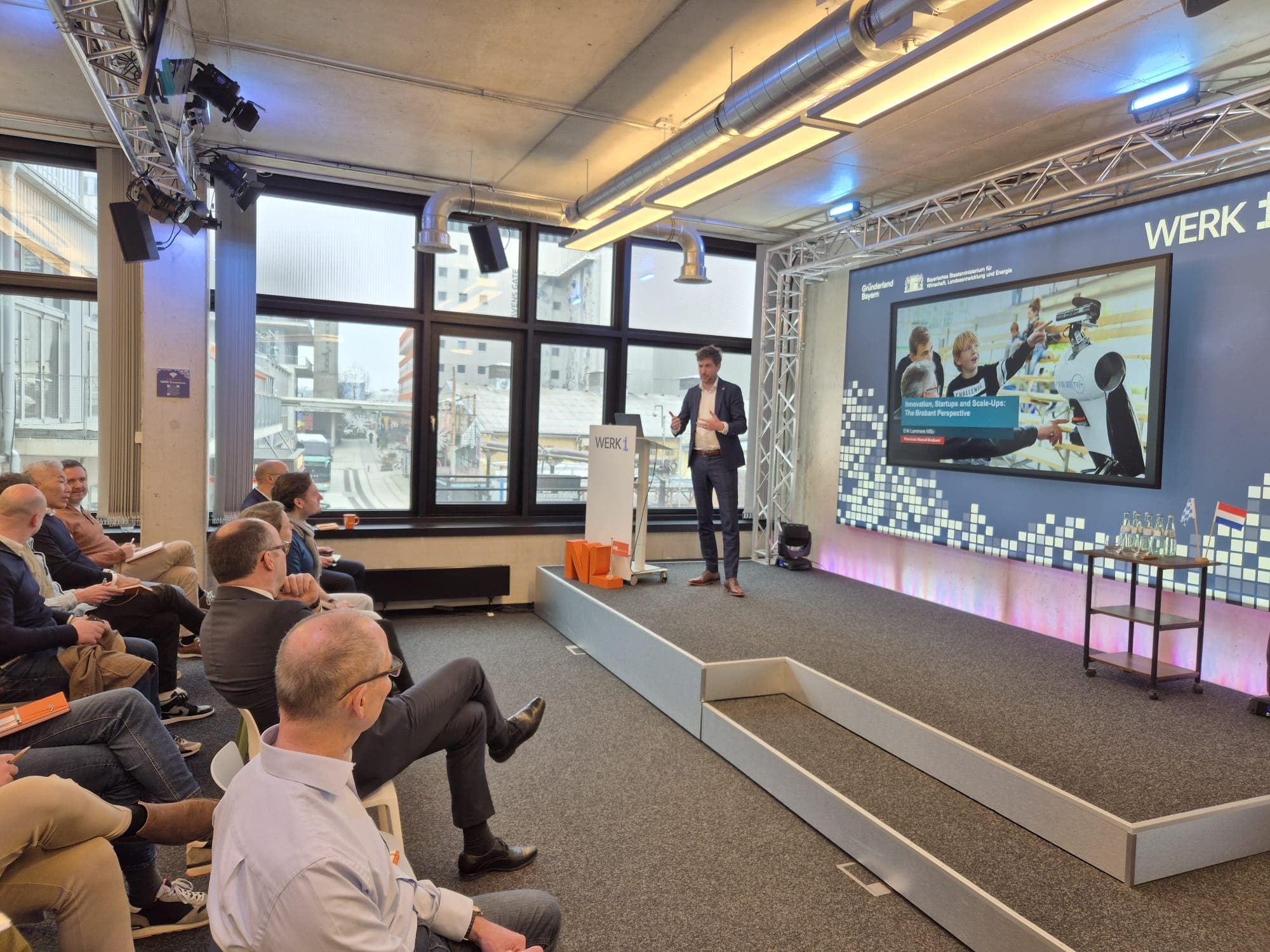
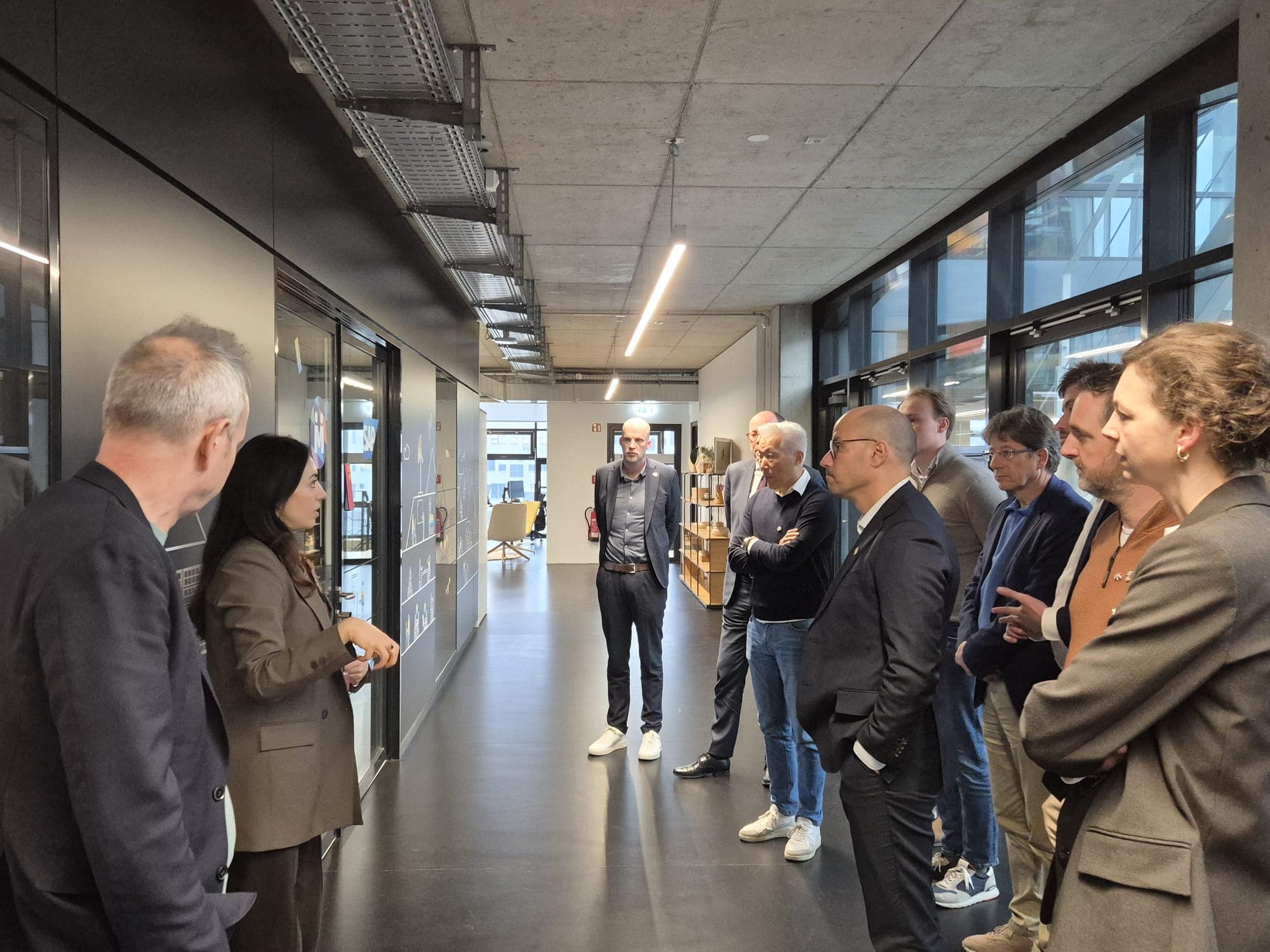
That was the lens through which a Brabant-wide delegation (with representatives from Breda, Tilburg, ’s-Hertogenbosch, and Eindhoven) traveled to Bavaria. Not to compare in terms of “better” or “worse,” but to reflect: what makes Munich such a mature startup city, and why does it work not only for Munich, but for the federal state as a whole?
Anyone reading the literature, policy papers, and business media on Bavaria will find no silver bullet. Success arises from a tightly coupled system of knowledge, capital, industry, and organizational strength. During our visit, that became strikingly tangible. The common thread: scale only works when it is governable. And scale becomes governable by design.
Driver 1 — Leadership is not only institutional, but personal
One of Bavaria’s most underestimated success factors is leadership that goes beyond meetings and advocacy. The ecosystem is partly carried by people and parties with real skin in the game: leaders who don’t just talk along, but invest, build, and, crucially, stay.
In Munich and Nuremberg, this is visible in the role of industrial families, successful entrepreneurs, and corporate leaders who remain involved in the ecosystem over the long term. The impact goes beyond reputation. It creates stability, legitimacy, and momentum. It is a culture in which giving back is not an afterthought, but a natural part of mature entrepreneurship.
This type of ecosystem leadership is beginning to emerge more strongly in Brabant as well. Bavaria shows what happens when such leadership becomes part of the system at scale and over time, not as a temporary project, but as infrastructure.
Driver 2 — Industry is not a side issue, but the foundation
Bavaria is not a startup region despite its industry; it is because of it. The presence of companies like BMW and Siemens creates more than jobs. They generate talent flows, technical complexity, launching customers, test environments, and supply chains. That makes growth paths for B2B and deeptech startups far more realistic.
This also explains why the ecosystem does not consist solely of student startups or academic spin-offs. Much entrepreneurship originates with professionals who gain industry experience and then choose to become entrepreneurs. Regions with a strong industrial base, therefore, have multiple entry points into startups and scale-ups, provided those routes are well connected.
For Brabant, this is familiar territory. Here too, industrial gravity is strong. The question is not whether that foundation exists, but how it is structurally leveraged for entrepreneurship at scale.
.jpeg%2520Brabant%2520in%2520Bayern&w=2048&q=75)
Driver 3 — Knowledge and entrepreneurship are not “linked,” they are interwoven
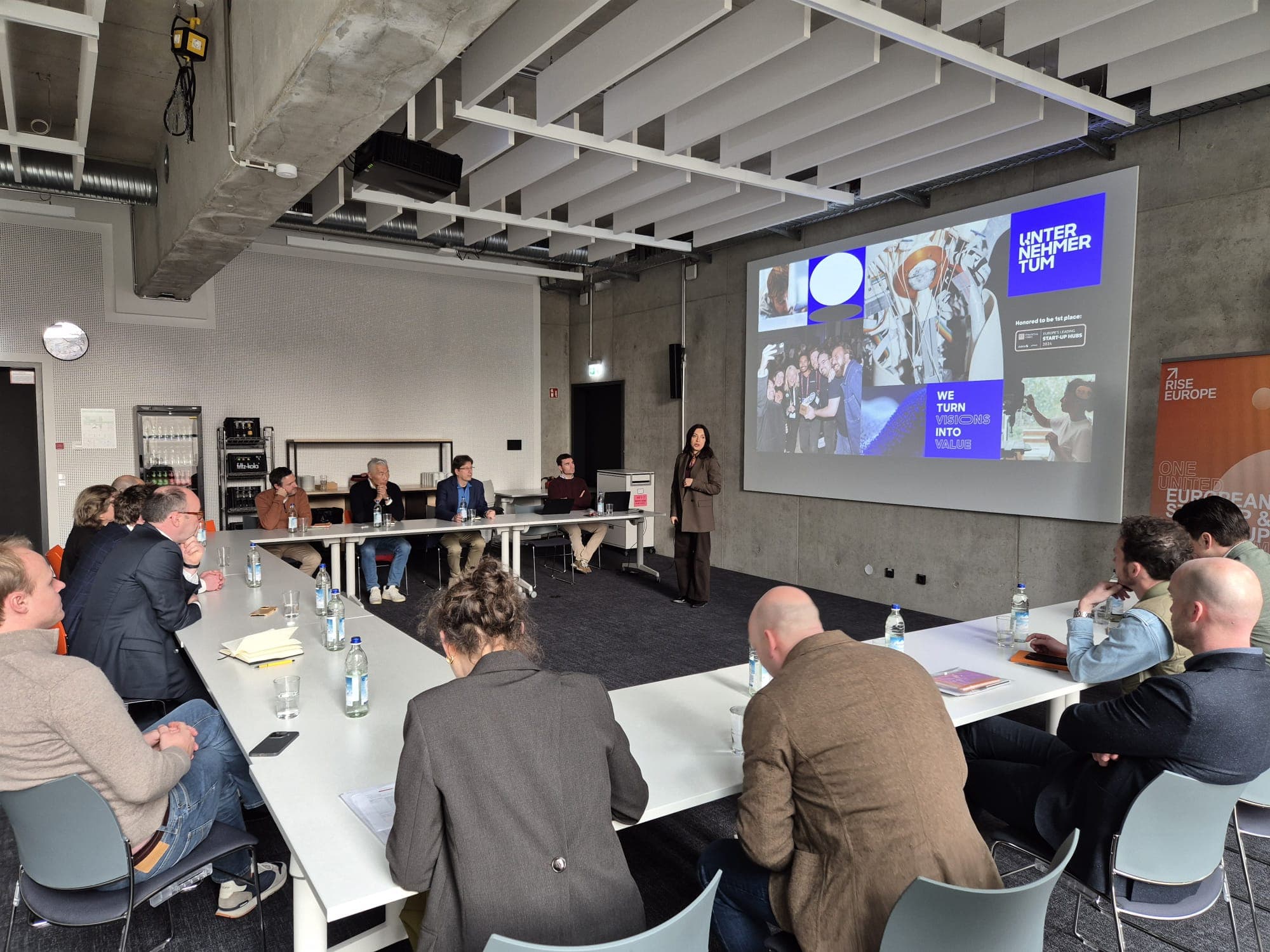
A striking strength of Munich is the intertwining of the university and entrepreneurship. Not through loose programs or incidental initiatives, but through institutional and physical integration. During the visit, it became clear how the Technical University of Munich (TUM) and UnternehmerTUM are structurally connected, among other things via the TUM Venture Labs.
As a result, the step from research to entrepreneurship is not an exception, but a logical continuation. Talent, IP, prototyping, coaching, and networks do not function as separate building blocks but as a coherent whole.
This observation is also relevant for regions that already have much knowledge and startup facilities. The core question then becomes not “what is missing?” but: where do silos still exist between components that could, in principle, form a single machine?
Driver 4 — Scale does not emerge by itself: it is organized
Munich is large, but Bavaria’s real success lies in organizing scale at the state level. Gründerland Bayern serves as a recognizable system layer that brings together instruments, networks, and startup centers. At the same time, there is no pretense that every city must play the same role.
Munich is the core. That is a fact. But that core function is not used as a power play; rather, it acts as an engine. Other cities and regions plug into the same system. This is asymmetry as a design principle: not everything needs to be everywhere, as long as everything is findable and connected.
What sets Bavaria apart is not only its structure, but also its culture: a shared ambition that is broadly embraced (Gründerland Bayern) and an explicit co-opetition mindset, collaborating where necessary, competing where possible.
As a result, the ecosystem feels less like a collection of good intentions and more like a single movement. Broadly supported, visibly orchestrated, and at the same time sharpened by internal competition. Precisely because Munich is allowed to be the core, space is created for other places to connect without everything having to be everywhere. That may well be the most mature form of scale: not wanting to look bigger, but daring to organize on a bigger scale.
.jpeg%2520&w=2048&q=75)
And then: the next step in scale
Anyone who thinks this is merely a regional story can see how quickly Bavaria is already moving to the next level of scale. Through RISE Europe, UnternehmerTUM is helping to build a pan-European network of startup ecosystem builders from fourteen countries and counting. Universities, venture builders, and hubs are joining forces to help startups scale faster across borders, with an explicit ambition around European technological sovereignty.
Dutch parties are also involved, including HighTechXL from Eindhoven. In addition, Eindhoven and Munich are strategically connected through the EuroTech Universities Alliance (TU/e and TUM). RISE Europe shows what happens when a region has its own ecosystem so well in order that the model is extended into international collaboration, not as a side path, but as a logical next step in organizing scale.
The mirror for North Brabant
Bavaria shows that ecosystems do not win on isolated pearls, but on organizational strength. This is not a story that says Brabant lacks something. On the contrary, many ingredients are already there. Precisely for that reason, the mirror is interesting.
- Not: “more initiatives.”
- But: “more coherence.”
- Not: “equal roles for everyone.”
- But: “explicitly organized complementarity.”
And perhaps the most important lesson of all: scale is not a coincidence. Scale is a design choice.