
Bladeless wind turbines are solving a different problem
Bladeless wind turbines concepts are emerging as a new, complementary way of harvesting wind power.
Published on April 3, 2026
© Vortex Bladeless

Mauro swapped Sardinia for Eindhoven and has been an IO+ editor for 3 years. As a GREEN+ expert, he covers the energy transition with data-driven stories.
Wind turbines are becoming the backbone of our energy system—in 2025, wind accounted for over 37% of the EU’s electricity production. Yet they are huge, loud, and disruptive to wildlife. Bladeless wind turbines aren't trying to beat them. They're trying to go where conventional generators can't.
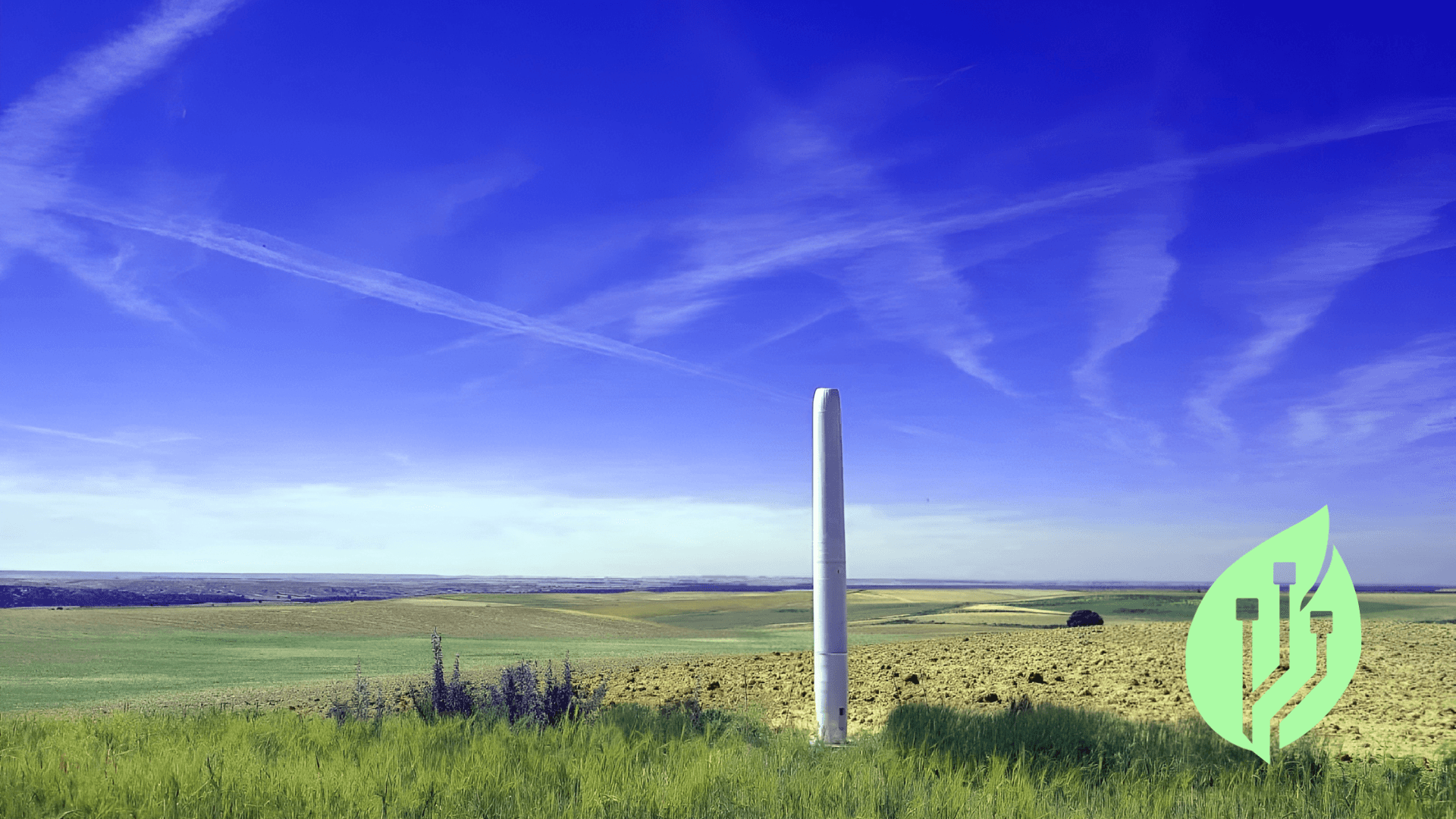
Bladeless wind turbines (BWTs) generate electricity without spinning blades. Instead of capturing energy through rotation, they exploit different aerodynamic phenomena to produce electricity.
BWTs are usually designed as cylindrical masts. In other words, they are tall cylinders, a few meters in height—the largest designs stand at 13 meters—built from resin-reinforced carbon fiber or glass fiber. The cylinder is anchored to the ground by a rod. The external structure oscillates, while the base remains fixed.
Think of them as tall lampposts that oscillate in the wind. But how do they generate electricity, then?
.png&w=2048&q=75)
Green Tech Decoded
From revolutionary wind turbines to futuristic materials, a lot is happening in green tech. But what are all these technologies about? And why should we care? In Green Tech Decoded, we explain how these innovations work and why they could redefine our society.
The physics behind bladeless wind turbines
When wind flows past a cylindrical structure, it creates air vortices on alternating sides of the structure. As a result, these vortices make the cylinder vibrate—a physical phenomenon known as vortex-induced vibration (VIV)—which is then converted into mechanical energy and into electricity through an alternator.
BWT designs ensure the cylinder oscillates at the same frequency as the wind-induced vortices, thereby maximizing energy capture. This principle is known as aeroelastic resonance. Basically, wind and the bladeless turbine reinforce each other in a feedback loop, with the structure oscillating at maximum amplitude for a given wind speed—because the vortex shedding frequency matches the structure's natural frequency.
Bladeless wind turbine concepts are designed to ensure that this resonance occurs at the most common wind speeds at the installation site. Maximum oscillation means maximum energy capture.
What are the pros of bladeless wind turbines?
Bladeless wind turbines have some advantages over conventional wind turbines.
- Longevity and maintenance. With no blades, gears, and rotating parts, BWTs are less prone to wear and mechanical failure.
- Cost-effective. In addition to lower maintenance costs, they are also cheaper to install and build, given their inherently more straightforward design.
- Environmental friendliness. These generators move less, making it easier for birds to avoid them than with conventional turbines. At the same time, they are quieter, reducing noise pollution.
- Urban suitability. Their lower noise levels make them potentially suitable for placement closer to urban areas, where energy is needed. At the same time, they can adapt to changing wind direction, which is useful in urban settings with turbulent currents.
- Space efficiency. Compared to the turbines deployed today, they take way less space.
What are the cons of bladeless wind turbines?
Alongside these pros, there are some significant disadvantages.
- Lower power output. Bladeless wind turbines are not as tall as conventional ones, which now stand at around 100 meters, meaning that they produce less power. They produce around 30% less electricity because they cannot access stronger, more consistent winds. This is a significant downside, which puts BWTs in a complementary role in wind energy.
- Structural stress. Oscillations that make bladeless wind turbines harness power can stress the foundation. There is still work for engineers to refine how the cylinders can resist higher oscillation speeds.
- Sensitivity to atmospheric conditions. Changes in the weather patterns can affect their energy production. Advanced oscillation control systems are necessary to maximize performance across different atmospheric conditions.
- Missing regulatory frameworks. Because it is a relatively new technology, there are no standardized protocols for testing it.
Where does the technology stand right now?
As you have probably inferred, bladeless wind turbine technology still has to prove itself and will not replace conventional wind turbines. But who is making the greatest strides?
The Spanish company Vortex Bladeless is recognized as one of the main names in this space. They developed a conical wind turbine that harnesses vorticity. They are currently developing different-sized models. Their Vortex Nano model, 85 centimeters high, has been selected by the non-governmental organization Birdlife to study the turbine's impact on birds’ lives.
American Aeromine Technologies is developing a bladeless wind turbine concept designed to sit atop buildings. They are pioneering a different kind of design. Rather than a mast, their concept features two wing-shaped panels. When airflow passes between them, it creates a low-pressure zone that generates suction. Directly connected through an enclosed channel, a propeller spins, generating electricity.
The Texan company has partnered with BMW Group to test its technology in the US. The company entered the market in 2025 and plans its first installations in 2026 across Europe and North America.
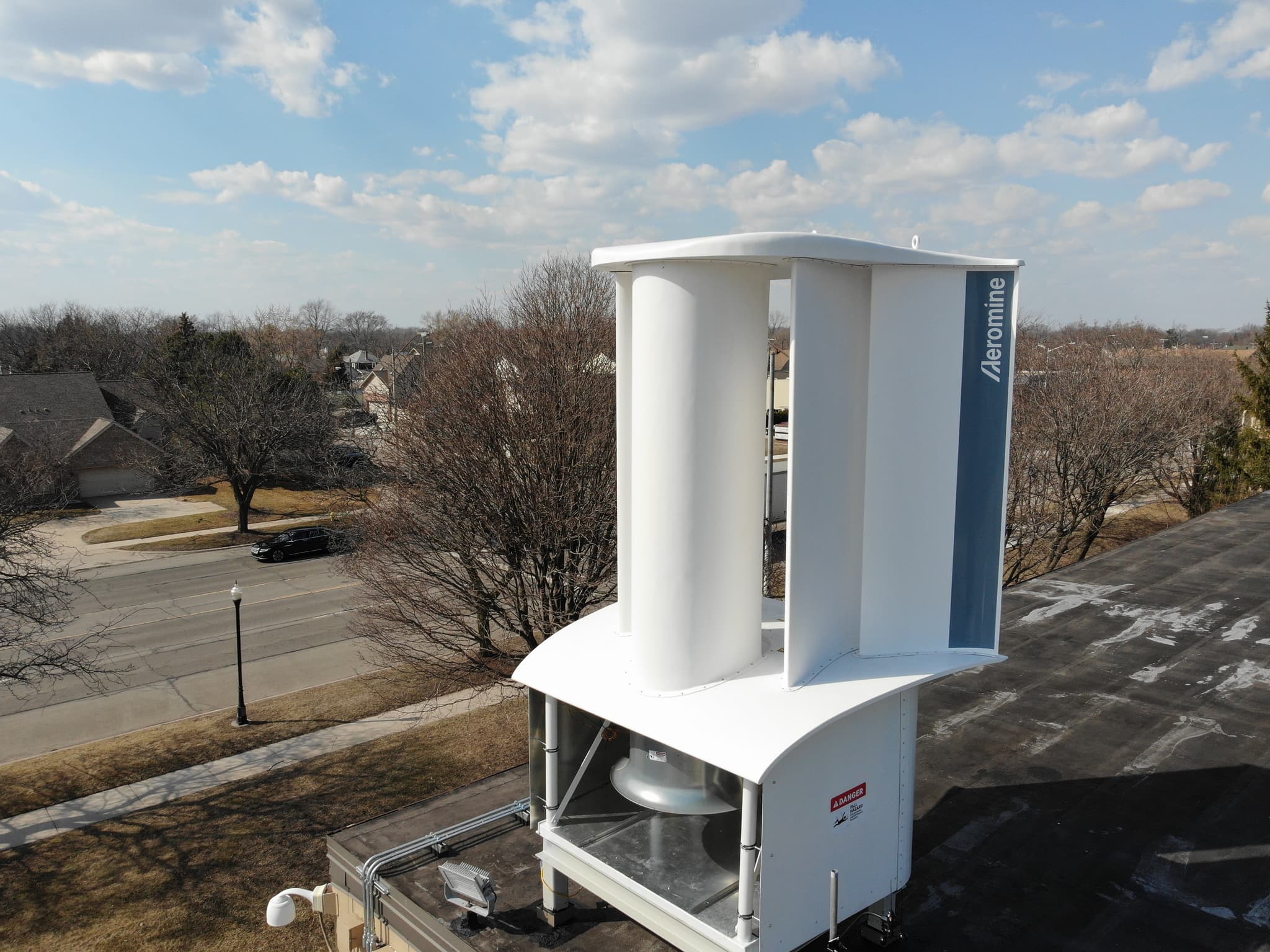
Aeromine's bladeless wind turbine design - © Aeromine Technologies
A 2025 study by the University of Glasgow identified an optimal BWT design that delivers up to 460 watts of peak power, outperforming the best-performing real-world concepts, which have delivered up to 100 watts. Their ideal design is an 80cm mast, which is 65cm in diameter.
What can we expect?
BWTs come in different designs and can serve as a complementary power source on rooftops to supplement solar power, as well as in urban environments or remote installations.
However, they are not on track to replace conventional wind farms. Bringing the concept to a larger scale will provide yet another solution for generating green energy on rooftops, in urban settings, and at remote sites. They could go where the 100-meter-tall generators can’t.