
“Behind every product, there is someone skilled in machining”
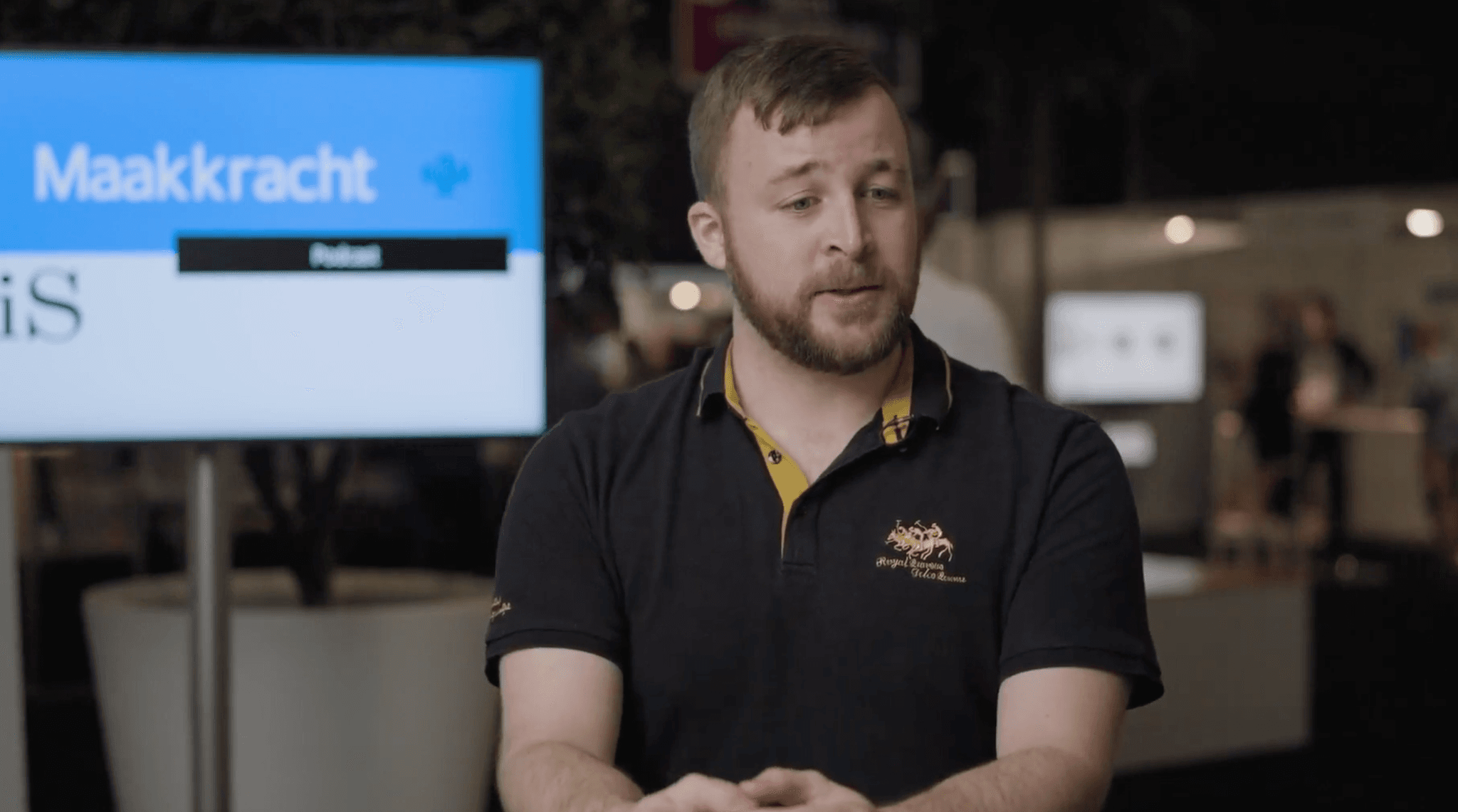
In our series 'Creative Power', Bart Zoutenbier shows what the work of an instrumant maker looks like.
Published on January 17, 2026
Bart, co-founder of Media52 and Professor of Journalism oversees IO+, events, and Laio. A journalist at heart, he keeps writing as many stories as possible.
Some careers start with a clear plan. Others take shape through detours, doubt and unexpected encounters. The story of Bart Zoutenbier clearly belongs to the latter category. His path into the high-tech manufacturing industry led him through Defence, hospitality school, web design and even several years as a bus driver. Only at the age of 29 did he discover what truly suited him: making precision instruments.
“The passion I had been missing suddenly switched on, like a light.”
Maakkracht - Creative Power
With a series of podcasts titled Maakkracht ('Creative Power'), the Leidse Instrumentenmakers School (LiS) offers insight into what it takes to get started in the high-tech manufacturing industry. The highlights of these conversations are presented in this series of articles.
Searching without a compass
After secondary school, Zoutenbier knew one thing for sure: he didn’t know what he wanted. “I found a lot of things interesting, but nothing really clicked.” A short attempt at a military career wasn’t the right fit, nor was the hospitality school he tried on his parents’ advice. “I liked cooking, but everything around it – service, organisation – that just wasn’t me.”
A degree in media and web design didn’t deliver the fulfilment he hoped for either. The work was fine, but no more than that. “I did it, but it didn’t make me happy.” The job market offered little encouragement: lots of competition and few ways to stand out. Eventually, he became a bus driver. “I love driving, so it made sense.”
After just two months, he already knew it wasn’t enough. Still, he stayed for four years. “You tell yourself you need stability first: a place to live, a steady income. The rest will come later.” But the housing never materialised, and neither did the feeling of purpose.
One conversation, one open day
The turning point came unexpectedly. In 2020, Zoutenbier met someone who worked as an instrument maker. She spoke enthusiastically about her job in a research environment. “My interest was immediately sparked.” He attended an open day at the Leiden Instrument Makers School and was instantly convinced. “That combination of making and designing, that was it.”
What appealed to him most was the balance. “You can spend your whole day behind a machine, or your whole day behind a desk. Instrument making sits right in between. That suits me.”
Where previous studies had felt abstract, this felt tangible. “I like working with my hands. Not just thinking up ideas, but actually bringing them to life.”
Learning by doing
Now in his fourth year, Zoutenbier has completed internships at the LUMC and at the research institute SRON. His first placement, in particular, left a lasting impression. “At the LUMC, I worked on a holder used in lung cancer research. It went into a machine that allowed researchers to examine cells.”
It was classic instrument-making work: a concrete question and a practical solution. “A researcher walks in with a problem, and you connect A to B. I love that.” The balance felt just right: “About 70 percent making, 30 percent designing.”
The best moments? “When you solve a complex problem with a simple solution. You test it, and it works. That’s incredibly satisfying.”
External Content
This content is from youtube. To protect your privacy, it'ts not loaded until you accept.
Behind everything, there is a maker
Zoutenbier is keenly aware of how invisible yet essential the profession is. “People don’t realise how much of what we use every day is made possible by instrument makers.” From medical devices to cars, aircraft and even plastic components: “Behind every machine and every mould, there is someone trained in machining.”
According to him, that importance is still underestimated. “Technology, especially vocational technical education, is often seen as ‘not high enough’. But this is literally what the world runs on.”
It’s never too late
Starting later in life has turned out to be an advantage. “I’m more confident now. Some teachers don’t always expect my answers,” he says with a smile. “They’re used to dealing with twenty-year-olds, not thirty-year-olds.”
For those who are unsure about their future, his advice is pragmatic. “Be open to new things. The timing has to be right, but you also have to dare to try.” He reflects on his own youth. “I knew someone who went to LiS when I was sixteen. I had zero interest back then. If I’d looked more closely, my path might have been very different.”
Hobbies matter too. “Since starting this course, I’ve been working on motorcycles at home. Everything I learn at school feeds into that. Then things start to fall into place.” His conclusion is simple: “Turning your hobby into your job, that’s often what it comes down to.”
Reskilling as part of the solution
In an industry facing a major shortage of technical talent, Zoutenbier sees reskilling as a crucial part of the answer. “Not everyone can go back to school for four years, I get that. But companies can play a role too.” He points to in-house training programmes, such as those at VDL, where people learn while working. “Those kinds of models are incredibly valuable.”
Education itself could also start earlier, he argues. “If I had seen a lathe at secondary school, I would have thought very differently about technology.” Making technology visible and tangible is key.
Meaning over titles
He prefers not to look too far ahead, but he does know what would make him happy. “A job I enjoy, in an environment where I can contribute.” Not necessarily solving the biggest problem in the world, but doing work that matters. “If I could make a small component for a place like CERN, where they’re trying to understand how the world works, that would be amazing.”
His story shows that there is no single path into the high-tech manufacturing industry. What there is, however, is a common thread: curiosity, courage and joy in making. Or, as Zoutenbier puts it himself: “Wherever you look, behind everything that is made, there is someone who knows how to make it.”