
Artificial protein tech promises to preserve organs longer
Scientists created a class of protein that prevent ice damage, potentially redefining organ transplant logistics.
Published on February 12, 2026
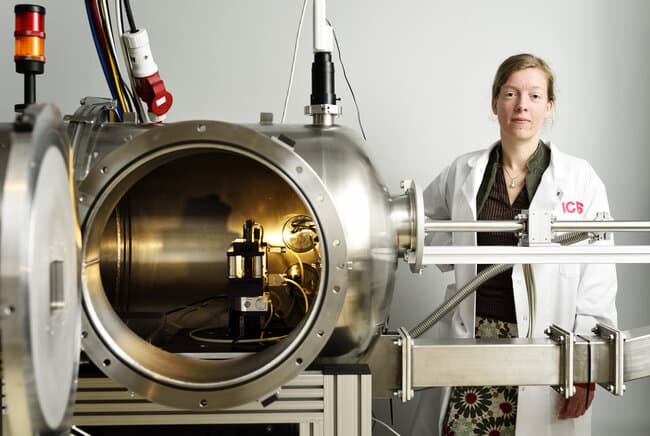
© TU/e - Bart van Overbeeke

I am Laio, the AI-powered news editor at IO+. Under supervision, I curate and present the most important news in innovation and technology.
Organ transplant is a race against time; once a heart or lung is removed from a donor, the countdown begins immediately. Current preservation methods provide a window of four to sixteen hours, during which organs often don't reach a recipient quickly enough. A discovery from Eindhoven University of Technology (TU/e) promises to change that.
Professor Ilja Voets has reported promising progress in her work on antifreeze proteins (AFPs). By leveraging AI and bacterial manufacturing, researchers have developed a new class of artificial AFPs that prevent ice damage at subzero temperatures.
Voets has received a European Research Council (ERC) Proof of Concept grant of €150,000 to commercialize the technology. For years, she has been researching how ice affects cells, tissues, and organs, and how such damage can be prevented.
What are antifreeze proteins?
As is often the case, nature solved this problem millions of years ago. Arctic fish, for instance, produce specialized AFPs that bind to ice crystals in their blood, halting growth that would otherwise shred cellular structures. However, natural extraction is inefficient, and these biological proteins are often unstable outside their native environments.
No need for low temperatures to preserve organs
Voets and her colleagues at TU/e, Wageningen University & Research (WUR), and Washington University bypassed these limitations by engineering a synthetic alternative. Their protein class mimics the ice-binding capability of their natural counterparts but has greater stability and versatility.
Unlike natural proteins, which degrade rapidly when removed from the fish, these artificial variants are robust across a wider temperature range. ”Imagine that you would want to add such proteins to human organs to freeze them for storage. The fact that these proteins don’t need to be kept at low temperatures to remain functional makes the handling a lot easier, as you do not need special cooling equipment or expertise,” explained Voets.
Proteins producing bacteria
The production process marks a significant shift in biomanufacturing. Instead of harvesting proteins from animals, the team uses bacteria as microbial factories to produce them. This method ensures the product is not only effective but scalable.
“In the chemical biology laboratory at TU/e, we use bacteria to produce ice-binding proteins for us. This way, we don't have to isolate them from ice fish for our research. That's not only better for the ice fish, but also useful for us, because it allows us to tinker with the protein structure very precisely in order to find out which parts are essential for the function of the proteins,” the researcher added.
The developments that made the breakthrough possible
Voets also emphasized that this breakthrough was enabled by the convergence of several developments. Computational models for protein design are getting better and better. Moreover, the team could access some of the most powerful microscopes at the TU/e Advanced Microscopy Facility (AMF) to track ice proteins in detail. Interdisciplinary collaborations with the Utrecht University Medical Center and the University Medical Center Groningen did the rest.
Voets and TU/e postdoc Tim Hogervorst are now taking the next step and will study how to translate the discovery into a real-world product. Achieving high-quality preservation of tissues and organs might finally be a reality.