
Amsterdam startup opens new carbon capture plant
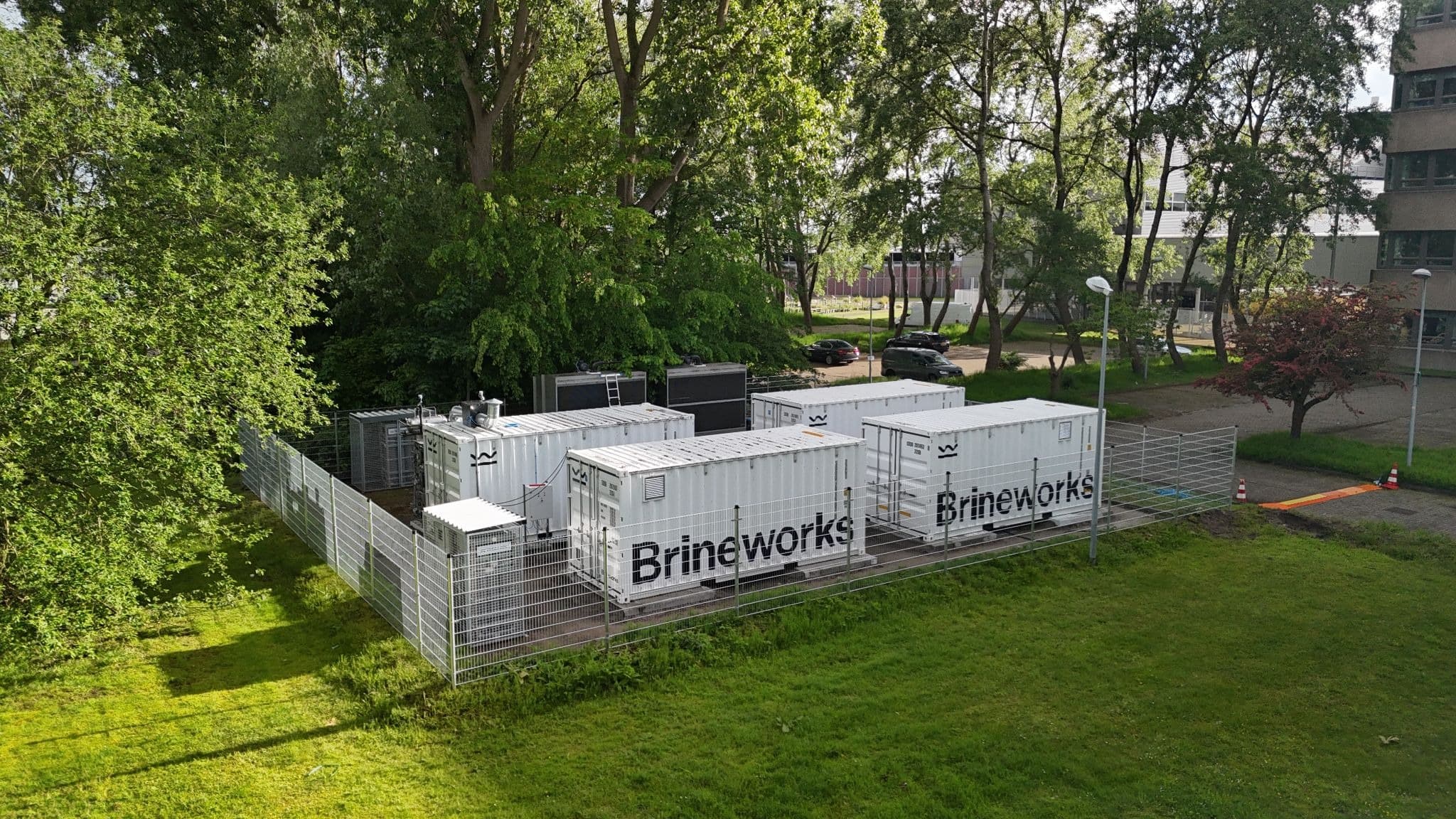
Brineworks, an Amsterdam-based climate tech startup, opened a new carbon capture plant.
Published on June 8, 2026
© Brineworks

Team IO+ selects and features the most important news stories on innovation and technology, carefully curated by our editors.
Amsterdam-based climate tech startup Brineworks opens the doors to its Direct Air Capture (DAC) demonstration plant at Amsterdam Science Park. Designed to capture up to 100 tonnes of CO2 per year, the plant is Brineworks' first operational demonstration at this scale, and a critical step toward commercial readiness.
Early data from the system is tracking toward Brineworks' core ambition: capturing CO2 from the atmosphere at below €100 per tonne, the threshold at which DAC-sourced CO2 becomes affordable enough to power the next generation of clean fuels. "This is the moment we've been working towards," said Gudfinnur Sveinsson, CEO of Brineworks. "The early numbers are confirming what we set out to prove: that Direct Air Capture will get affordable enough to actually deploy at the scale the world needs."
Brineworks' technology
At the heart of the plant is Brineworks' electrolyzer, designed to operate flexibly with intermittent renewable power. The system captures CO2 directly from the air while co-producing green hydrogen, delivering both essential feedstocks for e-fuels such as sustainable aviation fuel (eSAF) and e-methanol for shipping.
Aviation accounts for 2.5% of global CO2 emissions; shipping contributes around 2%. Both sectors urgently need scalable, low-cost alternatives, and Brineworks' technology is engineered to supply RFNBO-compliant CO2 and green H2 at market-leading costs.
"The key differentiator of this demonstration is that it proves we can produce both of the key feedstocks for e-fuels at the same time and at scale. We’re literally generating tonnes of clean CO2 and green hydrogen using a single electrochemical system, and we’re already confirming our cost projections while we do it," said Dr Joseph Perryman, CTO of Brineworks. "The cost trajectory we're seeing from the demo plant is the validation our engineers have been chasing. The next step is scaling up the tech, and we're already well on our way."
Next steps
Brineworks is currently in discussions with partners in the e-fuel sector, with the next phase of development focused on a commercial-scale pilot. The company has raised around €10M to date across financing rounds and European grants, with the next funding round in preparation.
If Brineworks hits its scale-up targets, airlines could be flying on carbon-neutral fuels produced from Brineworks-captured CO2 and hydrogen before the decade is out.