
Aluminum batteries: competition with lithium on the horizon
EQONIC Group has confirmed that it uses aluminum as the core chemical component of its revolutionary battery technology.
Published on August 9, 2026

Team IO+ selects and features the most important news stories on innovation and technology, carefully curated by our editors.
EQONIC Group has confirmed that it uses aluminum as the core chemistry behind its revolutionary battery technology. This lithium-free, sodium-free, and rare-earth-free innovation promises a structural shift in the battery market: lower costs, greater safety, and a supply chain that is immune to geopolitical tensions.
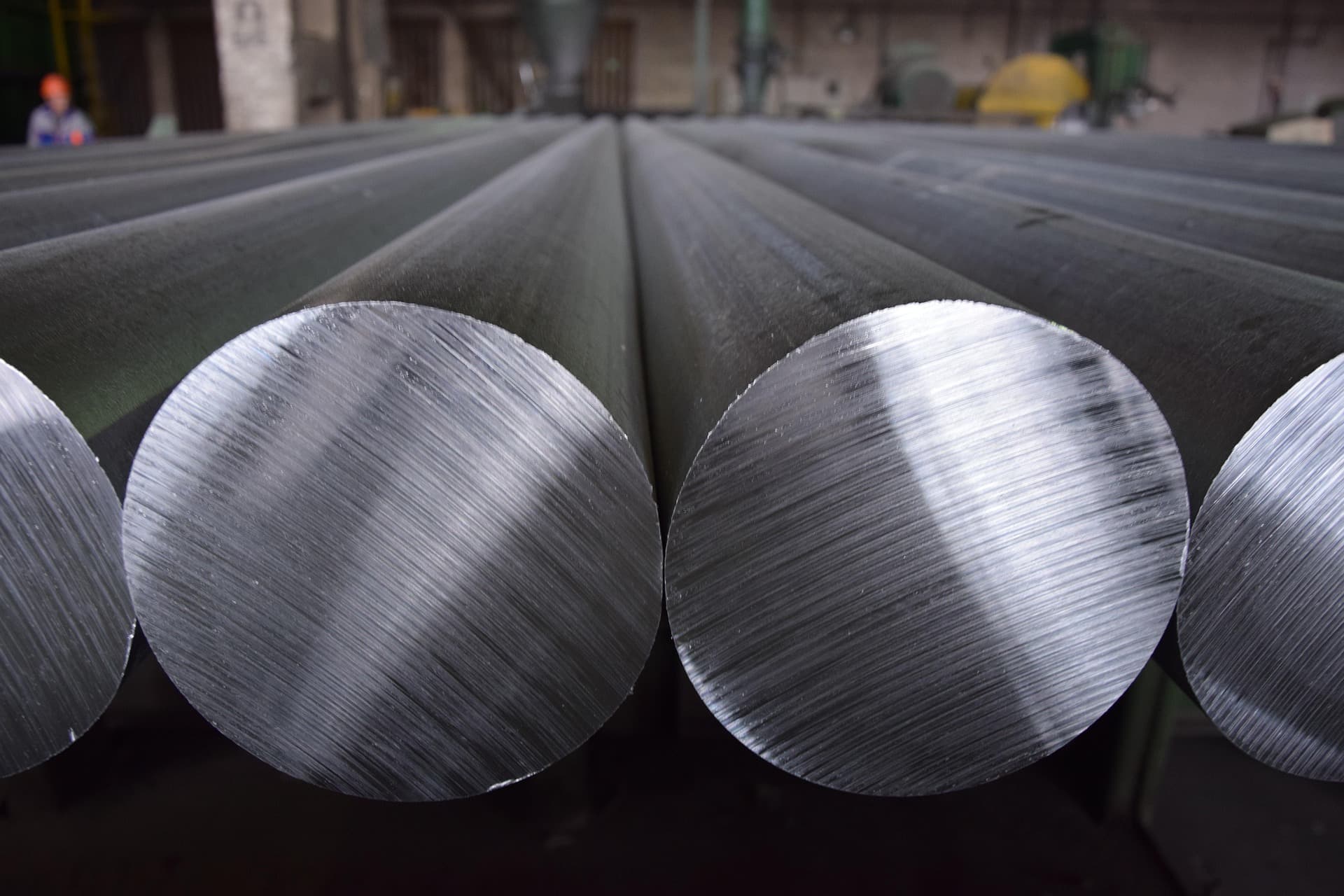
Aluminum is the third most abundant element in the Earth’s crust. This makes it an attractive alternative to lithium, whose price more than doubled in 2025 and early 2026 due to strong demand and limited supply. Cobalt, gallium, and heavy rare earth elements faced even more extreme price increases due to export restrictions, particularly from China and the Congo 🔗︎.
EQONIC’s technology eliminates these dependencies. Furthermore, aluminum is non-flammable, which reduces the risk of thermal runaway—a well-known problem with lithium batteries. Laboratory tests show that the batteries remain safe even when cut in half or pierced with nails 🔗︎.
From lab to factory
EQONIC is now transitioning from laboratory development to industrial validation. This is a crucial phase for testing the technology’s scalability, performance, and reliability under commercial conditions. The company is aiming for a production cost of £50 per kWh, which is roughly half the current price of LFP (lithium iron phosphate) batteries and represents a structural breakthrough in battery economics 🔗︎. This transition is supported by strategic partnerships, such as the collaboration with Barton Knight Group for the supply, installation, and maintenance of battery storage systems in the United Kingdom 🔗︎.
Government support
In June 2026, EQONIC was selected for the UK government’s £452 million *Battery Innovation Programme*. This program, which runs through 2030, supports two work streams: the development of a *full-stack digital twin* of the manufacturing process and a reconfigurable production line for both assembly and recycling 🔗︎. A digital twin enables EQONIC to virtually optimize production processes before they are physically implemented, significantly reducing the time and cost of scaling up. This recognition by Innovate UK underscores confidence in the technology’s feasibility 🔗︎.
Competing with lithium
EQONIC’s performance roadmap is ambitious. By 2026, the technology is expected to surpass the energy density of sodium-ion batteries. By 2027, the company aims to outperform LFP batteries (150–205 Wh/kg), and by 2029, it aims to match or exceed the performance of NMC batteries (250–300 Wh/kg) 🔗︎. These goals, if achieved, will open the door to applications in electric vehicles, stationary storage, and industrial infrastructure. The lifespan targets are equally impressive: more than 600 deep charge cycles in current tests, with a target of 10,000 cycles for residential storage systems 🔗︎.
A licensing model to avoid capital risks
Instead of building its own factories—a model that proved fatal for earlier players like Britishvolt and Northvolt—EQONIC has opted for a licensing model. The company aims to license its chemistry and production blueprint to established manufacturers. This reduces capital risks and accelerates time to market. The board of directors, bolstered by experienced figures from the banking sector, regulatory bodies, and the automotive industry, supports this strategy 🔗︎. In May 2026, they entered into a partnership with the Barton Knight Group, which immediately positions EQONIC as an active player in the energy market 🔗︎.
The challenges: from theory to practice
Although aluminum theoretically has superior properties—such as higher energy density due to its trivalent charge (Al³⁺) and the absence of dendrite formation—there are still hurdles to overcome. Aluminum-ion batteries are sensitive to moisture: contact with water can produce hydrogen gas, chlorine gas, and hydrochloric acid, which complicates production. EQONIC claims to have solved this challenge with a *proprietary composite*, but the exact composition of the electrolyte remains a secret 🔗︎. Furthermore, the technology has yet to demonstrate that it can make the transition from the lab to commercial production, including certification for abuse resistance and regulatory approval 🔗︎.